Biochemistry
-
Brilliant Black PN
Brilliant Black BN, Brilliant Black PN, Brilliant Black A, Black PN, Food Black 1, Naphthol Black, C.I. Food Black 1, or C.I. 28440, is a synthetic black diazo dye. It is soluble in water. It usually comes as… Read more.
-
The Food Chemicals Codex (FCC) has been published since 1966
Scope The FCC features more than 1,250 monographs, including food-grade chemicals, processing aids, foods (such as vegetable oils, fructose, whey, and amino acids), flavoring agents, vitamins, and functional food ingredients (such as lycopene, olestra, and short chain fructooligosaccharides). The FCC also contains… Read more.
-
The Codex Alimentarius (International Food Code)
The Codex Alimentarius (Latin for ‘Food Code’) is a collection of internationally recognized standards, codes of practice, guidelines, and other recommendations published by the Food and Agriculture Organization of the United Nations relating to food, food production, food… Read more.
-
Interactions between Paracetamol and Formaldehyde: Theoretical Investigation and Topological Analysis (Abstract and References)
In this work, noncovalent interactions including hydrogen bonds, C···C, N···O, and van der Waals forces between paracetamol and formaldehyde were investigated using the second-order perturbation theory MP2 in conjunction with… Read more.
-
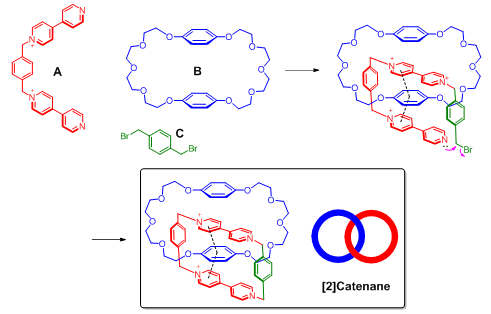
In supramolecular assembly
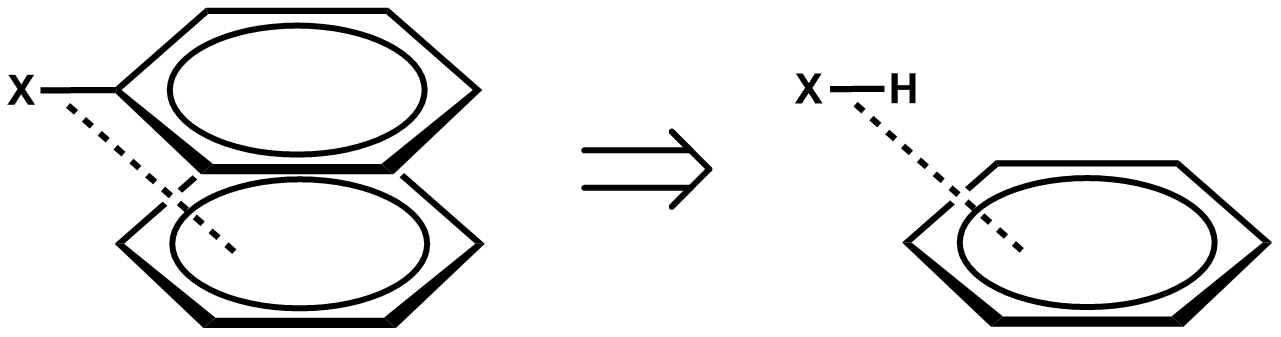
π systems are important building blocks in supramolecular assembly because of their versatile noncovalent interactions with various functional groups. A notable example of applying π–π interactions in supramolecular assembly is the synthesis… Read more.
-
Addition in pharmacological active compounds
Several variants of pi coordinated phenyls have even been tested using transition metals for stacking η6-phenyltropanes, using cyclopentadienyl and tricarbonyl in place of a benzene. Which in the case of the… Read more.
-
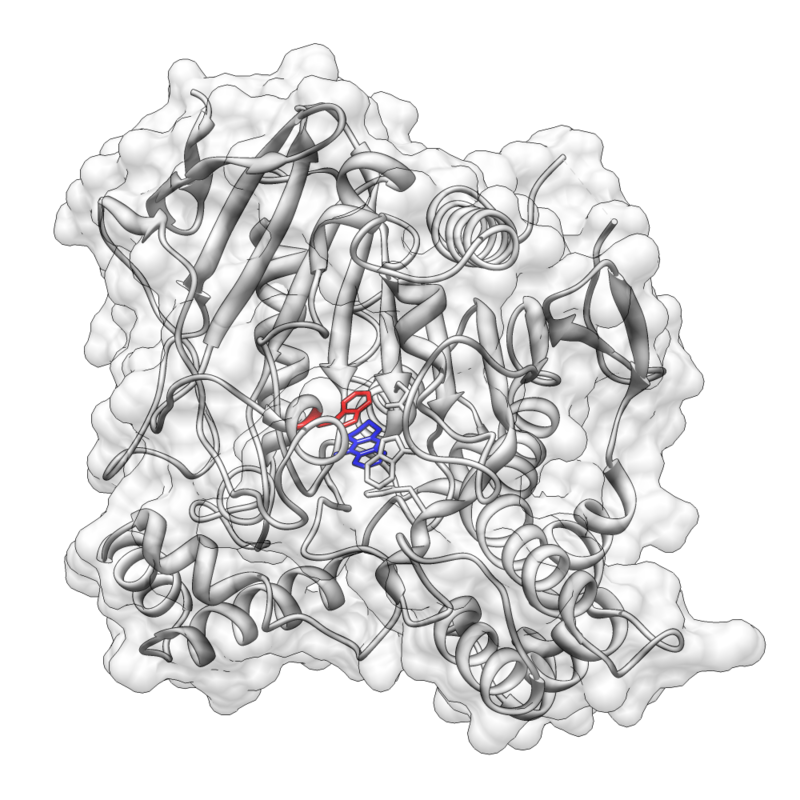
Pi stacking is prevalent in protein crystal structures and also contributes to the interactions between small molecules and proteins
As a result, pi–pi and cation–pi interactions are important factors in rational drug design. One example is the FDA-approved acetylcholinesterase (AChE) inhibitor tacrine which is used in the treatment of Alzheimer’s disease. Tacrine is proposed… Read more.
-
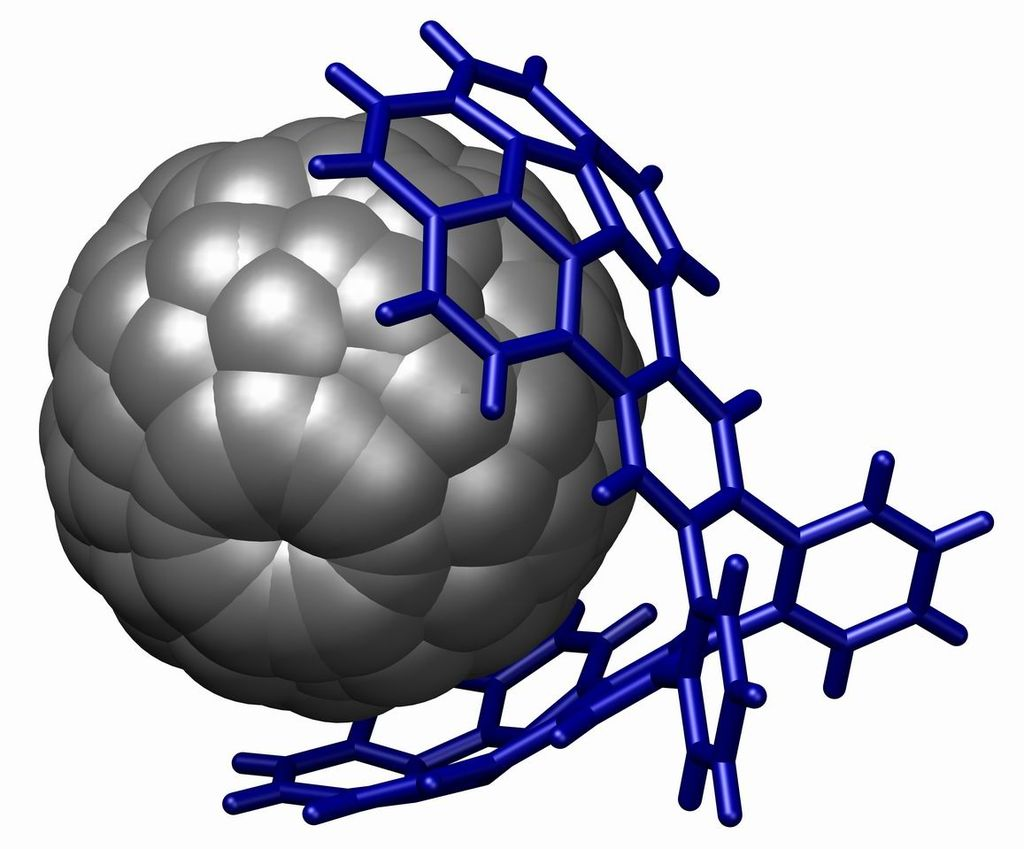
A powerful demonstration of stacking is found in the buckycatcher
This molecular tweezer is based on two concave buckybowls with a perfect fit for one convex fullerene molecule. Complexation takes place simply by evaporating a toluene solution containing both compounds. In solution an association constant of 8600 M−1 is… Read more.
-
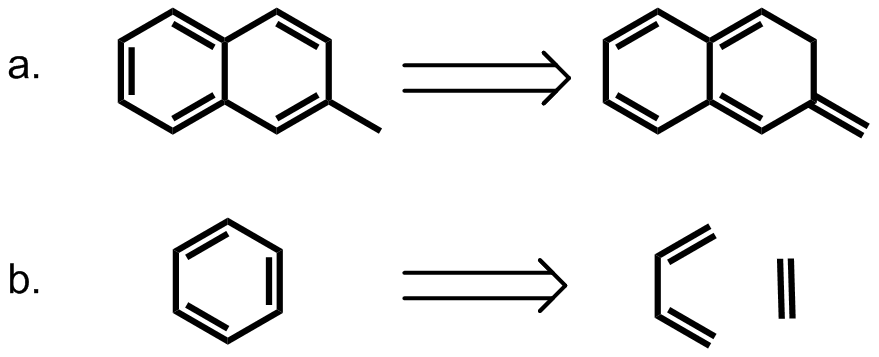
Requirement of aromaticity
The conventional understanding of pi stacking involves quadrupole interactions between delocalized electrons in p-orbitals. In other words, aromaticity should be required for this interaction to occur. However, several groups have… Read more.
-
Direct interaction model (substituent effects)
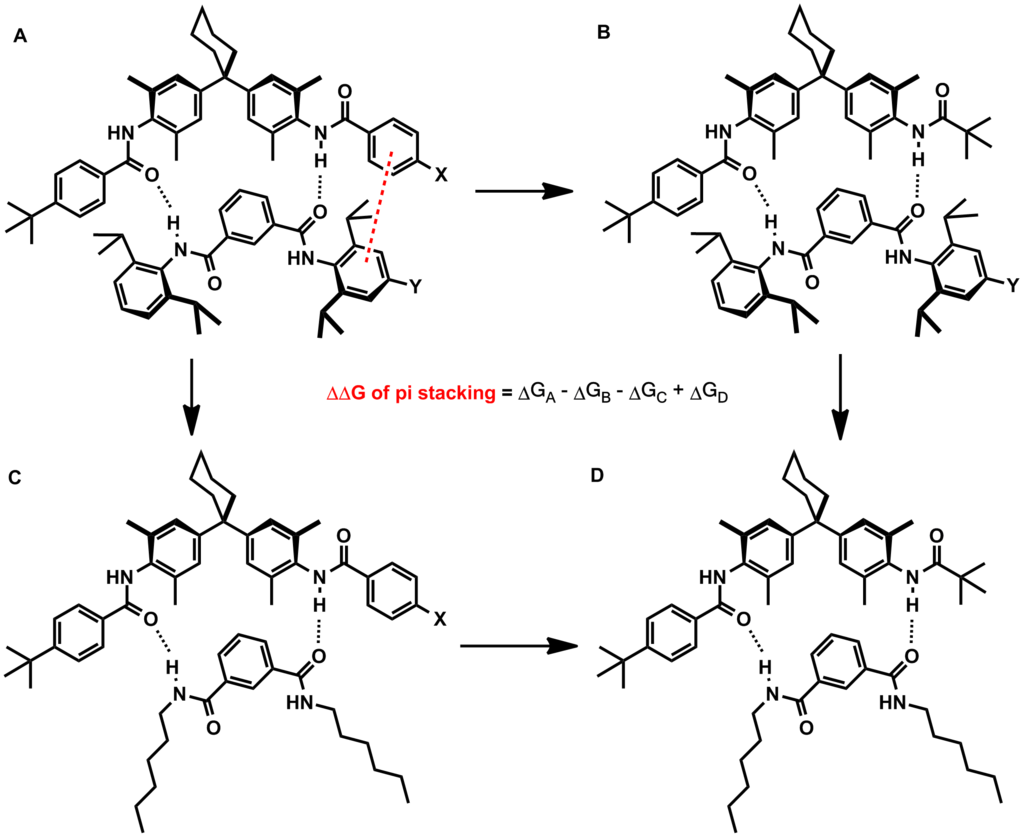
The Hunter–Sanders model has been criticized by numerous research groups offering contradictory experimental and computational evidence of pi stacking interactions that are not governed primarily by electrostatic effects. The clearest… Read more.