Biochemistry
-
Non-homologous end joining聽(NHEJ) is a pathway that repairs double-strand breaks in DNA. NHEJ is active in both non-dividing and proliferating cells.
Non-homologous end joining (NHEJ) is a pathway that repairs double-strand breaks in DNA. It is called “non-homologous” because the break ends are directly ligated without the need for a homologous template,… Read more.
-
Ku聽is a dimeric protein complex that binds to聽DNA聽double-strand break聽ends聽and is required for the聽non-homologous end joining聽(NHEJ) pathway of聽DNA repair
Ku is evolutionarily conserved from bacteria to humans. The ancestral bacterial Ku is a聽homodimer聽(two copies of the same protein bound to each other).[2]聽Eukaryotic Ku is a聽heterodimer聽of two聽polypeptides,聽Ku70聽(XRCC6) and聽Ku80聽(XRCC5), so named… Read more.
-
Ku70
Ku70 is a protein that, in humans, is encoded by the XRCC6 gene.[5][6] Function Together, Ku70 and Ku80 make up the Ku heterodimer, which binds to DNA double-strand break ends and is required for the non-homologous end joining (NHEJ) pathway of DNA repair. It is… Read more.
-
Ku80
Ku80 is a protein that, in humans, is encoded by the XRCC5 gene.[5] Together, Ku70 and Ku80 make up the Ku heterodimer, which binds to DNA double-strand break ends and is required for the non-homologous end joining (NHEJ) pathway of DNA repair. It is also required… Read more.
-
The聽trefoil knot fold聽is a聽protein聽fold聽in which the聽protein backbone聽is twisted into a聽trefoil knot聽shape
“Shallow” knots in which the tail of the polypeptide chain only passes through a loop by a few residues are uncommon, but “deep” knots in which many residues are passed… Read more.
-
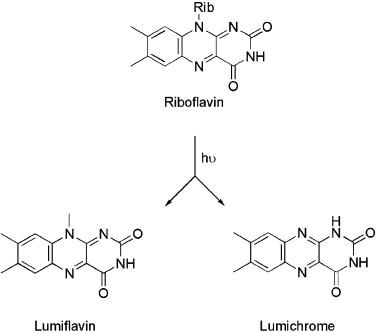
Riboflavin聽and its breakdown products interact with DNA, making this system attractive in the photodisinfection of blood and blood products聽
The application of photosensitisers to tropical pathogens in the blood supply Mark Wainwright PhD, Mauricio S. Baptista, in Photodiagnosis and Photodynamic Therapy, 2011 Riboflavin As vitamin B2,聽riboflavin聽(Fig. 5) is an essential聽nutrient聽in humans. The Mirasol system… Read more.
-
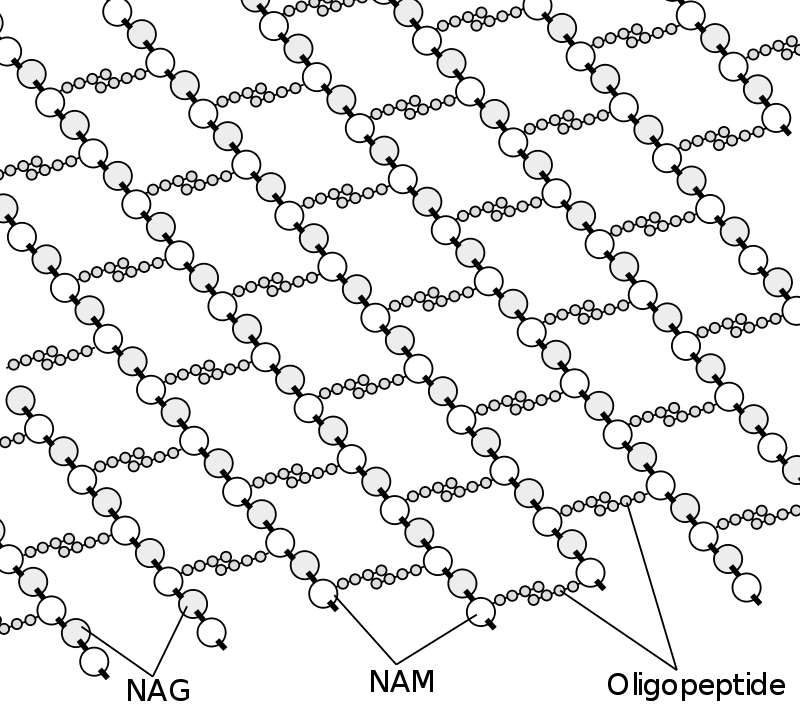
Peptidoglycan聽or聽murein聽is a unique large macromolecule, a聽polysaccharide, consisting of sugars and聽amino acids聽that forms a mesh-like聽peptidoglycan layer聽outside the聽plasma membrane
Not to be confused with glycopeptide, proteoglycan, or glycoprotein Peptidoglycan or murein is a unique large macromolecule, a polysaccharide, consisting of sugars and amino acids that forms a mesh-like peptidoglycan layer outside the plasma membrane, the rigid cell wall (murein sacculus) characteristic of most bacteria (domain Bacteria).… Read more.
-
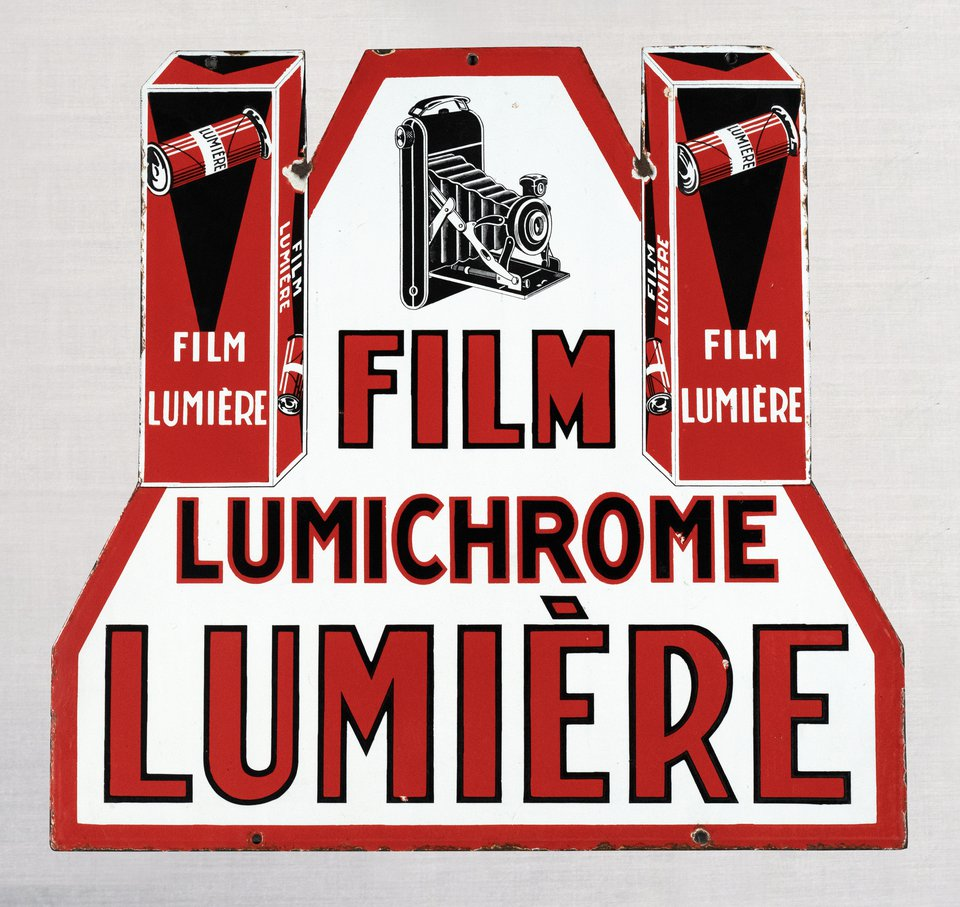
Lumiflavin and Lumichrome notes (and something called Autochrome)
Lumiflavin is a toxic product of photolysis of vitamin B2. Lumiflavin is a compound showing yellow-green fluorescence, formed by a photolysis of riboflavin in alkaline solution. Lumiflavin 1948-Present Lumichrome 1944-Present The Autochrome Lumi猫re was an early color photography process patented in 1903 by… Read more.
-
Ferrochelatase Wiki
Ferrochelatase catalyses the eighth and terminal step in the biosynthesis of聽heme, converting聽protoporphyrin IX聽into聽heme B Read more.
-
Heme metabolic intermediates
(porphyrin biosynthesis and heme degradation/excretion) and various other notes Read more.