


Culture
-
Sugar-coat (etymology)
also sugarcoat, 1870, originally of medicine; figuratively, “make more palatable,” from 1910; from sugar (n.) + coat (v.). Related: Sugarcoated; sugarcoating. sugar (n.) late 13c., sugre, from Old French sucre “sugar” (12c.), from Medieval Latin succarum, from Arabic sukkar, from Persian shakar, from Sanskrit sharkara “ground… Read more.
-
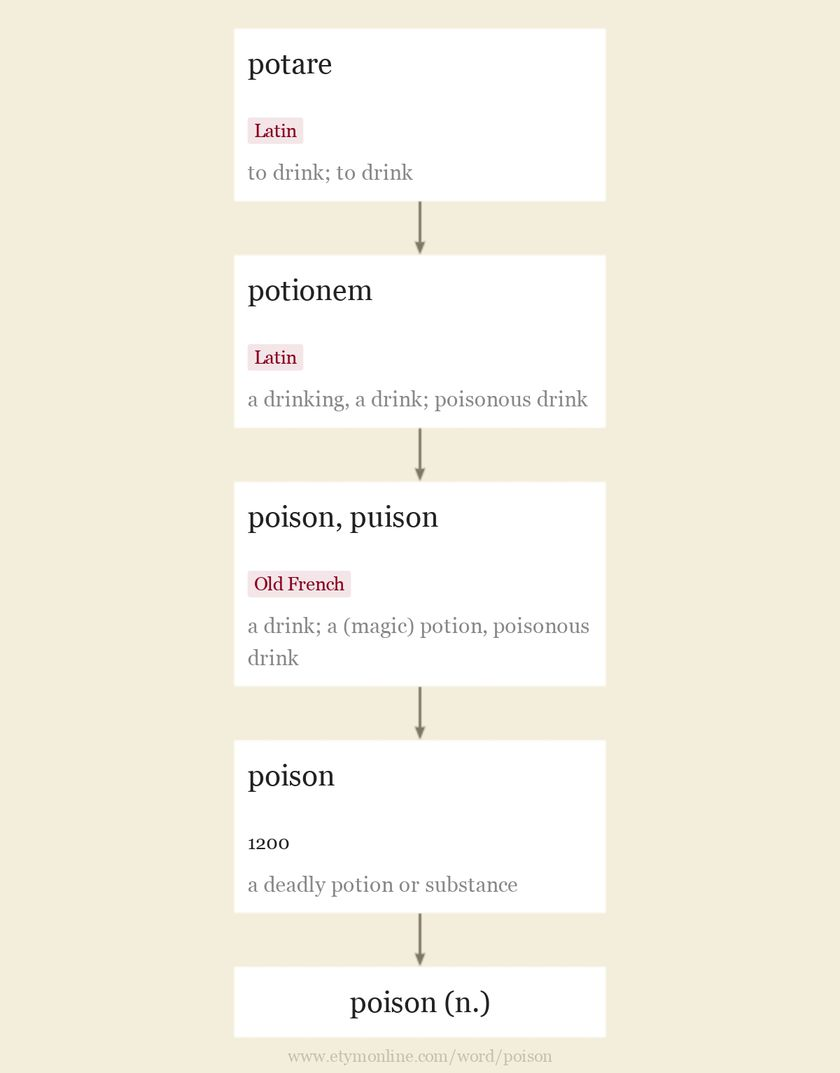
Poison (Etymology)
poison (n.) c. 1200, poisoun, “a deadly potion or substance,” also figuratively, “spiritually corrupting ideas; evil intentions,” from Old French poison, puison (12c., Modern French poison) “a drink,” especially a medical drink, later “a (magic) potion,… Read more.
-
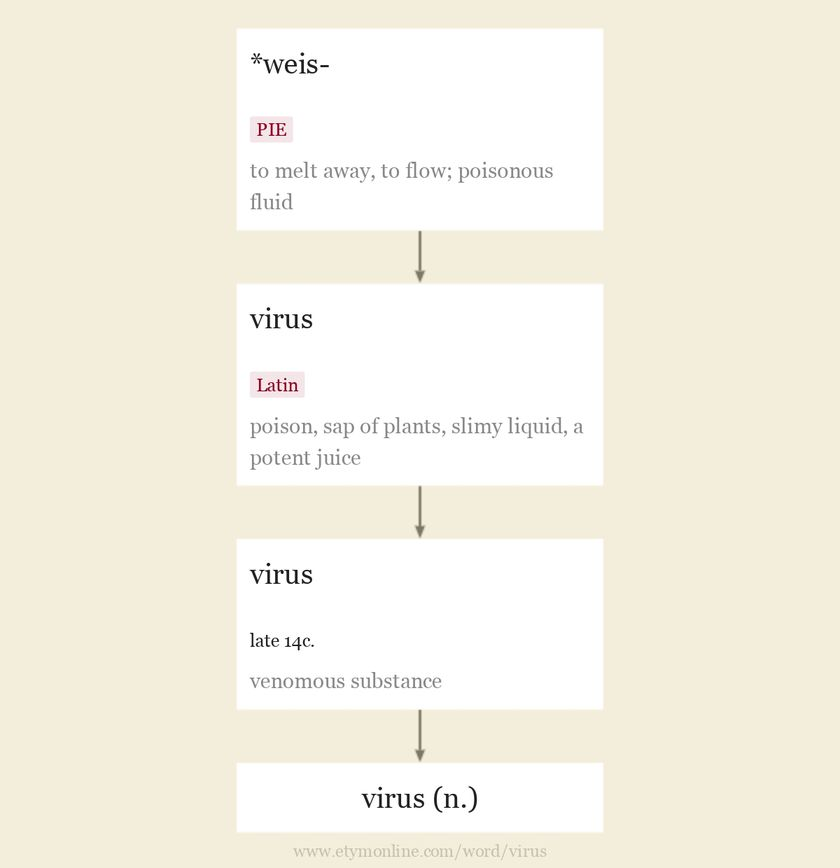
Virus (Etymology)
virus (n.) late 14c., “poisonous substance” (a sense now archaic), from Latin virus “poison, sap of plants, slimy liquid, a potent juice,” from Proto-Italic *weis-o-(s-) “poison,” which is probably from a PIE root *ueis-, perhaps originally meaning… Read more.
-
The Ant and The Grasshopper – Fable and Counter-fable
The Ant and the Grasshopper, alternatively titled The Grasshopper and the Ant (or Ants), is one of Aesop’s Fables, numbered 373 in the Perry Index. The fable describes how a hungry grasshopper begs for food from… Read more.
-
Ezekiel Stone Wiggins (1839 – 1910) was a Canadian weather and earthquake predictor known as the “Ottawa Prophet”
He was also the author of several scientific, educational and religious works. Wiggins wrote the “Architecture of the Heavens containing a new theory of the universe and the extent of… Read more.
-
Etymology of Pharmacy
pharmacy (n.) late 14c., farmacie, “a medicine that rids the body of an excess of humors (except blood);” also “treatment with medicine; theory of treatment with medicine,” from Old French farmacie “a purgative” (13c.)… Read more.
-
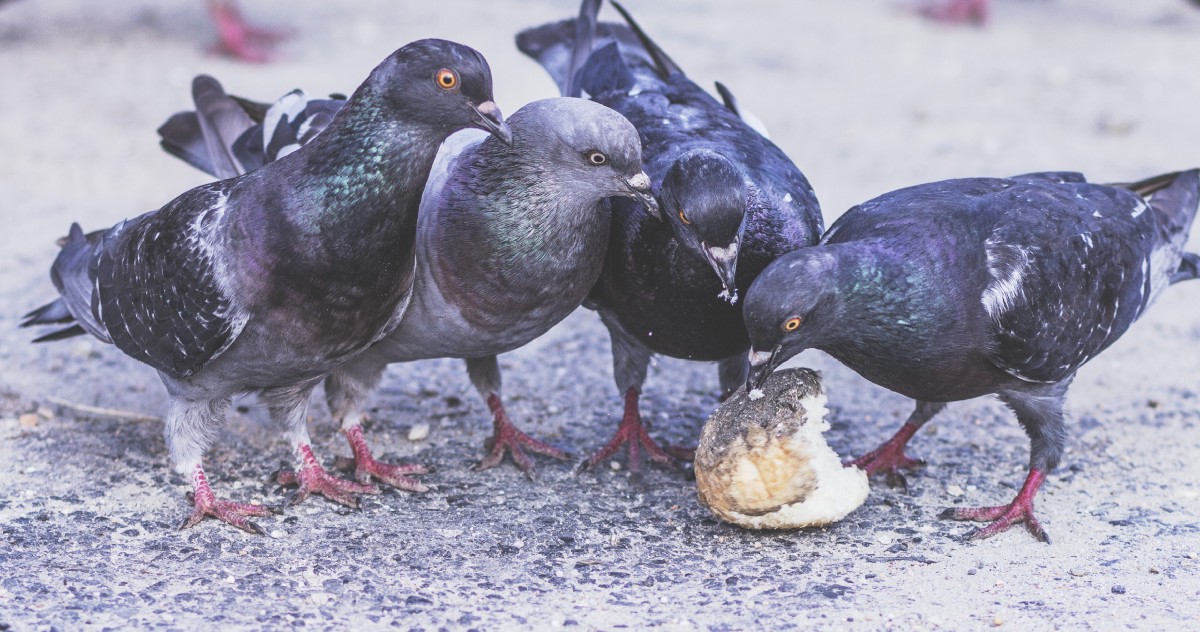
Another reason not to feed pigeons – your food is poison?
I can’t tell you why except they showed up on a wiki search. Climate change has a negative effect on this bird, and reproductive performance decreases with increased temperatures. It… Read more.
-
Arsenic Etymology
arsenic (n.) late 14c., “yellow arsenic, arsenic trisulphide,” from Old French arsenic, from Latin arsenicum, from late Greek arsenikon “arsenic” (Dioscorides; Aristotle has it as sandarake), adapted from Syriac (al) zarniqa “arsenic,” from Middle Persian zarnik “gold-colored” (arsenic trisulphide has… Read more.