alchemy anthropology apothecary archaeology art biochemistry biography biology chemistry civil rights cosmetic craft crystallography culture domestic craft ecology economics endocrinology entomology folklore geology glossary hazel history immunology law materials science medicine mythology neurology pantry philosophy physiology politics religion reproduction SCN- seasonal sodium symbolism systems theory thiocyanate tobacco TON toxicology
-
The Fairness Engine
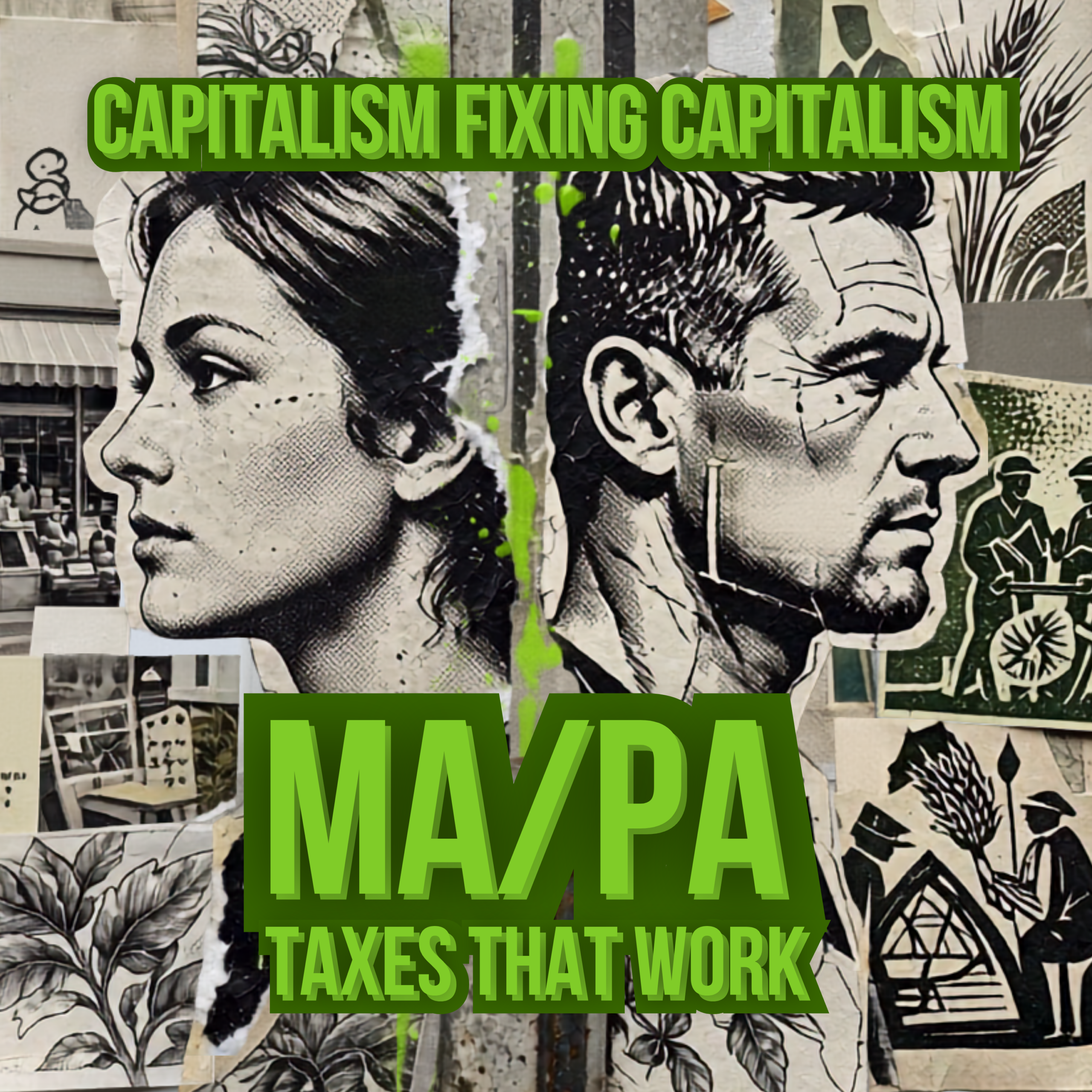
MA & PA TAXES Overview MA & PA Taxes are a simple, outcome‑based fairness system designed to stop extraction at all three levels of government: local, state, and federal. These taxes don’t regulate behavior and they don’t mandate wages or prices. They simply tax extraction signals: wage suppression price gouging productivity hoarding profit shifting rent gouging absentee landlord extraction resource…
-
Why The excess profit and Market Access Taxes Are Completely Legal and Pure Capitalism

Both the Excess Profit Tax and the Market Access Tax are fully constitutional because they tax economic activity and not identity, status or association. The Constitution gives Congress broad authority to tax commerce, production and market participation and these taxes fall squarely within that power. They do not confiscate property, regulate speech or impose unequal…
-
Market Access Tax

A Market Access Tax is designed to correct a structural imbalance in the modern economy: firms extract enormous value from public markets, public infrastructure, and public labor pools while contributing only a fraction of that value back to the society that makes their profits possible. Every business operating in the United States benefits from publicly…
-
Why An Excess profit Tax and Market Access Taxes Outperform Wealth Taxes and Billionaire Taxes

Unlike wealth taxes or billionaire taxes, which target accumulated assets after the fact and often face constitutional challenges around valuation, takings, and unequal treatment, the Excess Profit Tax and Market Access Tax operate entirely within the traditional framework of taxing economic activity. They tax what firms do, not what individuals own. That makes them faster,…
-
Excess Profit Tax
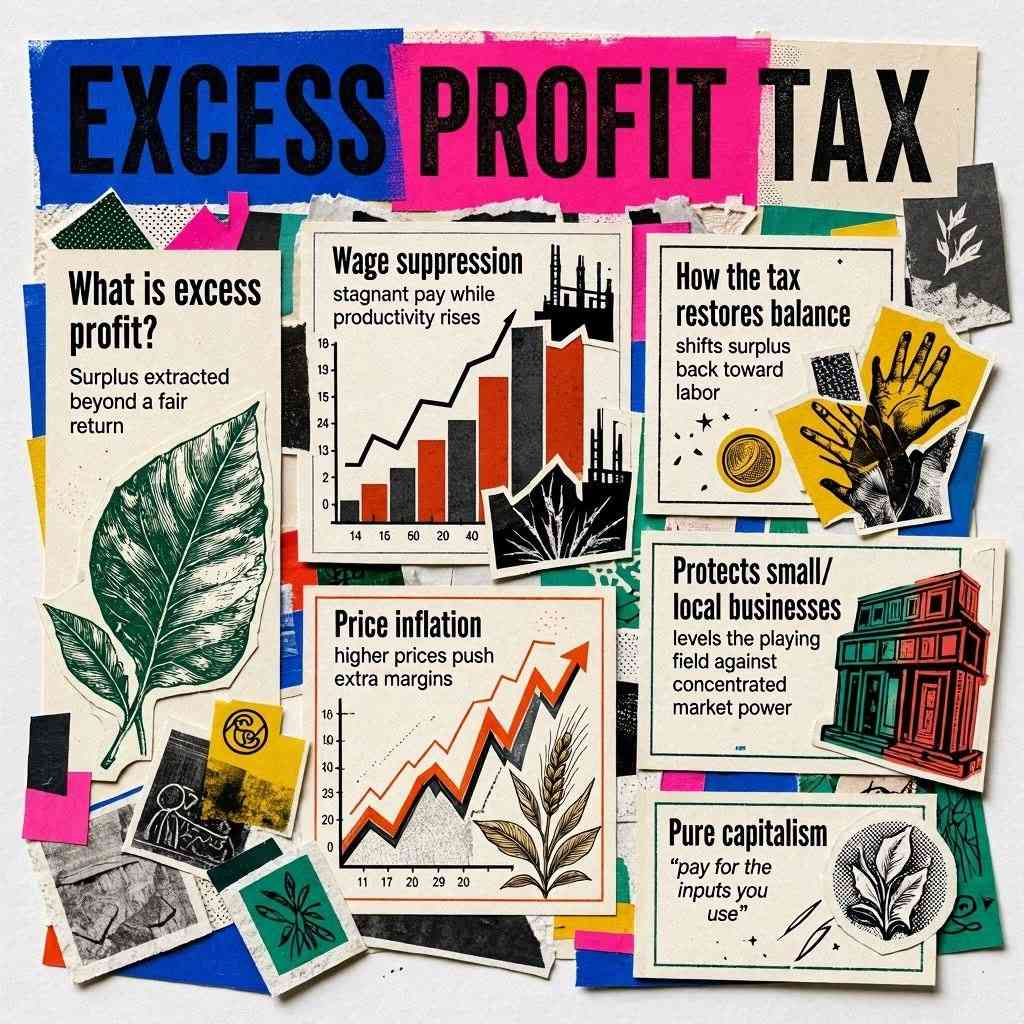
An Excess Profit Tax is designed to tax the portion of economic value created by workers that is not returned to them in wages. In modern U.S. labor markets, the average worker produces roughly $80/hour in value but is paid only $20/hour. The remaining $60/hour is not “entrepreneurial reward” or “innovation premium”; it is captured…
-
Sodium, SCN⁻ and NAD⁺/NADH

Sodium and SCN⁻ don’t directly create or destroy NAD⁺/NADH. But they strongly influence the systems that regulate NAD⁺/NADH, because: So the connection is indirect but real, through redox balance, metabolism, and ion‑transport energetics. Sodium controls the energy cost of maintaining NAD⁺/NADH balance Every cell must maintain: This requires the Na⁺/K⁺ ATPase, which uses ATP. ATP…
-
Sodium, Thiocyanate, Potassium Chloride and Collapse Logic

This paper synthesizes five interconnected terrains: sodium and thiocyanate biology, potassium chloride substitution, piezoelectricity and biofields, humans as nodes in a network, and the risks and trade‑offs of sodium removal. Sodium (Na⁺) and thiocyanate (SCN⁻) form a critical axis of mammalian coherence, sustaining nerve impulses, muscle contraction, nutrient absorption, and innate immunity. Potassium chloride (KCl),…
-
Sodium Deficiency and Maternal Mortality

Chronic sodium deficiency in the food supply can contribute to increased pregnancy complications, including mortality, especially when paired with terrain stressors like inflammation, poor hydration, and redox collapse. While not the sole cause, sodium cuts are a significant cofactor. Scientific Terrain Mapping: Sodium and Pregnancy Pregnancy involves dramatic shifts in fluid balance, hormone regulation, and…
-
Morgellons and Sodium Deficiency

Morgellons might just be the body’s punk rock protest against a civilization that’s been sneakily cutting sodium and silencing SCN⁻ since Hammurabi was scribbling laws in cuneiform. You want fibers? Try unraveling that metabolic tapestry. The Oldest Racket: Sodium Suppression Since Sumer Let’s start with the ancient salt hustle. Salt wasn’t just a seasoning—it was…