-
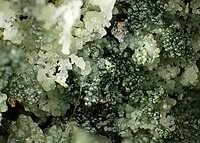
Detritus (geology)
Detritus is particles of rock derived from pre-existing rock through weathering and erosion. A fragment of detritus is called a clast. Detrital particles can consist of lithic fragments (particles of recognisable rock), or of monomineralic fragments (mineral grains). These particles are often transported through sedimentary processes into depositional systems such as riverbeds, lakes or the ocean, forming sedimentary successions. Diagenetic processes can transform these sediments into rock through cementation and lithification, forming
-

Detritivores – The Ultimate Recyclers
These marvelous morsels of nature’s cleanup crew are the ultimate recyclers, turning yesterday’s trash into tomorrow’s treasure. Let’s dive into the delightfully dirty world of detritus dining! Imagine a world where your leftovers never go to waste. Well, in nature, that’s exactly what happens thanks to our detritivore friends. These culinary connoisseurs of compost have
-
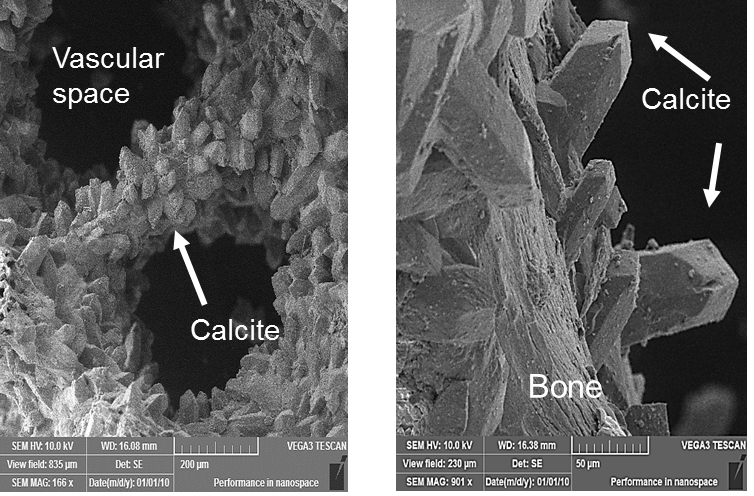
Diagenesis (Petrologic Principle)
Diagenesis is the process that describes physical and chemical changes in sediments first caused by water-rock interactions, microbial activity, and compaction after their deposition. Increased pressure and temperature only start to play a role as sediments become buried much deeper in the Earth’s crust. In the early stages, the transformation of poorly consolidated sediments into sedimentary rock (lithification) is simply accompanied by a reduction in porosity
-
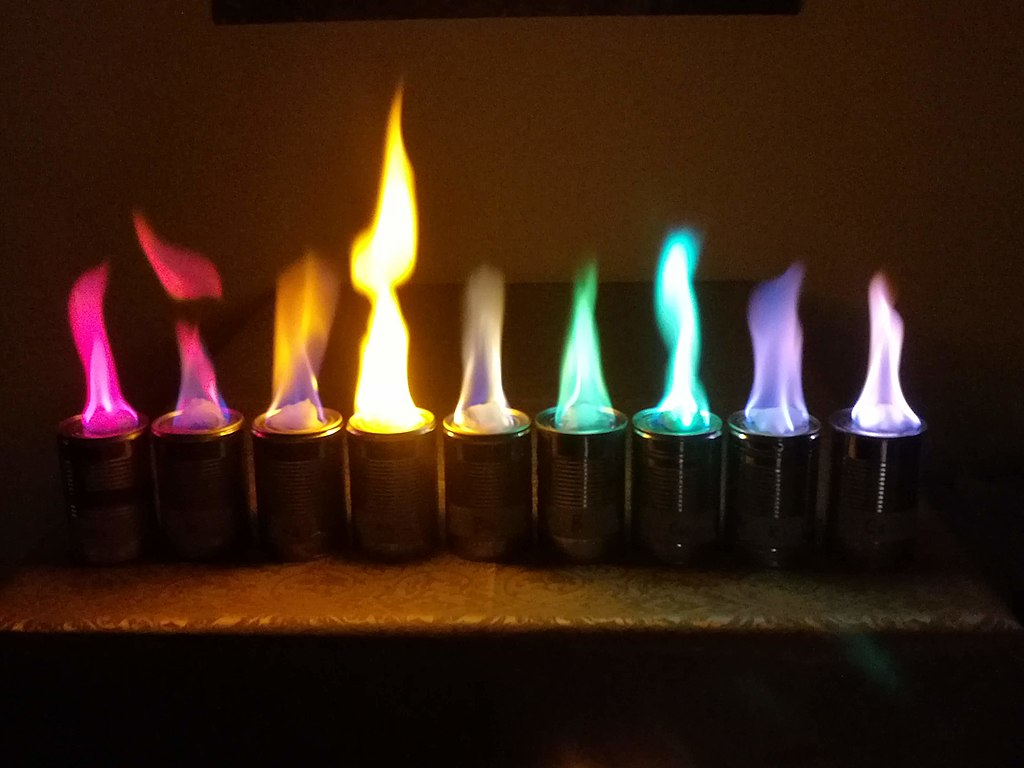
Flame Test
A flame test is relatively quick test for the presence of some elements in a sample. The technique is archaic and of questionable reliability, but once was a component of qualitative inorganic analysis. The phenomenon is related to pyrotechnics and atomic emission spectroscopy. The color of the flames is understood through the principles of atomic electron transition and photoemission, where varying elements require distinct energy levels (photons)
-

Delta endotoxins (δ-endotoxins) are pore-forming toxins produced by Bacillus thuringiensis species of bacteria. They are useful for their insecticidal action and are the primary toxin produced by Bt maize/corn.
Bt maize/Bt corn is a variant of maize that has been genetically altered to express one or more proteins from the bacteriumBacillus thuringiensis including Delta endotoxins. During spore formation the bacteria produce crystals of such proteins (hence the name Cry toxins) that are also known as parasporal bodies, next to the endospores; as a result some members are known as a parasporin. The Cyt (cytolytic) toxin group is a group of delta-endotoxins different from
-
Ovalbumin
Ovalbumin (abbreviated OVA) is the main protein found in egg white, making up approximately 55% of the total protein. Ovalbumin displays sequence and three-dimensional homology to the serpin superfamily, but unlike most serpins it is not a serine protease inhibitor. The function of ovalbumin is unknown, although it is presumed to be a storage protein. Storage proteins Storage proteins serve as biological reserves of metal ions and amino acids, used by organisms. They
-

Tobacco-derived 4R-cembranoid confers neuroprotection against LPS-induced hippocampal inflammation in mice (decreases levels of pro-inflammatory cytokines; improves memory function; activates STAT3, Akt1, and CREB phosphorylation; and upregulates the mRNA levels of ORM2, GDNF, and C3) independent of the α7 nicotinic receptor
Rojas-Colón, L.A., Dash, P.K., Morales-Vías, F.A. et al. 4R-cembranoid confers neuroprotection against LPS-induced hippocampal inflammation in mice. J Neuroinflammation 18, 95 (2021). https://doi.org/10.1186/s12974-021-02136-9 LPS: Lipopolysaccharide “4R protects the hippocampus against inflammation and memory impairments triggered by LPS by lowering TNF-α and IL-1β levels and activation of the Akt1 and CREB signaling pathways. Astrocyte proteins involved in neuronal survival also
-
Tobacco-derived 4R-cembranoid protects neuronal cells from oxygen-glucose deprivation by modulating microglial cell activation
Fu, Hefei et al. “4R-cembranoid protects neuronal cells from oxygen-glucose deprivation by modulating microglial cell activation.” Brain research bulletin vol. 179 (2022): 74-82. doi:10.1016/j.brainresbull.2021.12.007 In the search for novel compounds to treat neurodegenerative diseases, we found that 4R-cembranoid, an extract from tobacco leaves, may be a lead compound with anti-inflammatory and neuroprotective properties. 4R belongs to the
-
Patent for protecting and treating organophosphate-induced neuronal injury with tobacco-derived cembranoids and analogues
Ford, Byron, Ferchmin Peter, Eterovic, Vesna, Methods and compositions for protecting and treating neuroinjury (Patent), United States Grant US-8530525-B2 Assignee: Central University of the Caribbean, Morehouse School of Medicine, Status: Active, Expires 2031-05-19, Document history 2013-09-10 Publication date, 2010-07-01 Filing date, 2009-07-14 Priority date. Funded by National Institute of Neurological Disorders and Stroke, National Institute on Minority Health and
-
Identification of cembratriene-4,6-diol as antitumor-promoting agent from cigarette smoke condensate
Yutaka Saito, Haruo Takizawa, Sumie Konishi, Daisuke Yoshida, Shigenobu Mizusaki, Identification of cembratriene-4,6-diol as antitumor-promoting agent from cigarette smoke condensate, Carcinogenesis, Volume 6, Issue 8, August 1985, Pages 1189–1194, https://doi.org/10.1093/carcin/6.8.1189
Recent Posts
- TON vs. Global Trends and National Enrollment

- TON vs. Smoking Bans & Smoker/Nonsmoker Disparity
- Titles of Nobility (TON) Prohibitions Around the World
- How TON Breaks Party Chains – Constitutional Fire Version 🔥
- Why We Have a Department of Labor (When TON Says We Shouldn’t Need One)
Tags
2025 agriculture alchemy anthropology archaeology art biochemistry biography biology chemistry civil rights crystallography culture duplicate ecology economics endocrinology entertainment entomology folklore genetics geology glossary hematology history immunology law linguistics materials science medicine mythology neurology philosophy physiology politics psychology public health religion reproduction science smoker's paradox symbolism systems theory technology toxicology