-
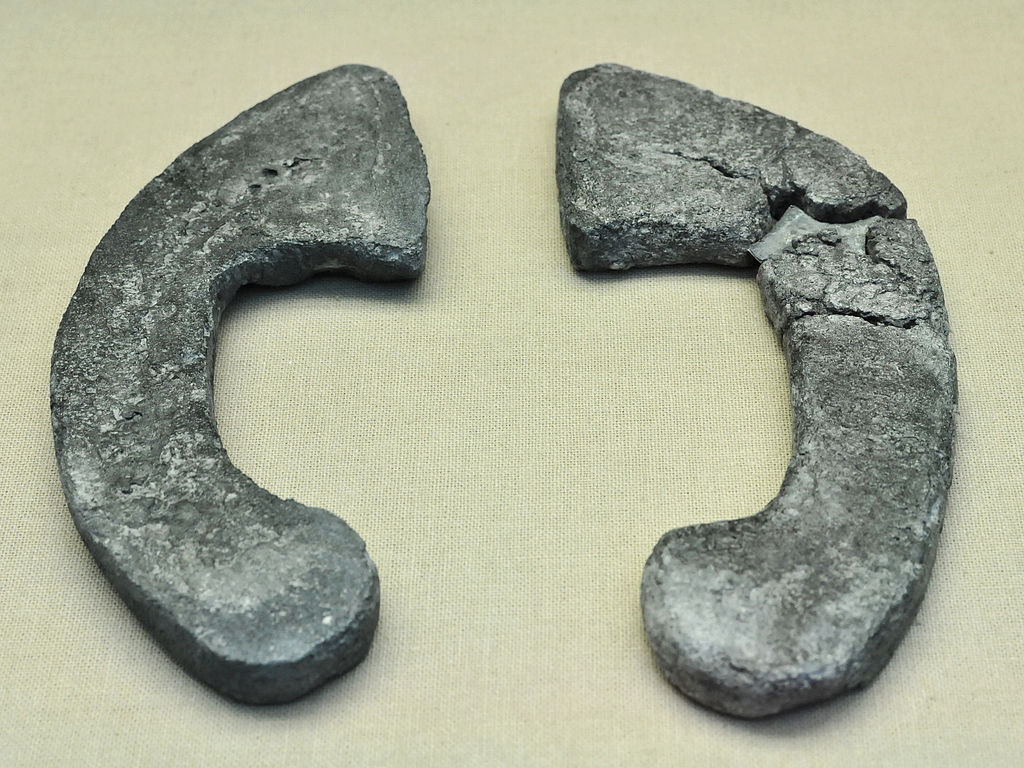
Halteres, the dumbbells of Ancient Greece
Halteres (Greek: ἁλτῆρες, from “ἅλλομαι” – hallomai, “leap, spring”; cf. “ἅλμα” – halma, “leaping”) were a type of DUMBBELLS used in Ancient Greece. In Ancient Greek sports, halteres were used as lifting weights, and also as weights in their version of the long jump. Halteres were held in both hands to allow an athlete to jump a greater distance; they may have been dropped after the first or
-
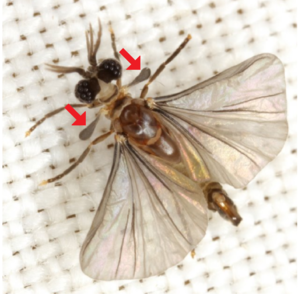
Halteres Are Club-Shaped Organs on Flying Insects That Give Data About Body Rotation During Flight
Halteres (singular halter or haltere) (from Ancient Greek: ἁλτῆρες, hand-held weights to give an impetus in leaping) are a pair of small club-shaped organs on the body of two orders of flying insects that provide information about body rotations during flight. Insects of the large order Diptera (flies) have halteres which evolved from a pair of ancestral hindwings, while males of the much smaller order Strepsiptera (stylops) have halteres which evolved from
-

Structure of DNA repair protein XRCC4 aka X-ray repair cross-complementing protein 4
XRCC4 protein is a TETRAMER that resembles the shape of a DUMBBELL containing two globular ends separated by a long, thin stalk. The tetramer is composed of two dimers, and each dimer is made up of two similar subunits. The first subunit (L) contains amino acid residues 1 – 203 and has a longer stalk than the second
-
Silicene is a two-dimensional allotrope of silicon, with a hexagonal honeycomb structure similar to that of graphene
Contrary to graphene, silicene is not flat, but has a periodically buckled topology; the coupling between layers in silicene is much stronger than in multilayered graphene; and the oxidized form of silicene, 2D silica, has a very different chemical structure from graphene oxide. History Although theorists had speculated about the existence and possible properties of free-standing silicene, researchers
-
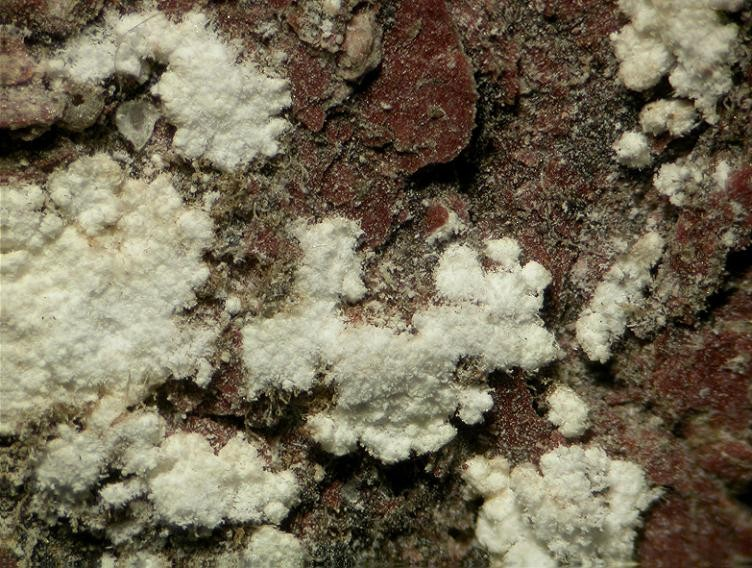
Weddellite and Whewellite
Weddellite (CaC2O4·2H2O) is a mineral form of calcium oxalate named for occurrences of millimeter-sized crystals found in bottom sediments of the Weddell Sea, off Antarctica. Occasionally, weddellite partially dehydrates to whewellite, forming excellent pseudomorphs of grainy whewellite after weddellite’s short tetragonal dipyramids. It was first described in 1936 but only named in 1942. Structural properties Weddellite, or calcium oxalate dihydrate, crystallises in a tetragonal system: the classic crystal
-
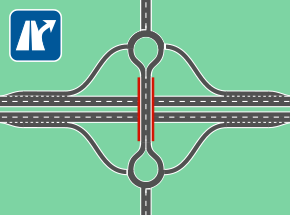
Diamond Interchanges
Dumbbell For the at-grade intersection design analogous to dumbbell and dogbone interchanges, see Bowtie (road). The ramp intersections may also be configured as a pair of roundabouts to create a type of diamond interchange often called a dumbbell interchange (due to its aerial resemblance to a dumbbell), and sometimes called a double roundabout interchange. Because roundabouts can generally handle traffic with fewer approach
-
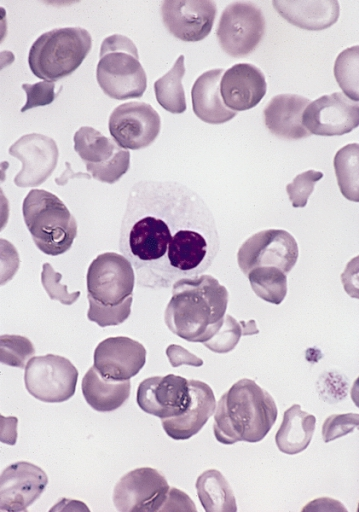
Pelger–Huët Anomaly, Congenital and Acquired, Pince-Nez, Laminopathy and A Little Ebola
Pelger–Huët anomaly is a blood laminopathy associated with the lamin B receptor, wherein several types of white blood cells (neutrophils and eosinophils) have nuclei with unusual shape (being bilobed, peanut or dumbbell-shaped instead of the normal trilobed shape) and unusual structure (coarse and lumpy). It is a genetic disorder with an autosomal dominant inheritance pattern. Heterozygotes are clinically normal, although their neutrophils may be mistaken for immature cells which may cause
-
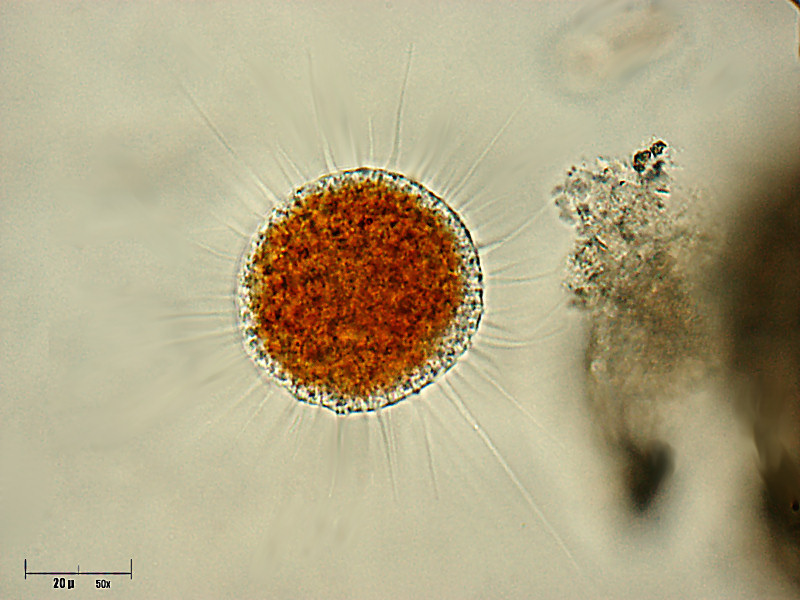
Vampyrella mitosis
Orthomitosis in Vampyrella occurs late in the cyst stage. Neither microtubule organizing centers (MTOCs) nor centrioles are present during mitosis. While in the trophozoite life stage and early cyst stage, the cell is in interphase. Heterochromatin decrease upon entering the cyst stage as the cell prepares for mitosis. The spherical nuclei increase in size from 1.5-2.0 µm in
-
Quasiracemate – Racemic mixture
There are four ways to crystallize a racemate; three of which H. W. B. Roozeboom had distinguished by 1899 and this is one of them. QuasiracemateA quasiracemate is a co-crystal of two similar but distinct compounds, one of which is left-handed and the other right-handed. Although chemically different, they are sterically similar (isosteric) and are still able
Recent Posts
- TON vs. Global Trends and National Enrollment

- TON vs. Smoking Bans & Smoker/Nonsmoker Disparity
- Titles of Nobility (TON) Prohibitions Around the World
- How TON Breaks Party Chains – Constitutional Fire Version 🔥
- Why We Have a Department of Labor (When TON Says We Shouldn’t Need One)
Tags
2025 agriculture alchemy anthropology archaeology art biochemistry biography biology chemistry civil rights crystallography culture duplicate ecology economics endocrinology entertainment entomology folklore genetics geology glossary hematology history immunology law linguistics materials science medicine mythology neurology philosophy physiology politics psychology public health religion reproduction science smoker's paradox symbolism systems theory technology toxicology