-

Sodium aurothiomalate aka gold sodium thiomalate
Sodium aurothiomalate (INN, known in the United States as gold sodium thiomalate) is a gold compound that is used for its immunosuppressive anti-rheumatic effects. Along with an orally-administered gold salt, auranofin, it is one of only two gold compounds currently employed in modern medicine. Medical uses It is primarily given once or twice weekly by intramuscular injection for moderate-severe rheumatoid arthritis. It has also proven to
-
Thrombin
Thrombin (fibrinogenase, thrombase, thrombofort, topical, thrombin-C, tropostasin, activated blood-coagulation factor II, blood-coagulation factor IIa, factor IIa, E thrombin, beta-thrombin, gamma-thrombin) is a serine protease, an enzyme that, in humans, is encoded by the F2 gene. During the clotting process, prothrombin (coagulation factor II) is proteolytically cleaved by the prothrombinase enzyme complex to form thrombin. Thrombin in turn acts as a serine protease that converts soluble fibrinogen into insoluble strands of fibrin, as well as catalyzing many other coagulation-related reactions. History After the description
-
Microsomal Prostaglandin E Synthase-1 (mPGES-1)
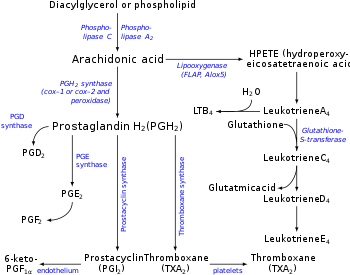
Microsomal prostaglandin E synthase-1 (mPGES-1) or Prostaglandin E synthase is an enzyme that in humans is encoded by the PTGES gene. The protein encoded by this gene is a glutathione-dependent prostaglandin E synthase. The expression of this gene has been shown to be induced by proinflammatory cytokine interleukin 1 beta (IL1B). Its expression can also be induced by tumor suppressor protein TP53, and may be involved in
-
Elastase
In molecular biology, elastase is an enzyme from the class of proteases (peptidases) that break down proteins. In particular, it is a serine protease. Forms and classification Eight human genes exist for elastase: Family Gene symbol Protein name EC number Approved Previous Approved Previous chymotrypsin-like CELA1 ELA1 chymotrypsin-like elastase family, member 1 elastase 1, pancreatic EC 3.4.21.36 CELA2A ELA2A chymotrypsin-like elastase family, member 2A elastase 2A, pancreatic EC 3.4.21.71 CELA2B
-
β-Glucuronidases
For α-glucuronidase, see alpha-glucuronidase. β-Glucuronidase β-Glucuronidase asymmetric unit showing active site residues Glu451, Tyr504, and Glu540, along with the potentially supporting Asn450 residue Identifiers Symbol GUSB NCBI gene 2990 HGNC 4696 OMIM 611499 RefSeq NM_000181 UniProt P08236 Other data EC number 3.2.1.31 Locus Chr. 7 q11.21 β-Glucuronidases are members of the glycosidase family of enzymes that catalyze breakdown of complex carbohydrates. Human β-glucuronidase is
-
Testican
Testican is a type of proteoglycan. Testican-1 is a highly conserved, multidomain proteoglycan that is most prominently expressed in the thalamus, and is upregulated in activated astroglial cells of the cerebrum. Several functions of this gene product have now been demonstrated in vitro including membrane-type matrix metalloproteinase inhibition, cathepsin L inhibition, and low-affinity calcium binding. The purified gene product has been shown to inhibit cell attachment
-
Keratocan (KTN)
Keratocan (KTN) also known as keratan sulfate proteoglycan keratocan, is a protein that in humans is encoded by the KERA gene. Keratan sulfate proteoglycans (KSPGs) are members of the small leucine-rich proteoglycan (SLRP) family. KSPGs, particularly keratocan, lumican and mimecan, are important to the transparency of the cornea. Mutations of the gene cause cornea plana 2. Cornea plana 2(CNA2) causes the cornea to flatten and the angle between the sclera and cornea to shrink. This
-
Lumican aka LUM
Lumican, also known as LUM, is an extracellular matrix protein that, in humans, is encoded by the LUM gene on chromosome 12. Structure Lumican is a proteoglycan Class II member of the small leucine-rich proteoglycan (SLRP) family that includes decorin, biglycan, fibromodulin, keratocan, epiphycan, and osteoglycin. Like the other SLRPs, lumican has a molecular weight of about 40 kilodaltons and has four major intramolecular domains: There are four N-linked sites within
-
Keratan sulfate (KS) aka keratosulfate
Not to be confused with Keratin. Keratan sulfate (KS), also called keratosulfate, is any of several sulfated glycosaminoglycans (structural carbohydrates) that have been found especially in the cornea, cartilage, and bone. It is also synthesized in the central nervous system where it participates both in development and in the glial scar formation following an injury. Keratan sulfates are large, highly hydrated molecules which in joints can act as a cushion to
-
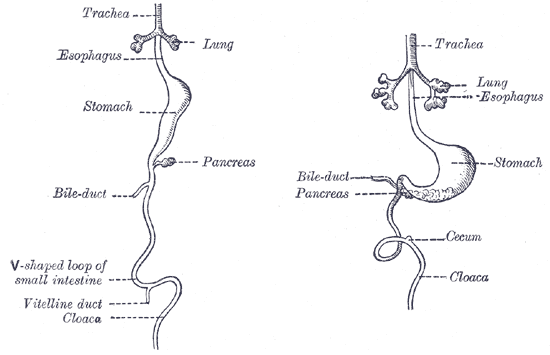
Vitelline duct connects the yolk sac to the small intestine. This duct obliterates when the embryo is about 6 weeks old. Complete failure of the duct to obliterate results in a fistula from the ileum to the umbilicus (vitelline fistula).
In the human embryo, the vitelline duct, also known as the vitellointestinal duct, the yolk stalk, the omphaloenteric duct, or the omphalomesenteric duct, is a long narrow tube that joins the yolk sac to the midgut lumen of the developing fetus. It appears at the end of the fourth week, when the yolk sac (also known as the umbilical vesicle) presents the appearance of a small pear-shaped vesicle. Function Obliteration Generally, the duct
Recent Posts
- Corporate “persons” are a perfect example of a Titles of Nobility (TON) violation

- TON vs. Global Trends and National Enrollment
- TON vs. Smoking Bans & Smoker/Nonsmoker Disparity
- Titles of Nobility (TON) Prohibitions Around the World
- How TON Breaks Party Chains – Constitutional Fire Version 🔥
Tags
2025 agriculture alchemy anthropology archaeology art biochemistry biography biology chemistry civil rights crystallography culture duplicate ecology economics endocrinology entertainment entomology folklore genetics geology glossary hematology history immunology law linguistics materials science medicine mythology neurology philosophy physiology politics psychology public health religion reproduction science smoker's paradox symbolism systems theory technology toxicology