-

Hephaestin, first identified in 1999 is homologous with ceruloplasmin
Named after Hephaestus, the Greek god of metal working
-
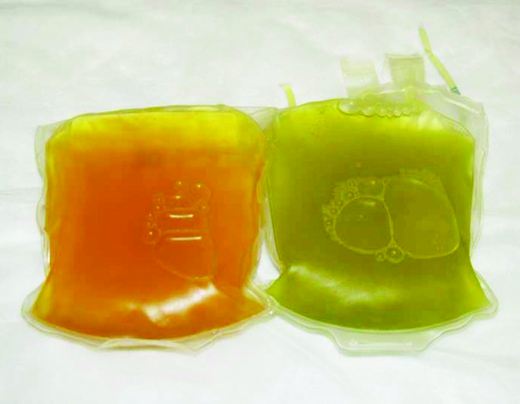
Nabil M. Elkassabany, Geralyn M. Meny, Rafael R. Doria, Catherine Marcucci; Green Plasma—Revisited. Anesthesiology 2008; 108:764–765 doi: https://doi.org/10.1097/ALN.0b013e3181672668
We could find no reports on green plasma in the past 40 yr in either the surgical or the anesthesia literature, which perhaps explains the lack of knowledge on the part of today’s clinicians. However, we found several articles dating back to the 1960s. At that time, green plasma was appearing in blood banks in
-
It Ain’t Easy Being Green
Is this why they have gone off the rails with the beta carotene and related things? Thoughts for another day. A search for “green plasma” at pubmed turns up 130 articles from 1965 to present. A search for green plasma (without the marks) or ‘green plasma’ at the same place turns up 1280 articles from
-
Wolf P, Enlander D, Dalziel J, Swanson J. Green plasma in blood donors. N Engl J Med. 1969 Jul 24;281(4):205. doi: 10.1056/NEJM196907242810407. PMID: 5790495.
ABSTRACT: Recently we have noticed that many plasmas in female blood donors have been extremely green. A green plasma in a unit of blood usually suggests the presence of a gram-negative cryophilic organism such as pseudomonas producing a green pigment that could cause shock if the unit were used, and these units should therefore be
-
Tovey LA, Lathe GH. Caeruloplasmin and green plasma in women taking oral contraceptives, in pregnant women, and in patients with rheumatoid arthritis. Lancet. 1968 Sep 14;2(7568):596-600. PMID: 4175158.
ABSTRACT: Of blood donations reaching the Leeds Regional Blood Transfusion Laboratory about 1% have green plasma. Most of these come from women taking oral contraceptives, who constitute about 6% of the blood-donor population. The three conditions in which green plasma is found all have elevated amounts of the blue plasma-protein, cæruloplasmin. A reduction in yellow
-
Ceruloplasmin carries more than 95% of the total copper in healthy human plasma and in addition plays a role in iron metabolism. It was first described in 1948.
Ceruloplasmin (or caeruloplasmin) is a ferroxidase enzyme that in humans is encoded by the CP gene. Ceruloplasmin is the major copper-carrying protein in the blood, and in addition plays a role in iron metabolism. It was first described in 1948. Another protein, hephaestin, is noted for its homology to ceruloplasmin, and also participates in iron and probably copper metabolism. Function Ceruloplasmin (CP) is an enzyme (EC 1.16.3.1) synthesized
-

Follistatin AKA Activin-Binding Protein and FSH-Suppressing Protein (FSP) Wiki
Follistatin also known as activin-binding protein is a protein that in humans is encoded by the FST gene. Follistatin is an autocrine glycoprotein that is expressed in nearly all tissues of higher animals. Its primary function is the binding and bioneutralization of members of the TGF-β superfamily, with a particular focus on activin, a paracrine hormone. An earlier name for the same protein was FSH-suppressing protein (FSP). At the time of its
-
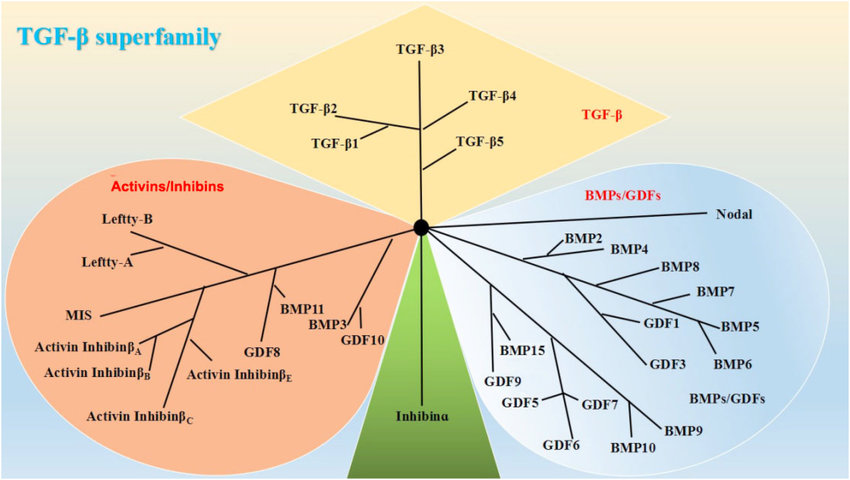
The transforming growth factor beta receptors
a family of serine/threonine kinase receptors involved in TGF beta signaling pathway
-
Adrenodoxin and Adrenodoxin reductase
Adrenal ferredoxin (also adrenodoxin (ADX), adrenodoxin, mitochondrial, hepatoredoxin, ferredoxin-1 (FDX1)) is a protein that in humans is encoded by the FDX1 gene. In addition to the expressed gene at this chromosomal locus (11q22), there are pseudogenes located on chromosomes 20 and 21. Function Adrenodoxin is a small iron-sulfur protein that can accept and carry a single electron. Adrenodoxin functions as an electron transfer protein in the
-
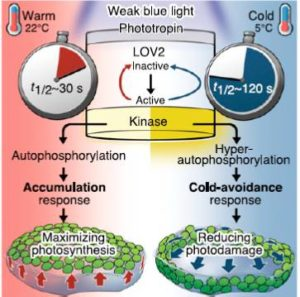
Phototropins are part of the phototropic sensory system in plants that causes various environmental responses in plants
Phototropins are photoreceptor proteins (more specifically, flavoproteins) that mediate phototropism responses in various species of algae, fungi and higher plants. Note: Flavoproteins are proteins that contain a nucleic acid derivative of riboflavin. These proteins are involved in a wide array of biological processes, including removal of radicals contributing to oxidative stress, photosynthesis, and DNA repair. The flavoproteins are some of the most-studied families of enzymes. Flavoproteins have either FMN (flavin mononucleotide) or FAD
Recent Posts
- Aristocracy is a poisonous weed and the TON clauses are weedkiller (in the unhinged spirit of Justice Scalia)

- Adams and Jefferson on Aristocracy: A Structural Disagreement in the Early Republic
- John Adams — Opinions of Philosophers — Anti‑Caste Constitutional Foundations
- Corporate “persons” are a perfect example of a Titles of Nobility (TON) violation
- TON vs. Global Trends and National Enrollment
Tags
2025 agriculture alchemy anthropology archaeology art biochemistry biography biology chemistry civil rights crystallography culture duplicate ecology economics endocrinology entertainment entomology folklore genetics geology glossary hematology history immunology law linguistics materials science medicine mythology neurology philosophy physiology politics psychology public health religion reproduction science smoker's paradox symbolism systems theory technology toxicology