-
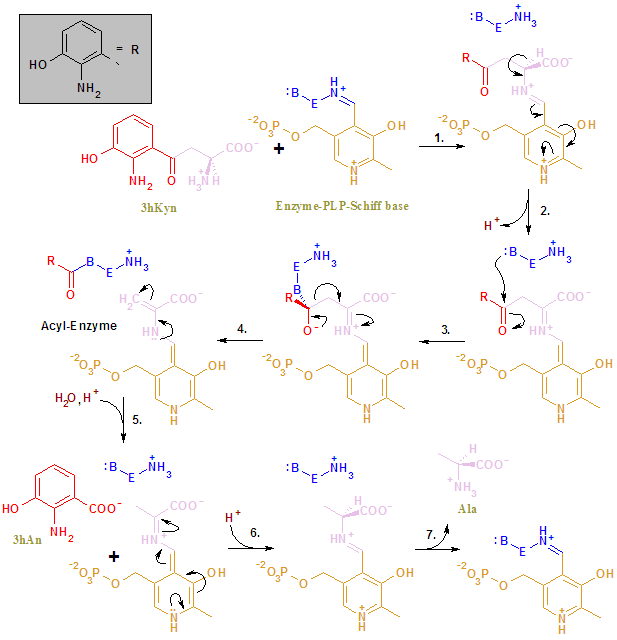
Kynureninase or L-Kynurenine hydrolase (KYNU) is part of the pathway for the catabolism of Trp and the biosynthesis of NAD cofactors from tryptophan (Trp).
Kynureninase or L-Kynurenine hydrolase (KYNU) (EC 3.7.1.3) is a PLP dependent enzyme that catalyses the cleavage of kynurenine (Kyn) into anthranilic acid (Ant). It can also act on 3-hydroxykynurenine (to produce 3-hydroxyanthranilate) and some other (3-arylcarbonyl)-alanines. Note: 3-Hydroxykynurenine is a metabolite of tryptophan, which filters UV light in the human lens. It is one of two pigments identified as responsible for the goldenrod crab spider‘s (Misumena vatia) yellow coloration. 3-Hydroxyanthranilic acid is an intermediate in the metabolism of tryptophan. It
-
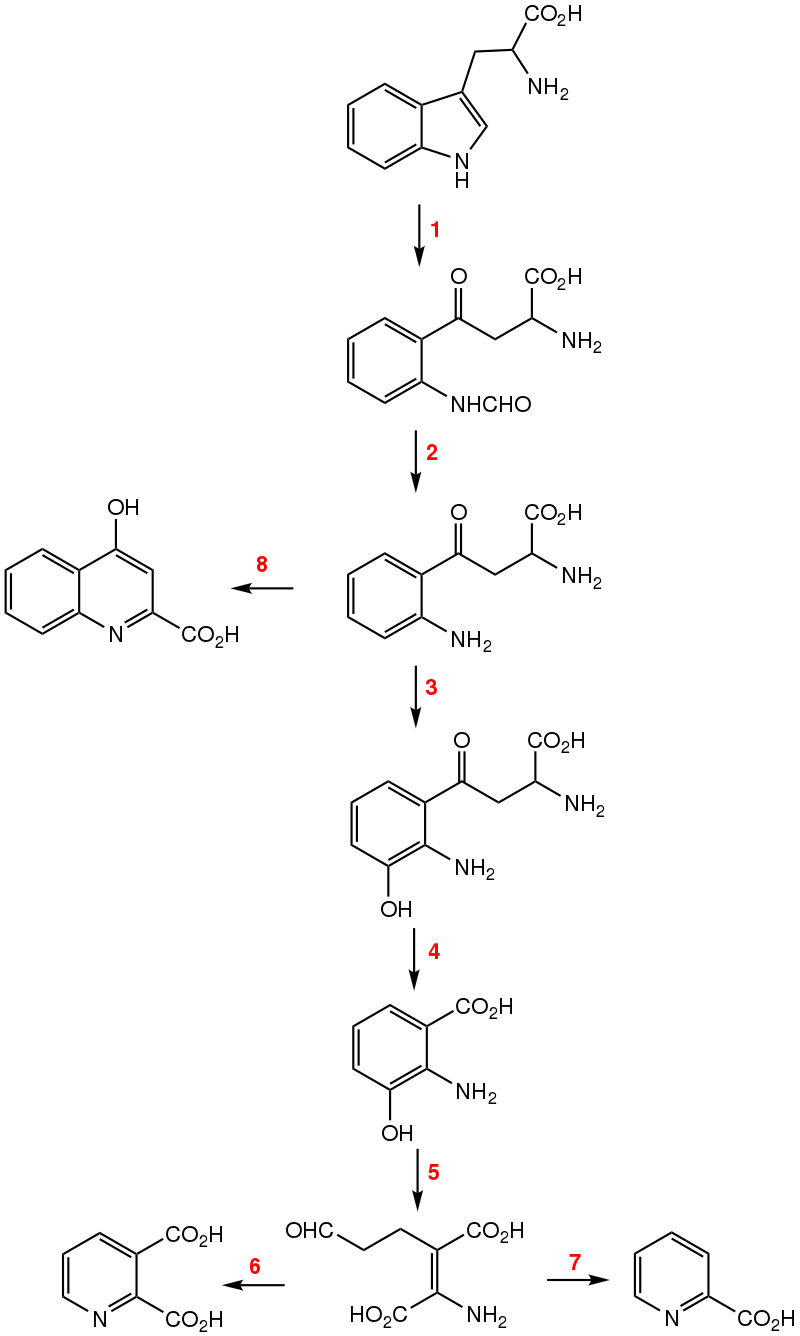
Ommochrome (Visual Pigment) and Kynurenine (L-Tryptophan Metabolite Used in Production of Niacin)
Ommochrome (or visual pigment) refers to several biological pigments that occur in the eyes of crustaceans and insects. The eye color is determined by the ommochromes. Ommochromes are also found in the chromatophores of cephalopods, and in spiders. Ommochromes are metabolites of tryptophan, via kynurenine and 3-hydroxykynurenine. They are responsible for a wide variety of colors, ranging from yellow over red and brown to black. Lighter colors tend to be generated by ommatins,
-
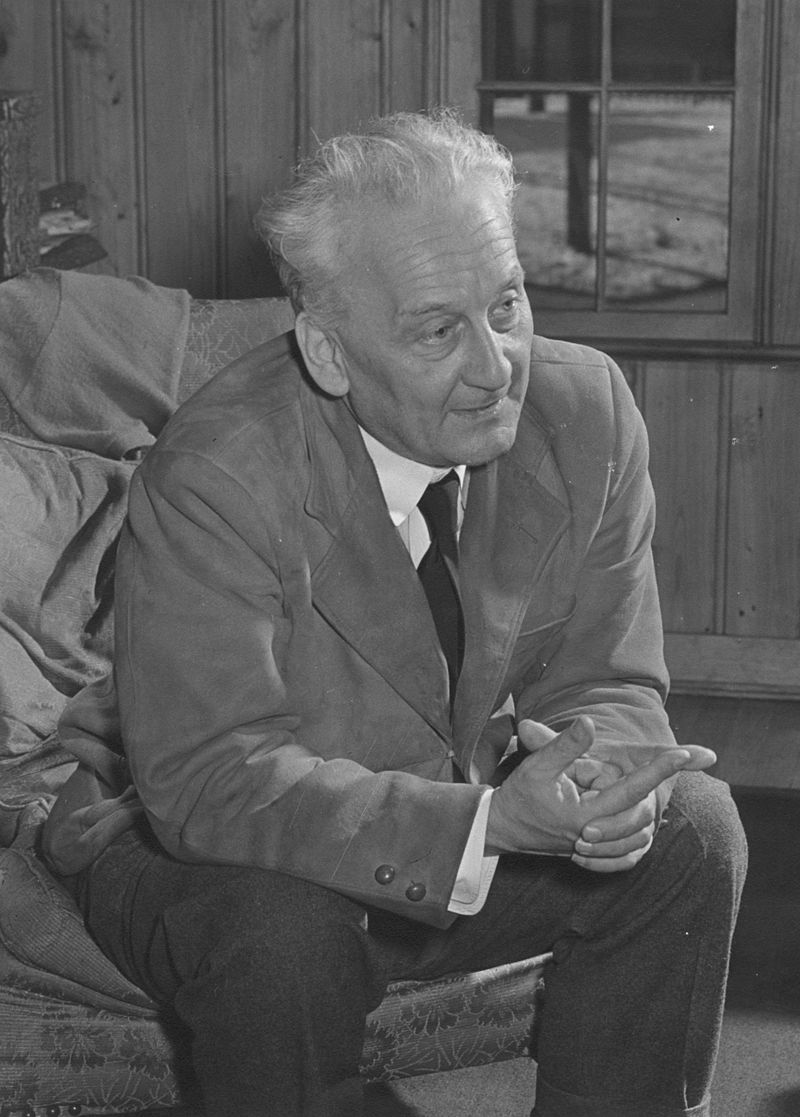
Albert Imre Szent-Györgyi – From Transylvania to Woods Hole (Vitamin C, Fumaric Acid, WWI, WWII, Vietnam War, Actin, Myosin, Muscles, Adrenal glands, Cancer, a Nobel prize, Apollonians and Dionysians, and something called the Constitution for the Federation of Earth)
Albert Imre Szent-Györgyi[a] de Nagyrápolt (Hungarian: nagyrápolti Szent-Györgyi Albert Imre; September 16, 1893 – October 22, 1986) was a Hungarian biochemist who won the Nobel Prize in Physiology or Medicine in 1937. He is credited with first isolating vitamin C and discovering the components and reactions of the citric acid cycle. He was also active in the Hungarian Resistance during World War II, and entered Hungarian politics after the
-
Streptomyces is the largest antibiotic-producing genus, producing antibacterial, antifungal, and antiparasitic drugs, and also a wide range of other bioactive compounds, such as immunosuppressants.
Streptomyces is the largest genus of Actinomycetota, and the type genus of the family Streptomycetaceae. Over 700 species of Streptomyces bacteria have been described. As with the other Actinomycetota, streptomycetes are gram-positive, and have very large genomes with high GC content. Found predominantly in soil and decaying vegetation, most streptomycetes produce spores, and are noted for their distinct “earthy” odor that results from production of a volatile metabolite, geosmin. Different strains of the
-

Sterol carrier proteins (aka nonspecific lipid transfer proteins)
These proteins are different from plant nonspecific lipid transfer proteins but structurally similar to small proteins of unknown function from Thermus thermophilus. This domain is involved in binding sterols. The human sterol carrier protein 2 (SCP2) is a basic protein that is believed to participate in the intracellular transport of cholesterol and various other lipids. Human
-
Glucuronic acid is a uronic acid that was first isolated from urine
Glucuronic acid (from Greek γλεῦκος “wine, must” and οὖρον “urine“) is a uronic acid that was first isolated from urine (hence the name”uronic acid”). It is found in many gums such as gum arabic (approx. 18%), xanthan, and kombucha tea and is important for the metabolism of microorganisms, plants and animals. Not to be confused with Gluconic acid (Gluconic acid occurs naturally in fruit, honey, and wine. As a food additive E574, it is now known as an acidity regulator.
-
Amygdalin and Laetrile
Amygdalin (from Ancient Greek: ἀμυγδαλή amygdalē “almond”) is a naturally occurring chemical compound found in many plants, most notably in the seeds (kernels) of apricots, bitter almonds, apples, peaches, cherries and plums, and in the roots of manioc. Amygdalin is classified as a cyanogenic glycoside, because each amygdalin molecule includes a nitrile group, which can be released as the toxic cyanide anion by the action of a beta-glucosidase. Eating amygdalin will cause it to release cyanide
-

UNITED STATES v. RUTHERFORD, 442 U.S. 544 (1979)
The question presented in this case is whether the Federal Food, Drug, and Cosmetic Act precludes terminally ill cancer patients from obtaining Laetrile, a drug not recognized as “safe and effective” within the meaning of § 201(p)(1) of the Act, 52 Stat. 1041, as amended, 21 U.S.C. § 321 (p)(1). Terminally ill cancer patients and their
-
Deficiency of Adenosine deaminase 2 (DADA2)
Deficiency of Adenosine deaminase 2 (DADA2) is a monogenic disease associated with systemic inflammation and vasculopathy that affects a wide variety of organs in different patients. As a result, it is hard to characterize a patient with this disorder. Manifestations of the disease include but are not limited to recurrent fever, livedoid rash (reticularis or racemosa), various cytopenias, stroke, immunodeficiency, and bone marrow failure. Symptoms often onset during
-
Adenosine deaminase deficiency (ADA deficiency) was discovered in 1972 and recognized as the first immunodeficiency disorder
Adenosine deaminase deficiency (ADA deficiency) is a metabolic disorder that causes immunodeficiency. It is caused by mutations in the ADA gene. It accounts for about 10–15% of all cases of autosomal recessive forms of severe combined immunodeficiency (SCID) among non-inbred populations. ADA deficiency can present in infancy, childhood, adolescence, or adulthood. Age of onset and severity is related to some 29 known genotypes associated with the disorder. It occurs
Recent Posts
- Adams and Jefferson on Aristocracy: A Structural Disagreement in the Early Republic

- John Adams — Opinions of Philosophers — Anti‑Caste Constitutional Foundations
- Corporate “persons” are a perfect example of a Titles of Nobility (TON) violation
- TON vs. Global Trends and National Enrollment
- TON vs. Smoking Bans & Smoker/Nonsmoker Disparity
Tags
2025 agriculture alchemy anthropology archaeology art biochemistry biography biology chemistry civil rights crystallography culture duplicate ecology economics endocrinology entertainment entomology folklore genetics geology glossary hematology history immunology law linguistics materials science medicine mythology neurology philosophy physiology politics psychology public health religion reproduction science smoker's paradox symbolism systems theory technology toxicology