-

The Goldfinch in art
The goldfinch is a widespread and common seed-eating bird in Europe, North Africa, and western and central Asia. As a colourful species with a pleasant twittering song, and an associated belief that it brought health and good fortune, it had been domesticated for at least 2,000 years. Pliny recorded that it could be taught to do tricks, and in the
-
Goldfinch In Art
The bird that repeatedly, almost obsessively, turns up in Renaissance religious painting is the European Goldfinch Carduelis carduelis, almost always in the hands of the Infant Jesus, and symbolising variously the soul, resurrection, sacrifice and death, but with a particular further dimension of meaning, following the plagues of the fourteenth century, as an augur (and hence
-

Thistle Tubes, Thistle Feeders, Distelfinks and Goldfinches Wiki
A thistle tube is a piece of laboratory glassware consisting of a shaft of tube, with a reservoir and funnel-like section at the top. Thistle tubes are typically used by chemists to add liquid to an existing system or apparatus. Thistle funnels are used to add small volumes of liquids to an exact position. Thistle funnels are found with or without taps. Since they’re
-
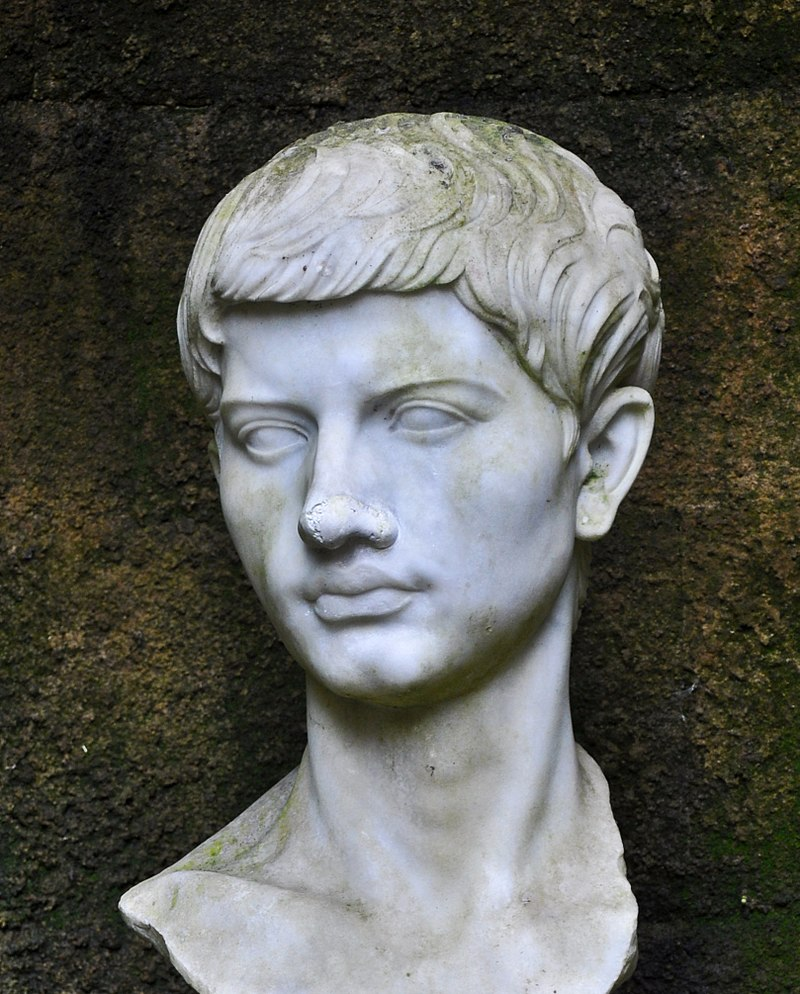
Virgil was a sorcerer?
Publius Vergilius Maro (traditional dates 15 October 70 – 21 September 19 BC), usually called Virgil or Vergil in English, was an ancient Roman poet of the Augustan period. He composed three of the most famous poems in Latin literature: the Eclogues (or Bucolics), the Georgics, and the epic Aeneid. A number of minor poems, collected in the Appendix Vergiliana, were attributed to him in ancient times, but modern scholars consider his
-
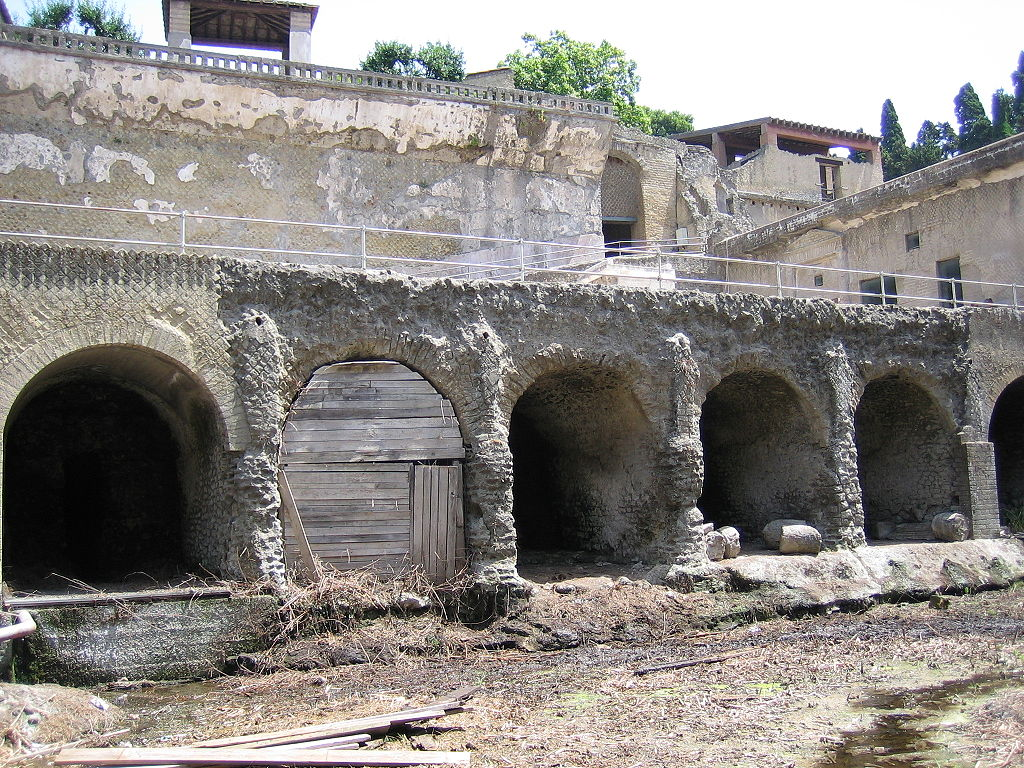
Herculaneum Was an Ancient Roman Town Buried Under Volcanic Ash and Pumice in the Eruption of Mount Vesuvius in 79 AD.
Herculaneum (Neapolitan and Italian: Ercolano) was an ancient Roman town, located in the modern-day comune of Ercolano, Campania, Italy. Herculaneum was buried under volcanic ash and pumice in the Eruption of Mount Vesuvius in 79 AD. Like the nearby city of Pompeii, Herculaneum is famous as one of the few ancient cities to be preserved nearly intact, as the ash that blanketed the town protected it against
-
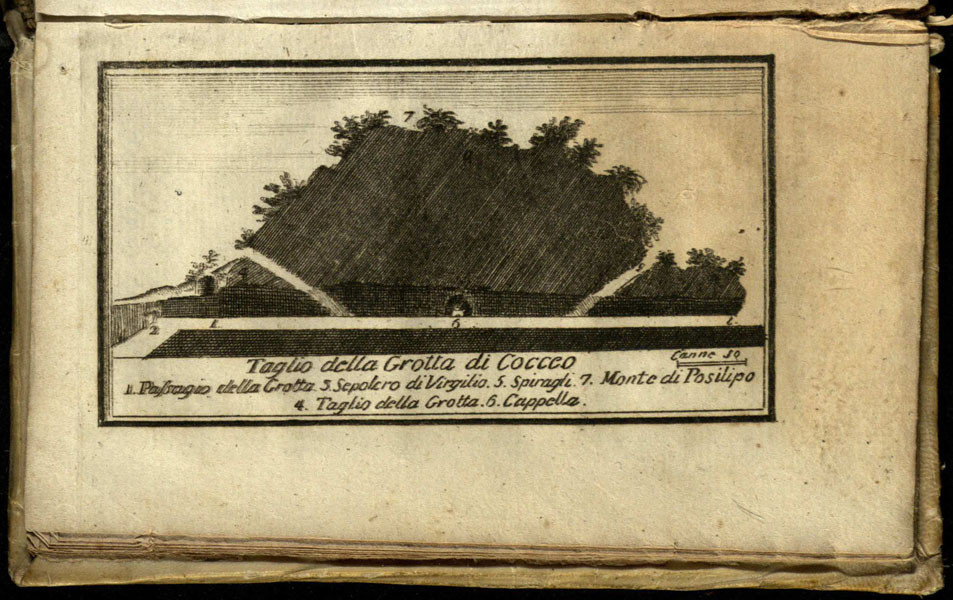
The Grotta di Cocceio is an ancient Roman tunnel connecting Lake Avernus with Cumae, dated 38-36 BC
The Grotta di Cocceio (Cocceius’ Tunnel) is an ancient Roman tunnel nearly a kilometre in length connecting Lake Avernus with Cumae and dating from 38-36 BC. It was burrowed through the tuff stone of Monte Grillo by the architect Lucius Cocceius Auctus at the command of Agrippa who was in the process of converting the Lake into a military port, the Portus Julius. The tunnel was wide enough to
-
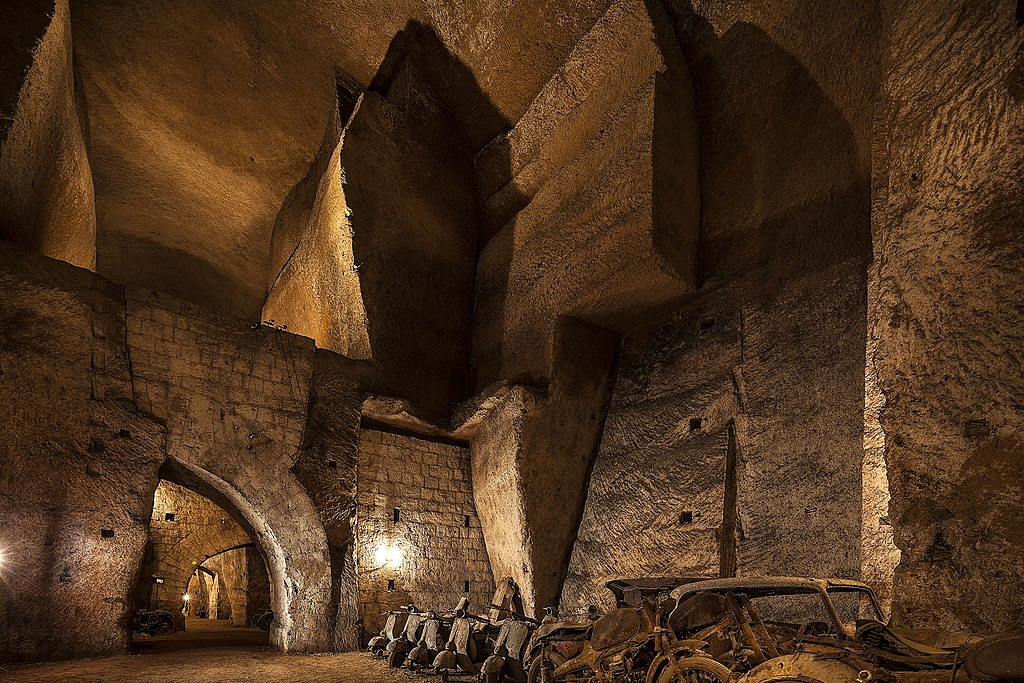
The Bourbon Tunnel
The Bourbon Tunnel, Tunnel Borbonico or Bourbon Gallery (Italian: Galleria Borbonica) is an ancient underground passage, constructed for military purposes to connect the Royal Palace to military barracks in Naples, Italy. The monarchy in the era of King Ferdinand II of Bourbon was fearful of the revolution-prone populace of Naples. Errico Alvino was commissioned to construct a military passage for troops connecting the Royal Palace of Naples to Via
-
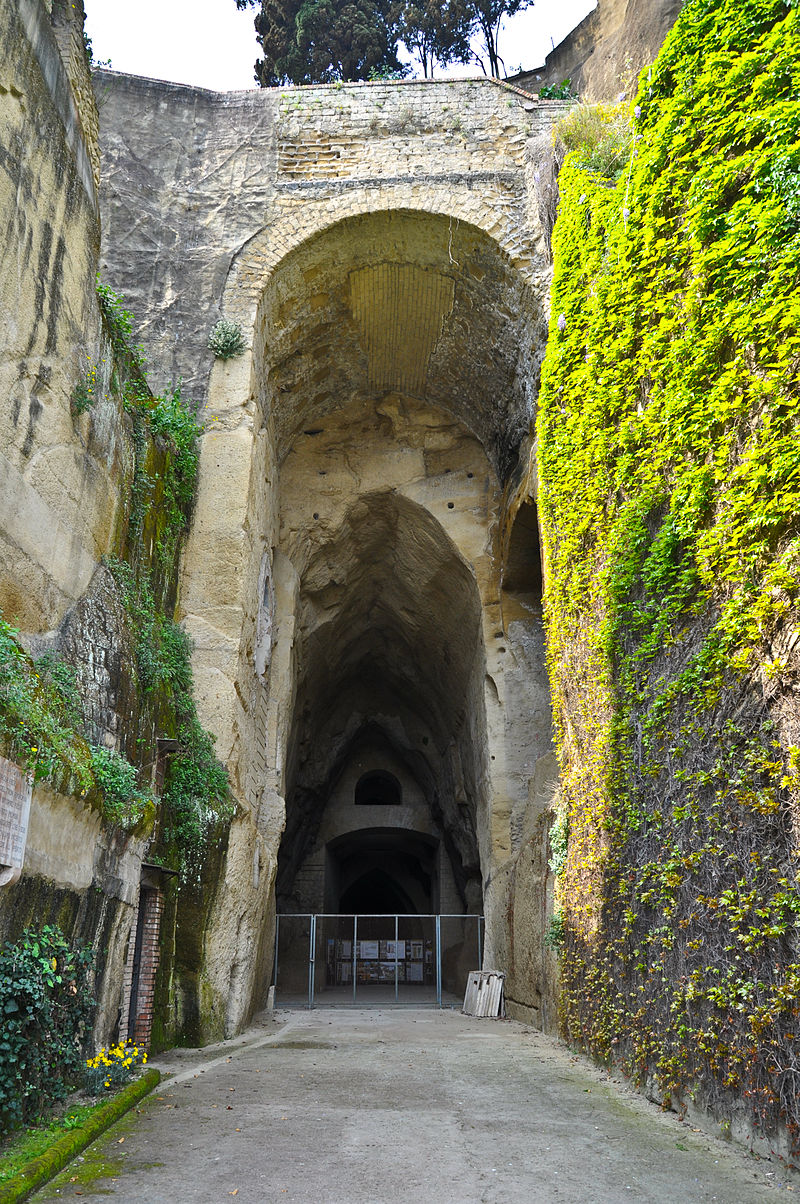
Crypta Neapolitana, Virgil’s Tomb and more
The Crypta Neapolitana (Latin for “Neapolitan crypt”) is an ancient Roman road tunnel near Naples, Italy. It was built in 37 BC and is over 700 metres long. The tunnel connected Naples with the so-called Phlegrean Fields and the town of Pozzuoli along the road known as the via Domiziana. Via Domiziana is the modern name for the Via Domitiana in the Campania region of Italy, a major Roman road built in 95 AD under (and
-
Catacombs of Saint Gaudiosus
Are you ready for a journey into the macabre underbelly of Naples? Welcome to the Catacombs of San Gaudioso, where the dead don’t just rest – they put on a show! Nestled beneath the bustling Rione Sanità district, these 4th-century catacombs are a veritable playground for the morbidly curious. Here’s what awaits you in this
-
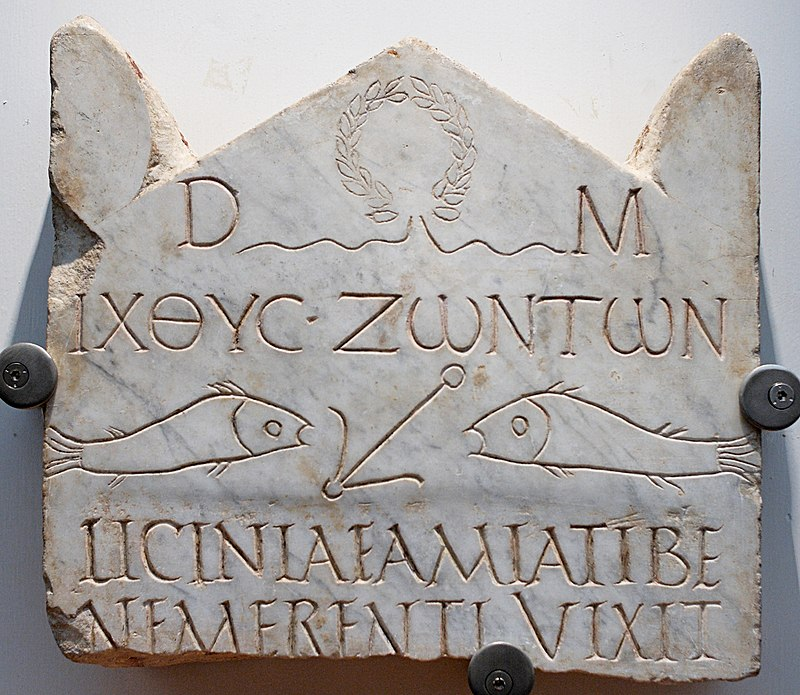
Manes or Di Manes
In ancient Roman religion, the Manes or Di Manes are chthonic deities sometimes thought to represent souls of deceased loved ones. They were associated with the Lares, Lemures, Genii, and Di Penates as deities (di) that pertained to domestic, local, and personal cult. They belonged broadly to the category of di inferi, “those who dwell below,” the undifferentiated collective of divine dead. The Manes were honored during the Parentalia and Feralia in February.
Recent Posts
- The Founders did not whisper about aristocracy. They roared. So did the Framers.

- Adams and Jefferson on Aristocracy: A Structural Disagreement in the Early Republic
- John Adams — Opinions of Philosophers — Anti‑Caste Constitutional Foundations
- Corporate “persons” are a perfect example of a Titles of Nobility (TON) violation
- TON vs. Global Trends and National Enrollment
Tags
2025 agriculture alchemy anthropology archaeology art biochemistry biography biology chemistry civil rights crystallography culture duplicate ecology economics endocrinology entertainment entomology folklore genetics geology glossary hematology history immunology law linguistics materials science medicine mythology neurology philosophy physiology politics psychology public health religion reproduction science smoker's paradox symbolism systems theory technology toxicology