-
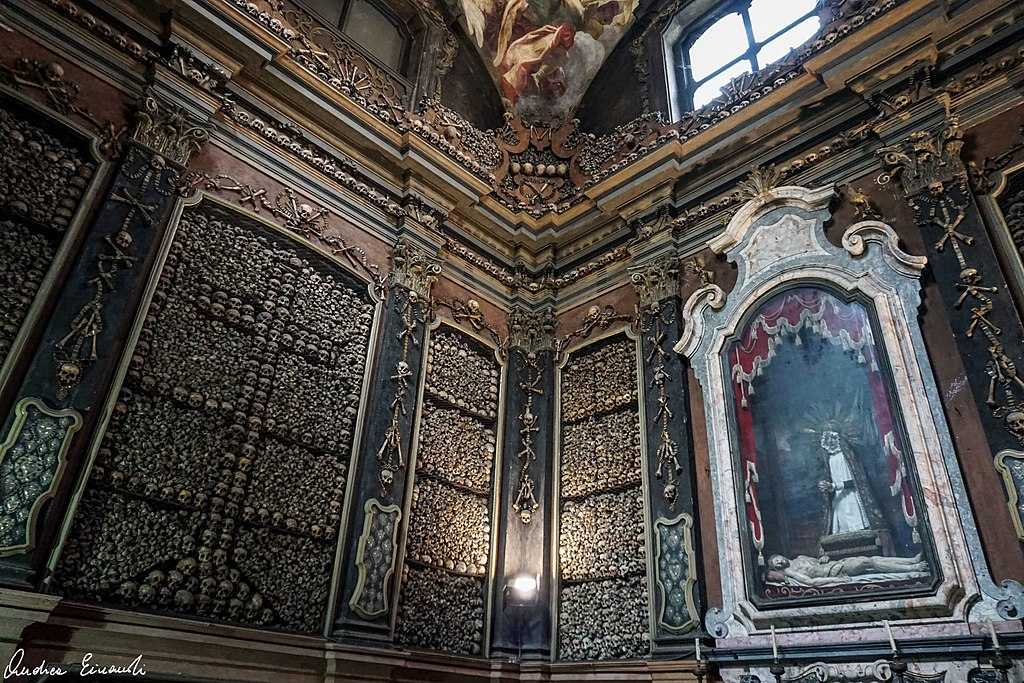
San Bernardino alle Ossa, Milan
San Bernardino alle Ossa is a church in Milan, northern Italy, best known for its ossuary, a small side chapel decorated with numerous human skulls and bones. In 1210, when an adjacent cemetery ran out of space, a room was built to hold bones. A church was attached in 1269. Renovated in 1679, it was destroyed by a
-
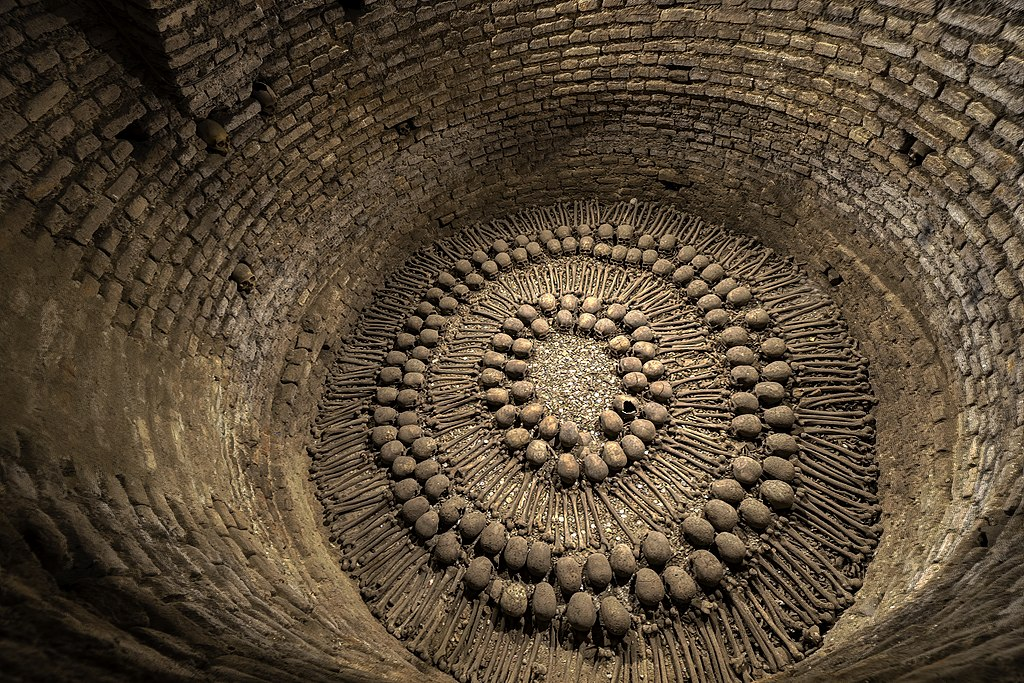
Catacombs of Lima, Peru
The Catacombs of Lima (Spanish: Catacumbas de Lima) are underground ossuaries in the historic centre of Lima, Peru. The catacombs were built under the Basilica and Convent of San Francisco and currently function as a museum. History In 1546, the Franciscan order began construction of the Basilica and Convent of San Francisco in Lima, which included the catacombs, built to support the convent in the event of an earthquake. The crypt’s use as a cemetery continued for almost
-
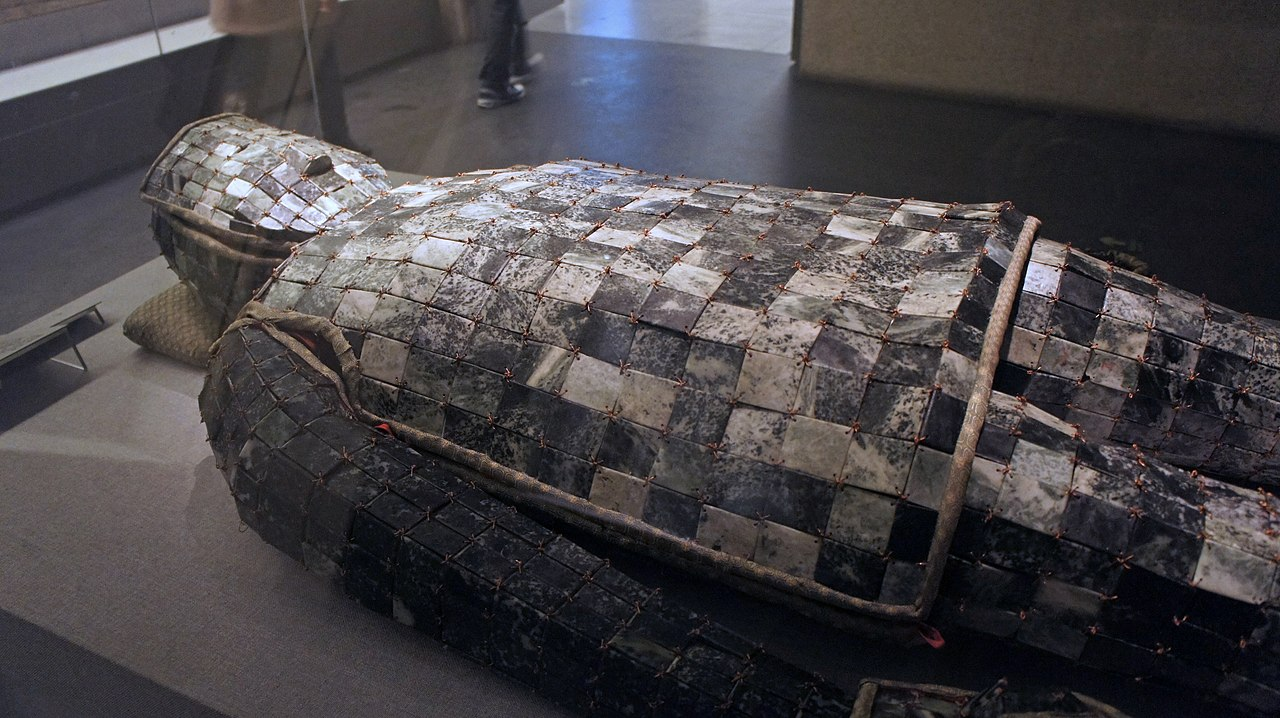
Jade burial suit
A jade burial suit (Chinese: 玉衣; pinyin: yù yī; lit. ‘jade clothing’) is a ceremonial suit made of pieces of jade in which royal members in Han dynasty China were buried. Construction Of the jade suits that have been found, the pieces of jade are mostly square or rectangular in shape, though triangular, trapezoid and rhomboid plaques have also been found. Plaques are often joined by means of
-
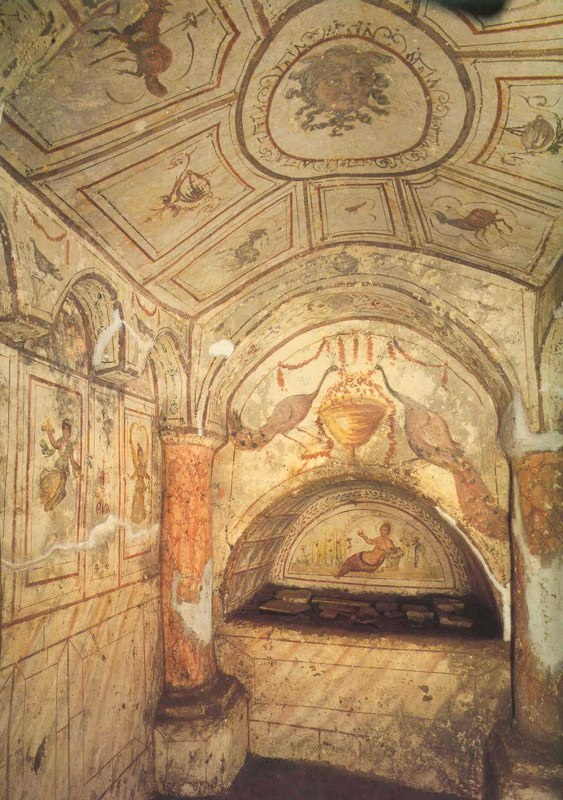
An arcosolium is an arched recess used as a place of entombment
An arcosolium, plural arcosolia, is an arched recess used as a place of entombment. The word is from Latin arcus, “arch”, and solium, “throne” (literally “place of state”) or post-classical “sarcophagus“.[dubious – discuss] Early arcosolia were carved out of the living rock in catacombs. In the very earliest of these, the arched recess was cut to ground level. Then a low wall would be
-
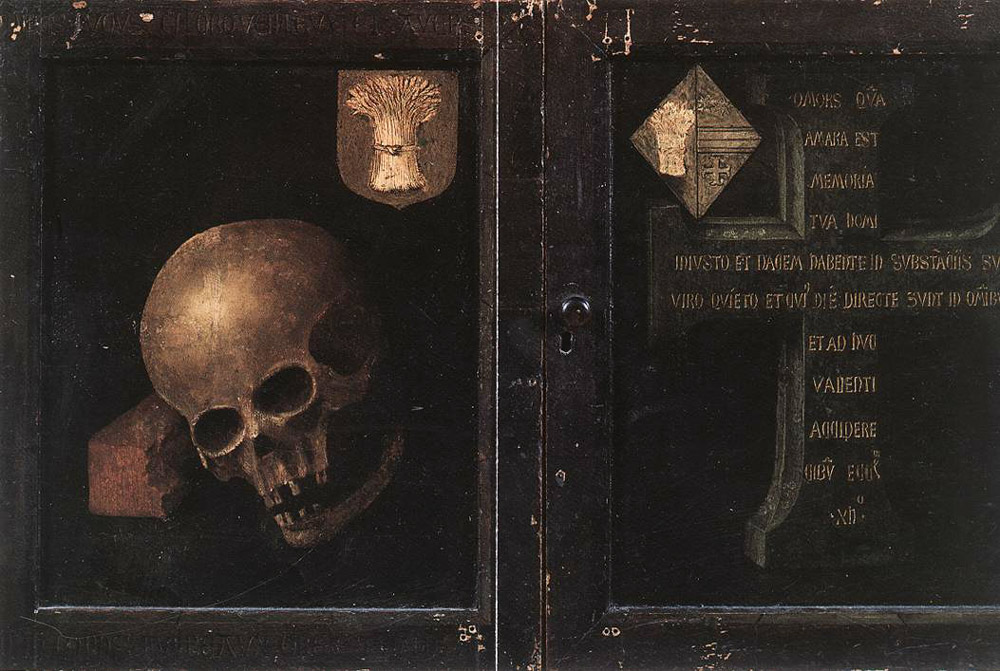
Memento Mori (Symbolic Trope)
Memento mori (Latin for ‘remember that you [have to] die’) is an artistic or symbolic trope acting as a reminder of the inevitability of death. The concept has its roots in the philosophers of classical antiquity and Christianity, and appeared in funerary art and architecture from the medieval period onwards. The most common motif is a skull, often accompanied by one or more bones. Often this alone is
-
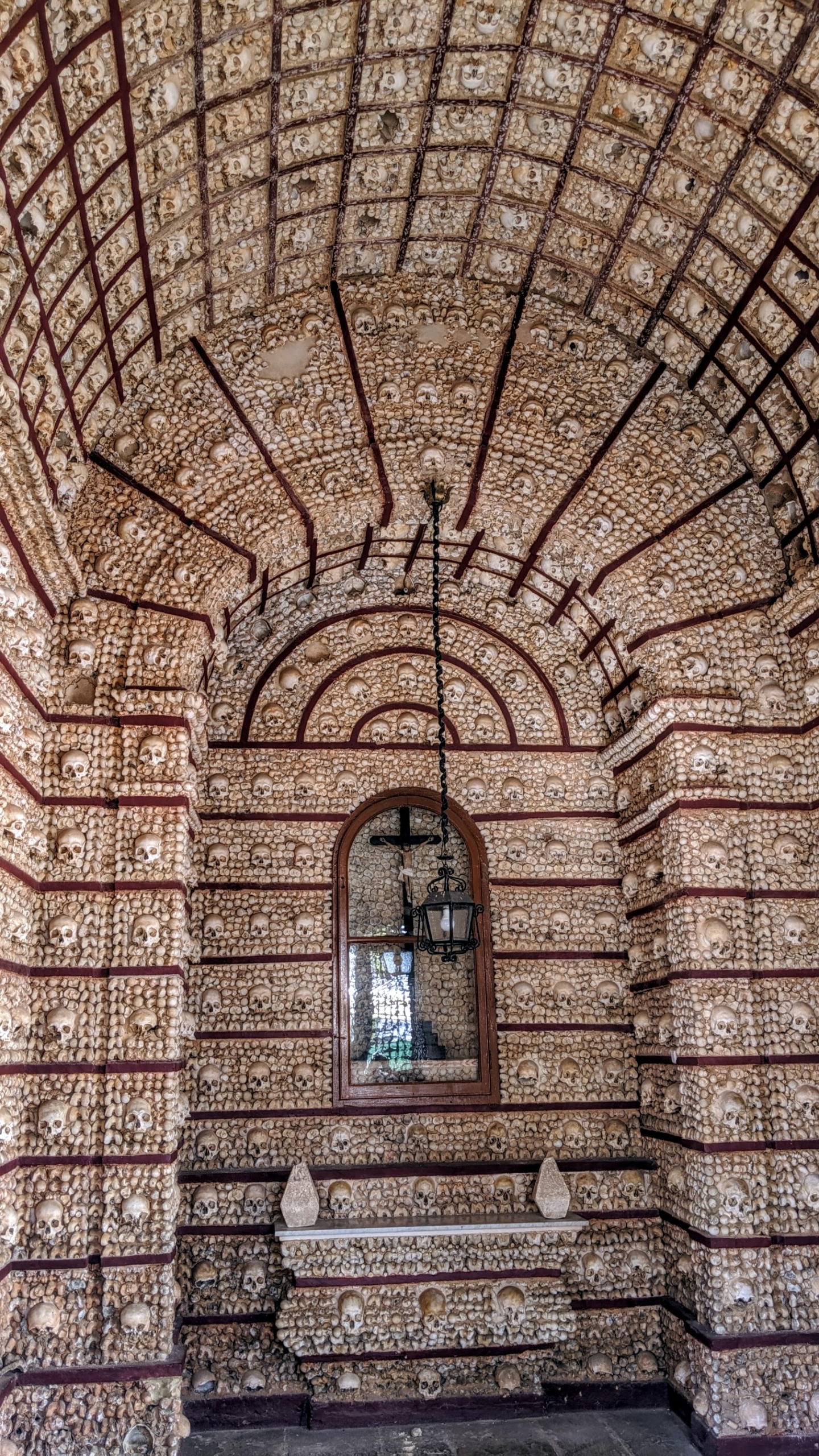
Chapel of Bones (Faro, Portugal)
The Capela dos Ossos (English: Chapel of Bones) is an ossuary chapel in Faro, Portugal, which belongs to the 18th century Carmelite church Nossa Senhora do Carmo. Above the entrance, there is the following inscription: Pára aqui a considerar que a este estado hás-de chegar which translates to Stop here and consider, that you will reach this state too. The 4 by 6 meter
-
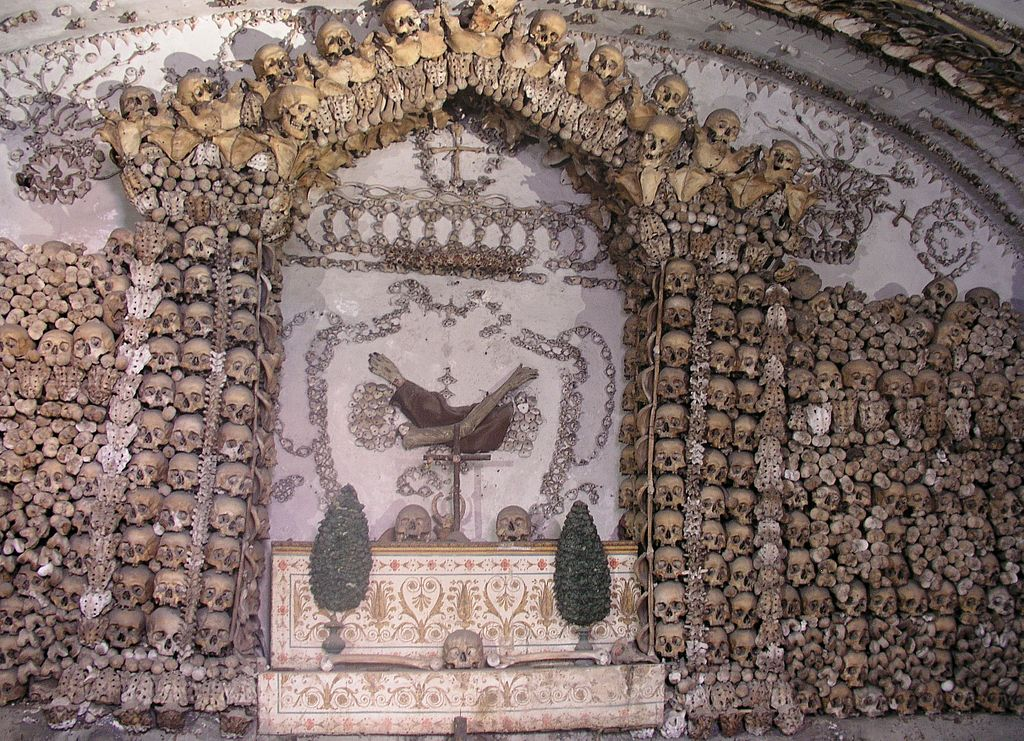
The Capuchin Crypt, Rome
The Capuchin Crypt is a small space comprising several tiny chapels located beneath the church of Santa Maria della Concezione dei Cappuccini on the Via Veneto near Piazza Barberini in Rome, Italy. It contains the skeletal remains of 3,700 bodies believed to be Capuchin friars buried by their order. The Catholic order insists that the display is not meant to be macabre, but a silent reminder of the swift passage of
-
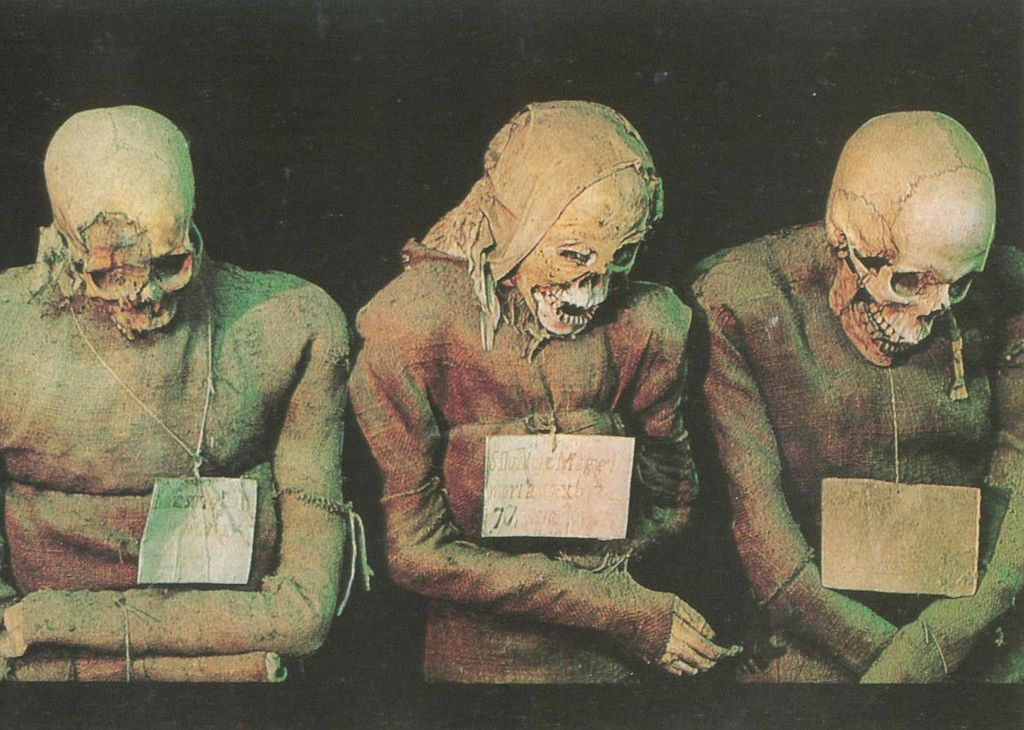
The Capuchin Catacombs of Palermo
The Capuchin Catacombs of Palermo (also Catacombe dei Cappuccini or Catacombs of the Capuchins) are burial catacombs in Palermo, Sicily, southern Italy. Today they provide a somewhat macabre tourist attraction as well as an extraordinary historical record. Historical background Palermo’s Capuchin monastery outgrew its original cemetery in the 16th century and monks began to excavate crypts below it. In 1599 they mummified one of their number, the recently-deceased brother Silvestro of Gubbio, and placed him
-
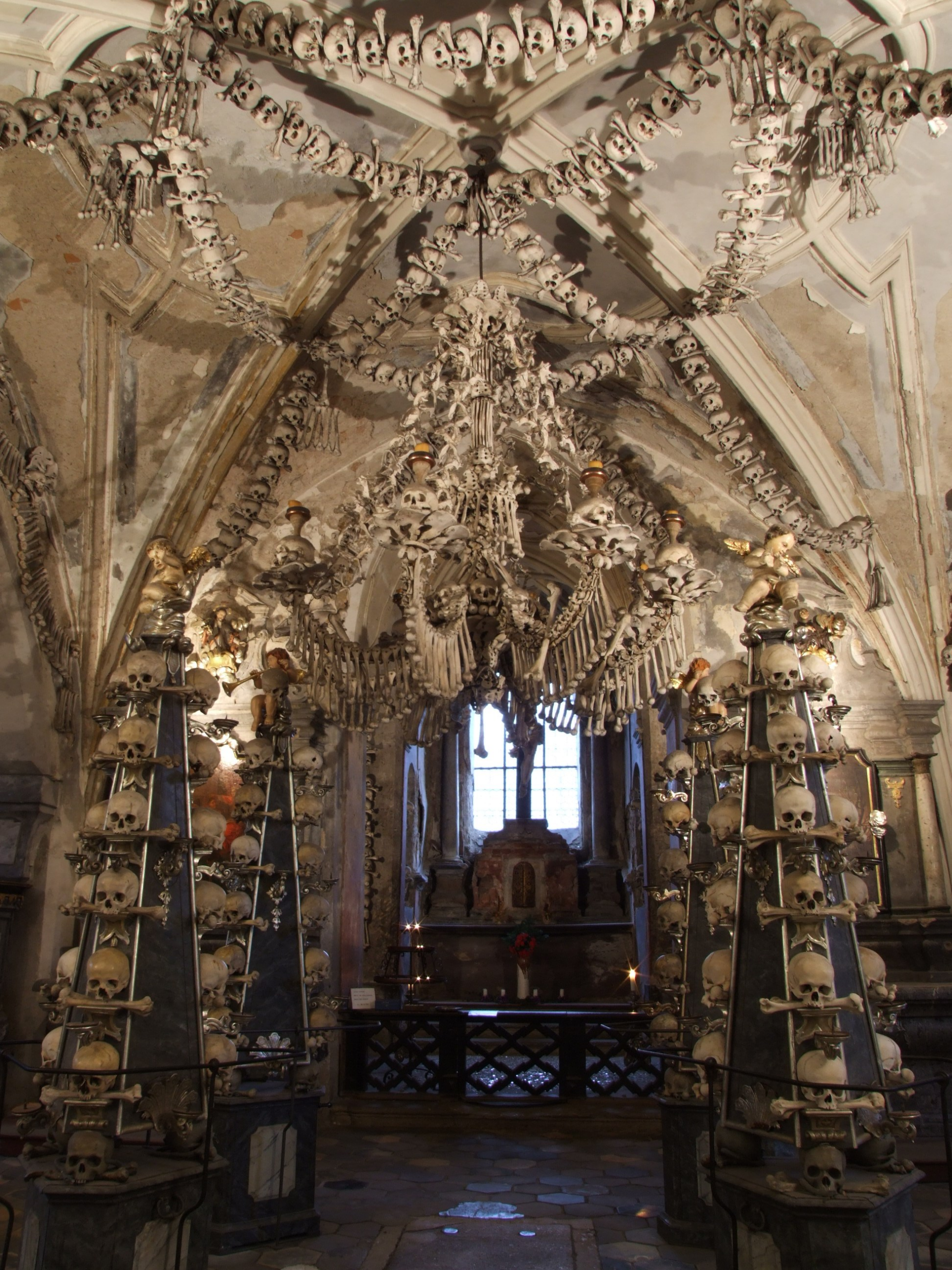
The Sedlec Ossuary (Czech Republic)
The Sedlec Ossuary (Czech: Kostnice v Sedlci; German: Sedletz-Beinhaus) is a Roman Catholic chapel, located beneath the Cemetery Church of All Saints (Czech: Hřbitovní kostel Všech Svatých), part of the former Sedlec Abbey in Sedlec, a suburb of Kutná Hora in the Czech Republic. The ossuary is estimated to contain the skeletons of between 40,000 and 70,000 people, whose bones have, in many cases, been artistically arranged to form decorations and furnishings for the
-
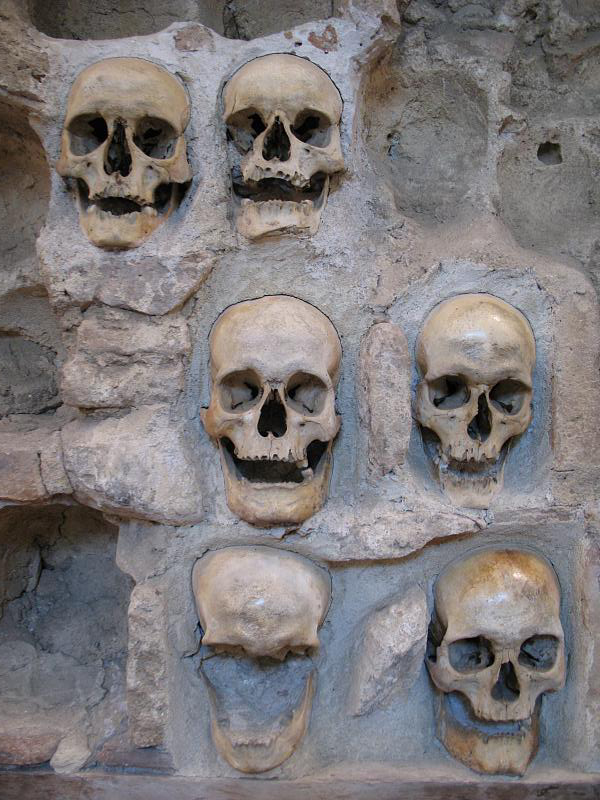
Skull Tower (Niš, Serbia)
Skull Tower (Ćele kula) is a stone structure embedded with human skulls located in Niš, Serbia. It was constructed by the Ottoman Empire following the Battle of Čegar of May 1809, during the First Serbian Uprising. During the battle, Serbian rebels under the command of Stevan Sinđelić were surrounded by the Ottomans on Čegar Hill, near Niš. Knowing that he and his fighters would be impaled if captured, Sinđelić detonated a
Recent Posts
- The Founders did not whisper about aristocracy. They roared. So did the Framers.
- Adams and Jefferson on Aristocracy: A Structural Disagreement in the Early Republic
- John Adams — Opinions of Philosophers — Anti‑Caste Constitutional Foundations
- Corporate “persons” are a perfect example of a Titles of Nobility (TON) violation
- TON vs. Global Trends and National Enrollment
Tags
2025 agriculture alchemy anthropology archaeology art biochemistry biography biology chemistry civil rights crystallography culture duplicate ecology economics endocrinology entertainment entomology folklore genetics geology glossary hematology history immunology law linguistics materials science medicine mythology neurology philosophy physiology politics psychology public health religion reproduction science smoker's paradox symbolism systems theory technology toxicology