-
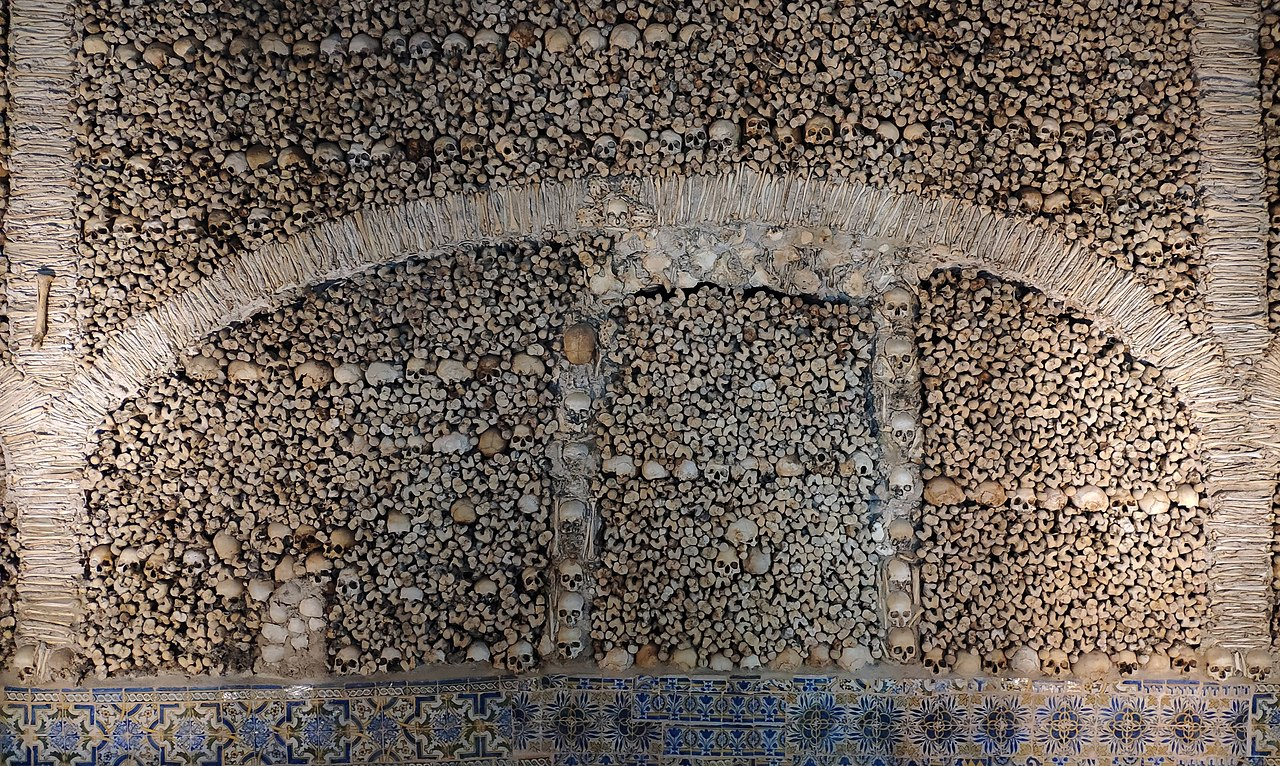
Chapel of Bones is one of the best-known monuments in Évora, Portugal
The Capela dos Ossos (English: Chapel of Bones) is one of the best-known monuments in Évora, Portugal. It is a small interior chapel located next to the entrance of the Church of St. Francis. The Chapel gets its name because the interior walls are covered and decorated with human skulls and bones. Origin The Capela dos Ossos was built
-
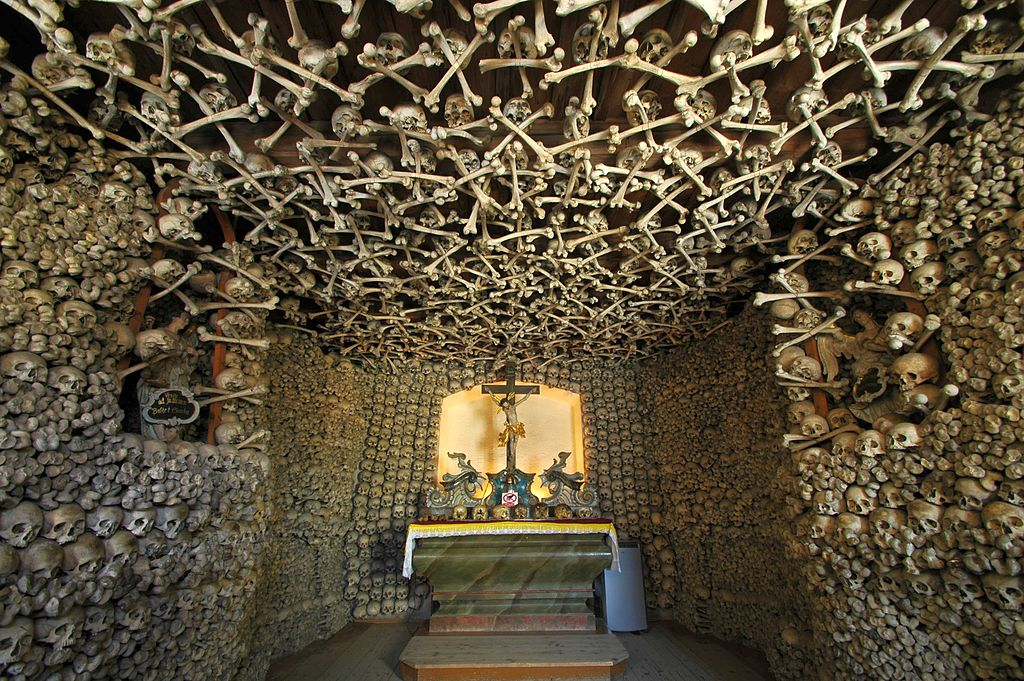
Skull Chapel or St. Bartholomew’s Church is a mass grave in Poland
The Skull Chapel (Polish: Kaplica Czaszek) or St. Bartholomew’s Church, is an ossuary chapel located in the Czermna district of Kudowa-Zdrój, Poland. Built in Baroque style in the last quarter of the 18th century, the temple serves as a mass grave with thousands of skulls and skeletal remains adorning its interior walls as well as floor, ceiling and foundations. The Skull Chapel is the only such monument in Poland,
-
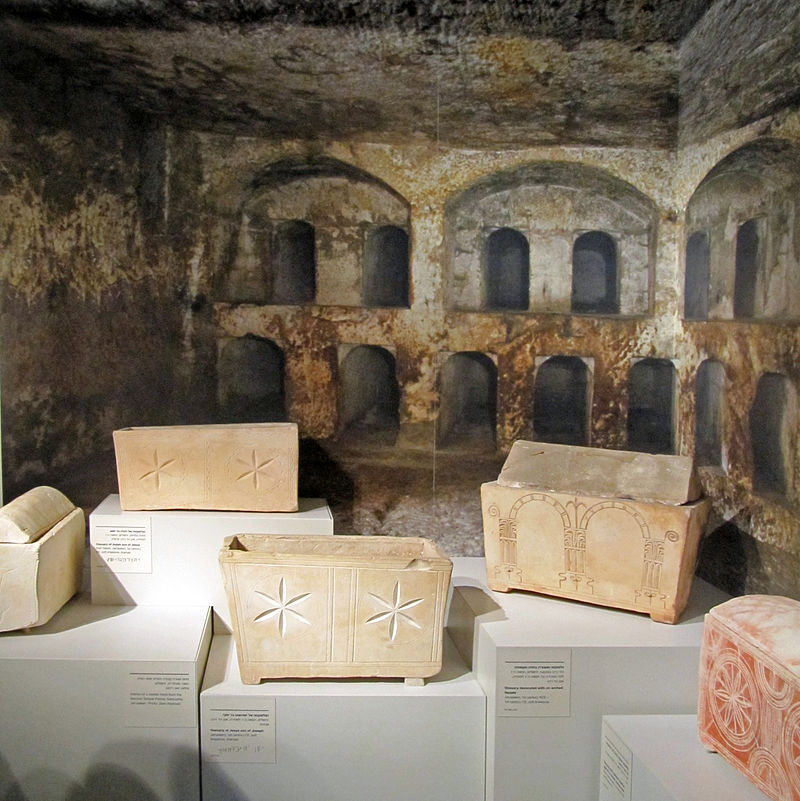
Ossuary
An ossuary is a chest, box, building, well, or site made to serve as the final resting place of human skeletal remains. They are frequently used where burial space is scarce. A body is first buried in a temporary grave, then after some years the skeletal remains are removed and placed in an ossuary (“os” is “bone” in Latin). The greatly
-
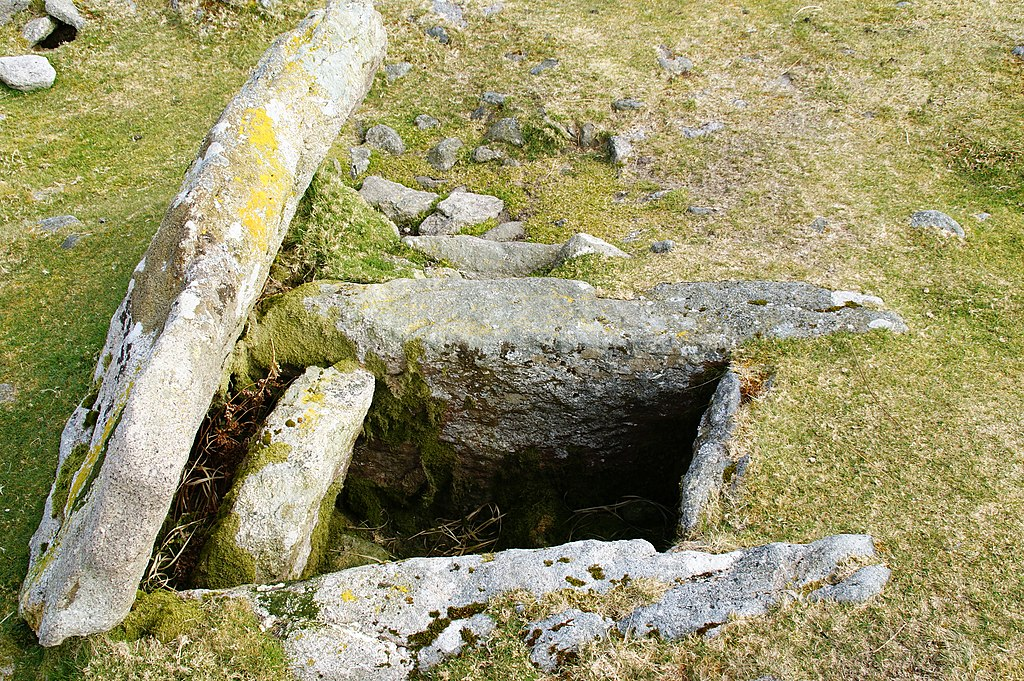
Kist or Cist and Kistivan
A kistvaen or cistvaen is a tomb or burial chamber formed from flat stone slabs in a box-like shape. If set completely underground, it may be covered by a tumulus. The word is derived from the Welsh cist (chest) and maen (stone). The term originated in relation to Celtic structures, typically pre-Christian, but in antiquarian scholarship of the 19th and early 20th centuries it was sometimes applied to similar structures outside the Celtic world. One
-

Passage graves – neolithic luxury condos for the dead
Imagine you’re a Neolithic farmer with a flair for architecture and a penchant for dramatic burials. What do you build? A passage grave, of course! These stone-age structures are the ultimate “tight squeeze” for the dearly departed. A passage grave, also known as a passage tomb (because nothing says “final resting place” like a narrow
-
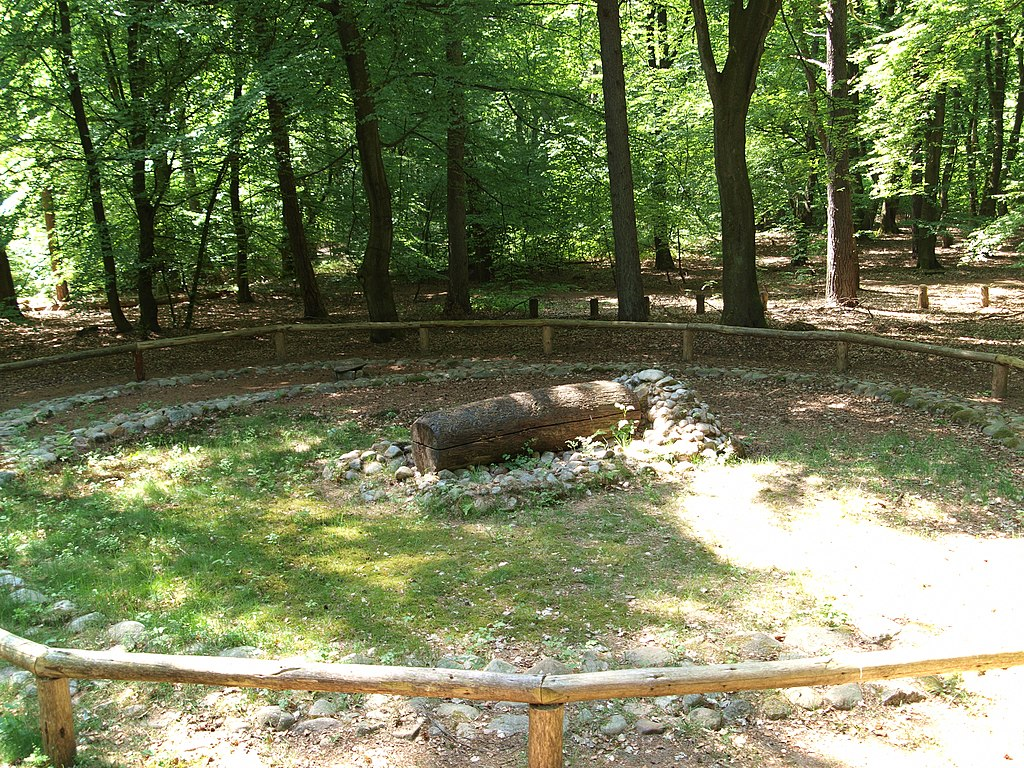
Secondary burial is a feature of prehistoric and historic gravesites which refers to an exhumation and reburial
The secondary burial (German: Nachbestattung or Sekundärbestattung), or “double funeral” (not to be confused with double burial in which two bodies are interred together) is a feature of prehistoric and historic gravesites. The term refers to remains that represent an exhumation and reburial, whether intentional or accidental. Examples of secondary burial are known from the Paleolithic period, (including the Middle Paleolithic Mousterian culture and the Upper Paleolithic Magdalenian culture) and continuing through the Mesolithic period into the Neolithic period. The
-
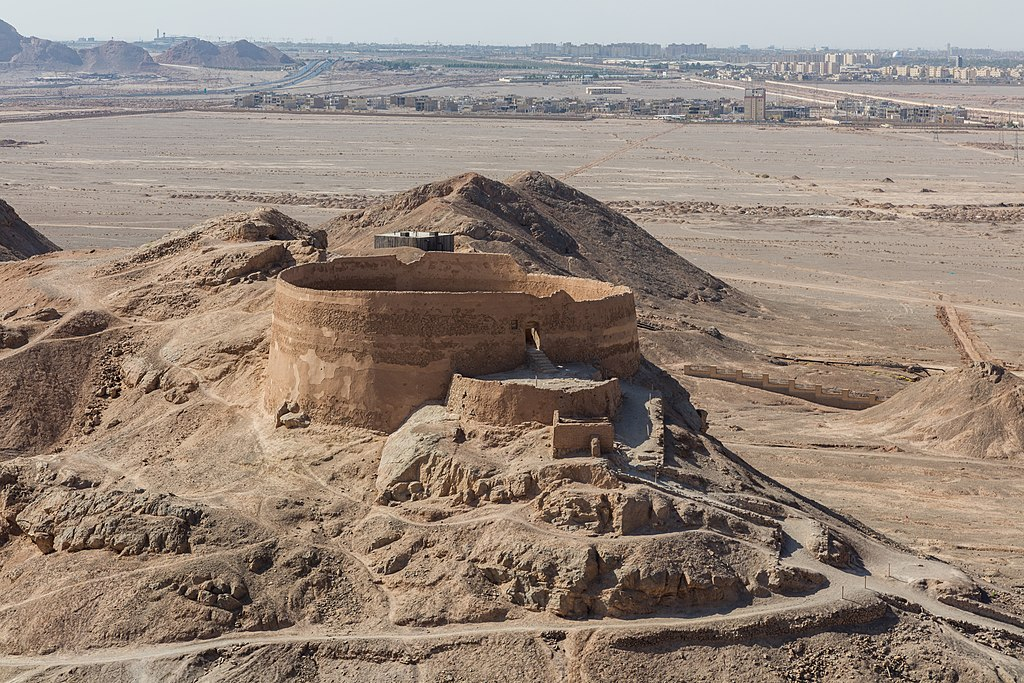
Nasu aka Nasa (Zoroastrianism) and Tower of Silence
Nasu (Also; Druj Nasu, Nasa, Nas, Nasuš) is the Avestan name of the female Zoroastrian demon (daeva) of corpse matter. She resides in the north (Vendidad. 7:2), where the Zoroastrian hell lies. Nasu takes the form of a fly, and is the manifestation of the decay and contamination of corpses (nasa) (Bundahishn. 28:29). When a death occurs, Nasu inhabits the
-
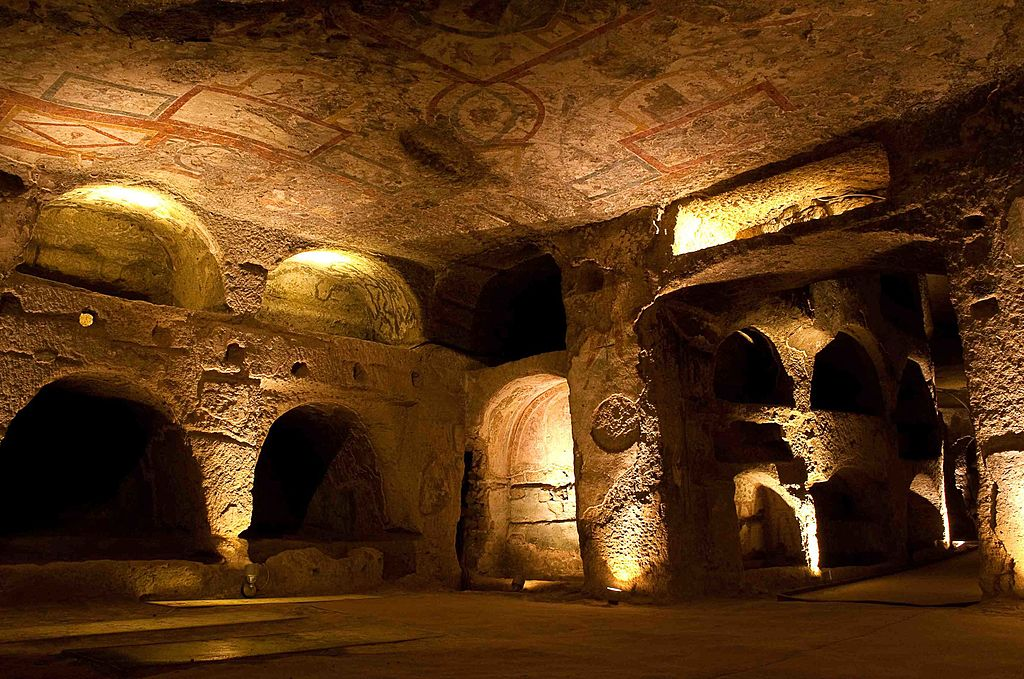
Catacombs of San Gennaro in Naples, Italy
The Catacombs of San Gennaro are underground paleo-Christian burial and worship sites in Naples, Italy, carved out of tuff, a porous stone. They are situated in the northern part of the city, on the slope leading up to Capodimonte [it], consisting of two levels, San Gennaro Superiore, and San Gennaro Inferiore. The catacombs lie under the Rione Sanità neighborhood of Naples, sometimes called the “Valley of the Dead”. The
-
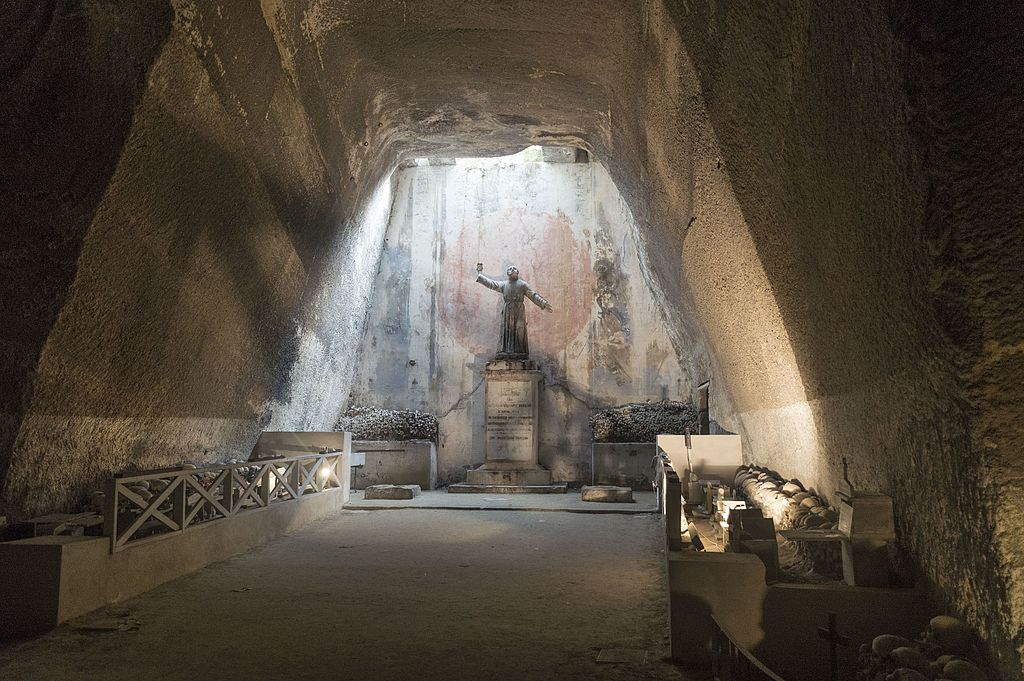
Fontanelle cemetery in Naples
The Fontanelle cemetery in Naples is a charnel house, an ossuary, located in a cave in the tuff hillside in the Materdei section of the city. It is associated with a chapter in the folklore of the city. By the time the Spanish moved into the city in the early 16th century, there was already concern over where to locate cemeteries, and moves
-

Saint-Lazare Prison was originally a leprosarium and then a prison and then a hospital now marked by the Church of Saint-Vincent-de-Paul
Saint-Lazare Prison was a prison in the 10th arrondissement of Paris, France. History Originally a leprosarium was founded on the road from Paris to Saint-Denis at the boundary of the marshy area of the former River Seine bank in the 12th century. It was ceded on 7 January 1632 to St. Vincent de Paul and the Congregation of the Mission he had founded. At this stage, it became a place
Recent Posts
- The Founders did not whisper about aristocracy. They roared. So did the Framers.

- Adams and Jefferson on Aristocracy: A Structural Disagreement in the Early Republic
- John Adams — Opinions of Philosophers — Anti‑Caste Constitutional Foundations
- Corporate “persons” are a perfect example of a Titles of Nobility (TON) violation
- TON vs. Global Trends and National Enrollment
Tags
2025 agriculture alchemy anthropology archaeology art biochemistry biography biology chemistry civil rights crystallography culture duplicate ecology economics endocrinology entertainment entomology folklore genetics geology glossary hematology history immunology law linguistics materials science medicine mythology neurology philosophy physiology politics psychology public health religion reproduction science smoker's paradox symbolism systems theory technology toxicology