-
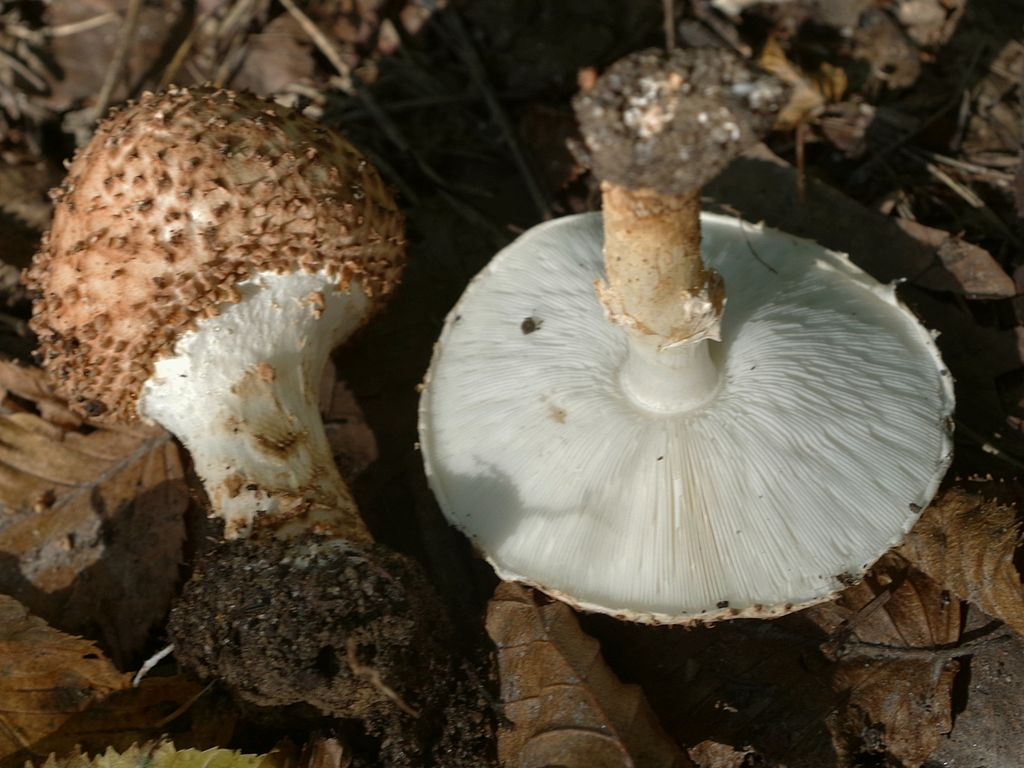
Echinoderma is a genus of fungi
Echinoderma is a genus of fungi in the family Agaricaceae. Its members were for a long time considered to belong to genus Lepiota and the group was then circumscribed by French mycologist Marcel Bon in 1981 as a subgenus of Cystolepiota before he raised it to generic status in 1991. Echinoderma Echinoderma asperum Scientific classification Kingdom: Fungi Division: Basidiomycota Class: Agaricomycetes Order: Agaricales Family: Agaricaceae Genus: Echinoderma(Locq. ex Bon) Bon (1991) Type species
-
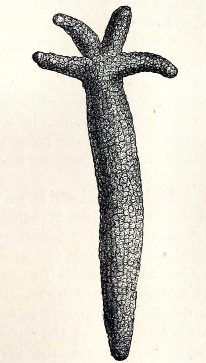
Echinoderm reproduction and pluteus larva
An echinoderm is any member of the phylum Echinodermata. The adults are recognisable by their (usually five-point) radial symmetry, and include starfish, brittle stars, sea urchins, sand dollars, and sea cucumbers, as well as the sea lilies or “stone lilies”. Adult echinoderms are found on the sea bed at every ocean depth, from the intertidal zone to the abyssal zone. The phylum contains about 7,000 living species, making it the second-largest
-
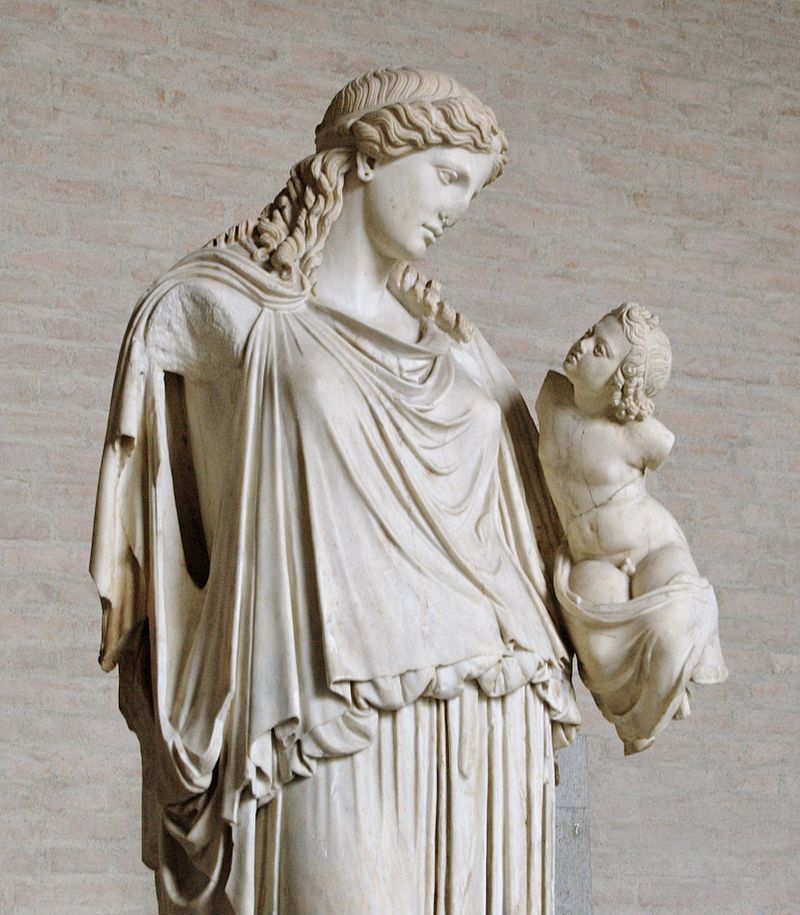
Plutus Notes
In ancient Greek religion and mythology, Plutus (Ploûtos, lit. “wealth”) is the god and the personification of wealth, and the son of the goddess of agriculture Demeter and the mortal Iasion. Family Plutus is most commonly the son of Demeter and Iasion, with whom she lay in a thrice-ploughed field. He is alternatively the son of the fortune goddess Tyche. Two ancient depictions of Plutus, one of him as a little boy standing with
-
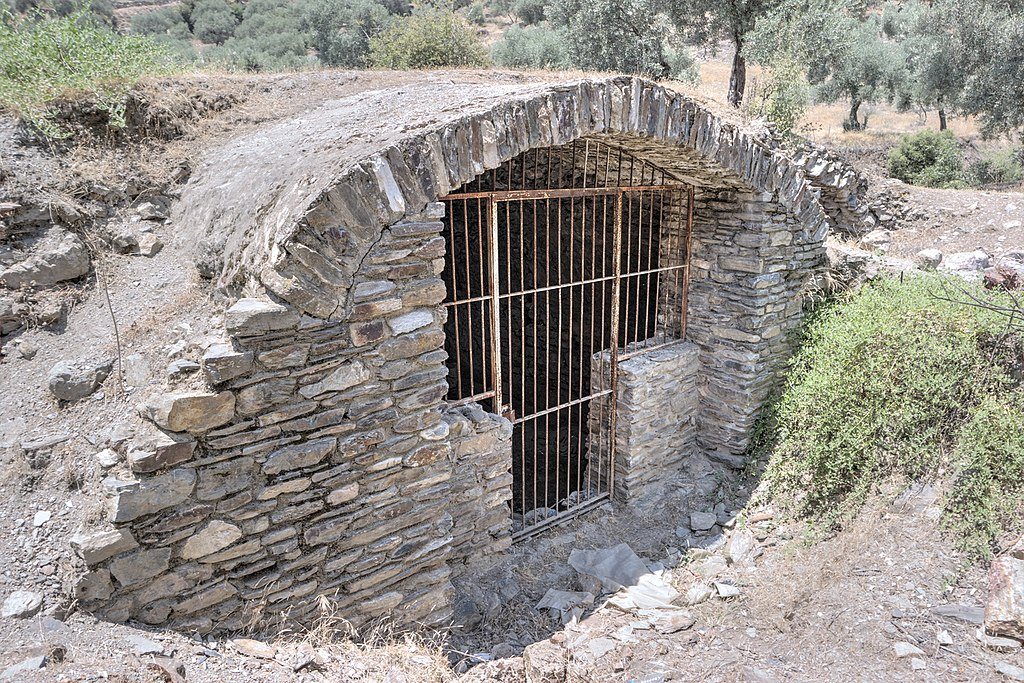
Acharaca was a village of ancient Lydia with a Ploutonion or a temple of Pluto and a cave named Charonium
Acharaca was a village of ancient Lydia, Anatolia on the road from Tralles (modern Aydın, Turkey) to Nysa on the Maeander, with a Ploutonion or a temple of Pluto, and a cave, named Charonium (Ancient Greek: Χαρώνειον άντρον), where the sick were healed under the direction of the priests. There is some indication that it once bore the name Charax (Χάραξ), but that name may have belonged to
-

-ium
word-forming element in chemistry, used to coin element names, from Latin adjectival suffix -ium (neuter of -ius), which formed metal names in Latin (ferrum “iron,” aurum “gold,” etc.). In late 18c chemists began to pay attention to the naming of their substances with words that indicate their chemical properties. Berzelius in 1811 proposed forming all element names in Modern Latin. As
-
Charonium at Aornum
Aornum was an oracle in Ancient Greece, located in Thesprotia in a cave called Charonium (Χαρώνειον ἄντρον or χάσμα) which gave forth poisonous vapours. The name of the cave, “Charon‘s Cave”, reflects the belief that it was an entrance for Hades, the Greek underworld. The Greek Myths (Volume 1) by Robert Graves, 1990),page 112: “… He used the passage which opens at Aornum in
-
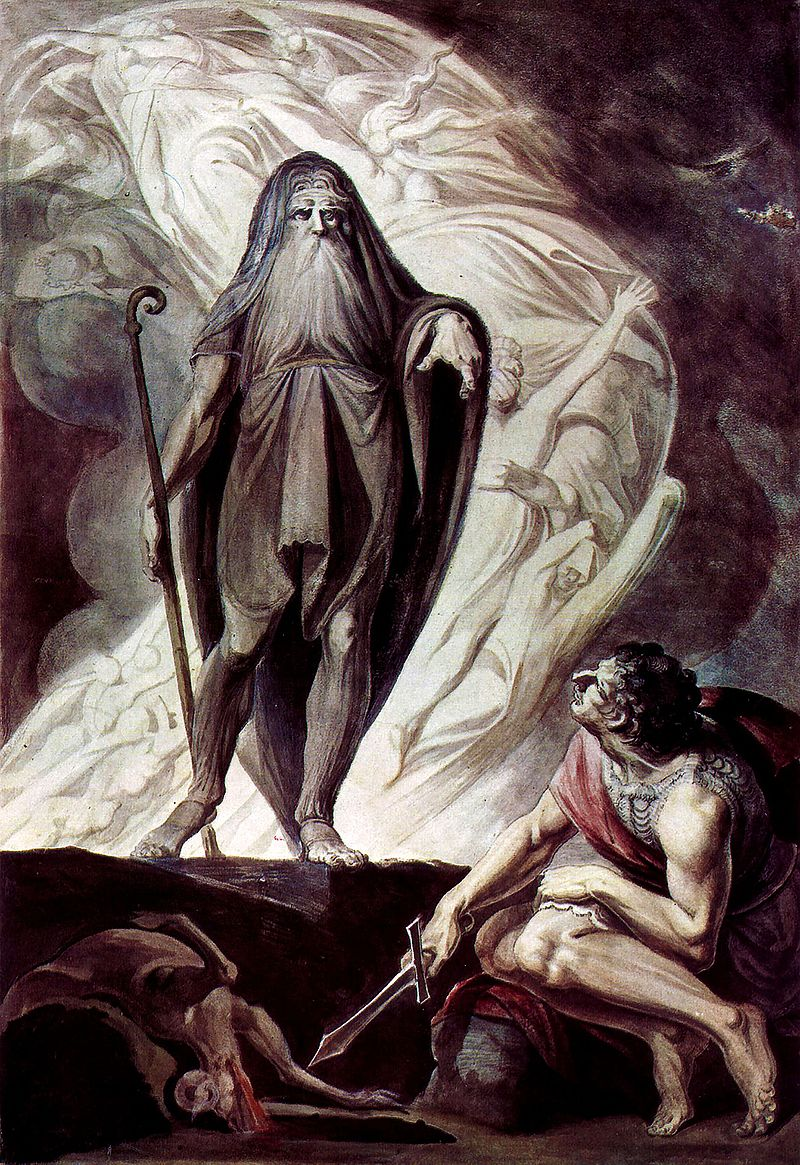
Tiresias, Blind Prophet Transformed into a Woman for Seven Years
In Greek mythology, Tiresias was a blind prophet of Apollo in Thebes, famous for clairvoyance and for being transformed into a woman for seven years. He was the son of the shepherd Everes and the nymph Chariclo. Tiresias participated fully in seven generations in Thebes, beginning as advisor to Cadmus himself. Mythology Eighteen allusions to mythic Tiresias, noted by Luc Brisson, fall into three groups: the first recounts Tiresias’ sex-change episode and later his
-
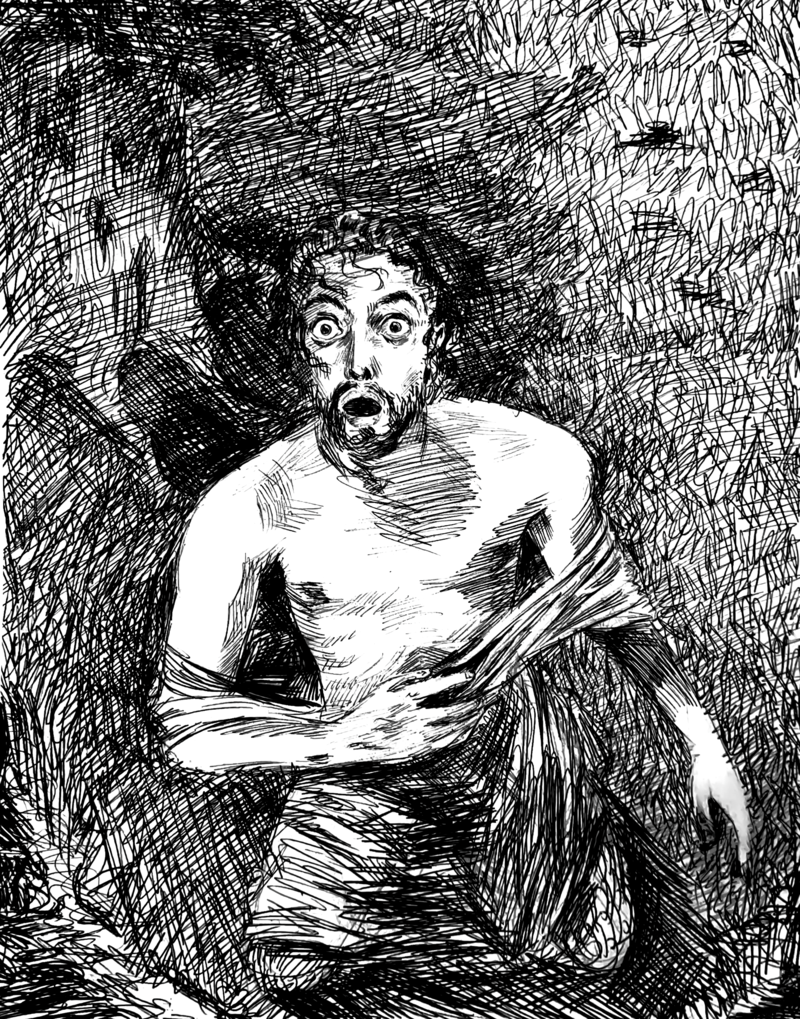
In Greek mythology, Leucippus is notable for a magical gender transformation
In Greek mythology, Leucippus (Ancient Greek: Λεύκιππος Leukippos, “white horse”) was a young man of Phaestus, Crete. Leucippus was born to Lamprus, the son of Pandion, and Galatea, daughter of Eurytius the son of Sparton. He is notable for having underwent a magical gender transformation by the will of the goddess Leto. Due to his transition from female to male, Leucippus can be considered a transgender male figure in Greek mythology.
-
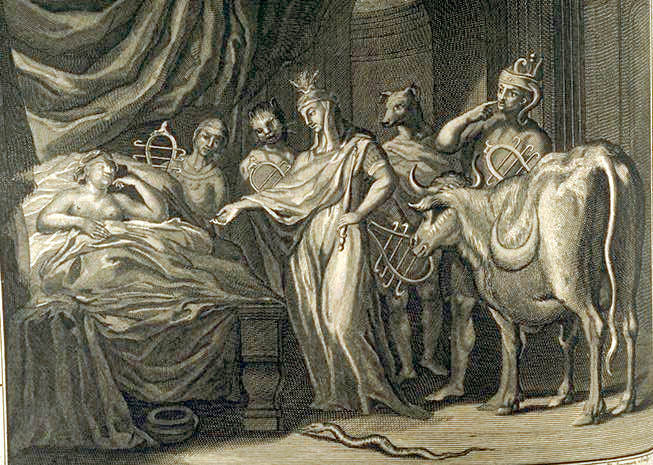
Iphis Notes
In Greek and Roman mythology, Iphis or Iphys was a child of Telethusa and Ligdus in Crete, born female and raised male, who was later transformed by the goddess Isis into a man. (/ˈaɪfɪs/ EYE-fis, /ˈɪfɪs/ IF-iss; Ancient Greek: Ἶφις Îphis [íi.pʰis], gen. Ἴφιδος Ī́phidos) Mythology According to the Roman poet Ovid‘s Metamorphoses, there was a humbly born, but well-respected, man named Ligdus who lived in Phaestus with his pregnant wife, Telethusa. Ligdus said he wished for two things: that his
-
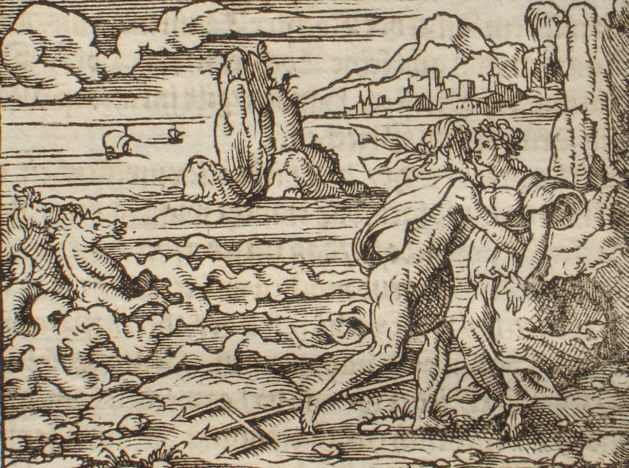
Caeneus, invincible transman in Greek mythology
In Greek mythology, Caeneus was a Lapith hero of Thessaly. Family According to Book XII of Ovid‘s Metamorphoses, he was originally a woman, Caenis (/ˈsiːnɪs/; Ancient Greek: Καινίς, romanized: Kainís), daughter of Atrax. In Apollonius of Rhodes‘ Argonautica, he is briefly noted as the great father of a lesser son, Coronus, who sailed forth among the Argonauts. Caeneus was also an Argonaut in some versions. The striking mythic image of this hero is that, indomitable through
Recent Posts
- Aristocracy is a poisonous weed and the TON clauses are weedkiller (in the unhinged spirit of Justice Scalia)

- Adams and Jefferson on Aristocracy: A Structural Disagreement in the Early Republic
- John Adams — Opinions of Philosophers — Anti‑Caste Constitutional Foundations
- Corporate “persons” are a perfect example of a Titles of Nobility (TON) violation
- TON vs. Global Trends and National Enrollment
Tags
2025 agriculture alchemy anthropology archaeology art biochemistry biography biology chemistry civil rights crystallography culture duplicate ecology economics endocrinology entertainment entomology folklore genetics geology glossary hematology history immunology law linguistics materials science medicine mythology neurology philosophy physiology politics psychology public health religion reproduction science smoker's paradox symbolism systems theory technology toxicology