-
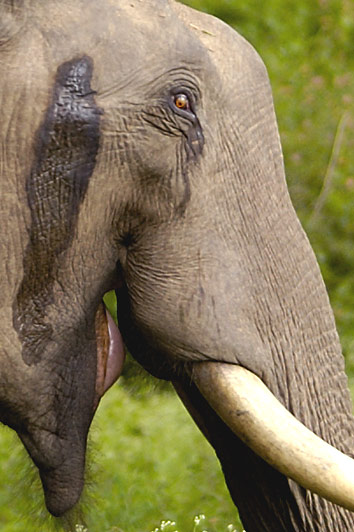
Temporins and Musth or must
Temporins are a family of peptides isolated originally from the skin secretion of the European red frog, Rana temporaria. Peptides belonging to the temporin family have been isolated also from closely related North American frogs, such as Rana sphenocephala. In elephants, temporin is secreted by temporal glands during the period of musth. It contains proteins, lipids (notably cholesterol), phenols, cresols and sesquiterpenes (notably farnesol and its derivatives). This is not related to temporins that are antimicrobial peptides. In old Sanskrit
-
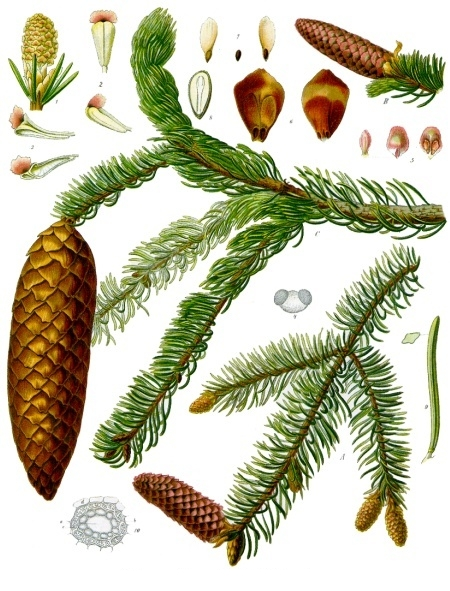
Piceol Is a Phenolic Compound Found in the Needles and in Mycorrhizal Roots of Norway Spruce and More
Piceol is a phenolic compound found in the needles and in mycorrhizal roots of Norway spruces (Picea abies). Picein is the glucoside of piceol. Pungenin is a also phenolic compound found in the needles of Blue Spruce (Picea pungens). It is the glucoside of 3,4-dihydroxyacetophenone. The compound serves a feeding deterrent against Spruce Budworm larvae. This may be a little redundant as the base information is already included on the Baccharis page
-
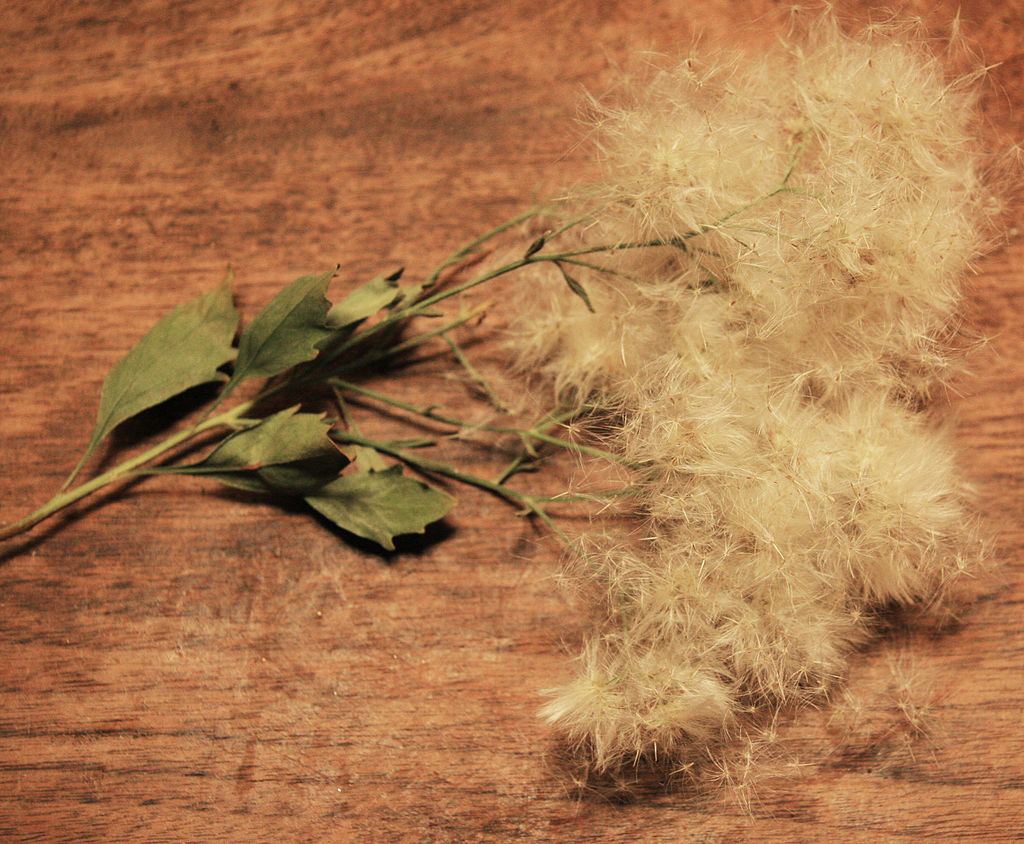
Baccharis is a genus of perennials and shrubs in the aster family (Asteraceae)
They are commonly known as baccharises but sometimes referred to as “brooms”, because many members have small thin leaves resembling the true brooms. They are not at all related to these however, but belong to an entirely different lineage of eudicots. B. halimifolia is commonly known as “groundsel bush”, however true groundsels are found in the genus Senecio. Baccharis, with over 500
-
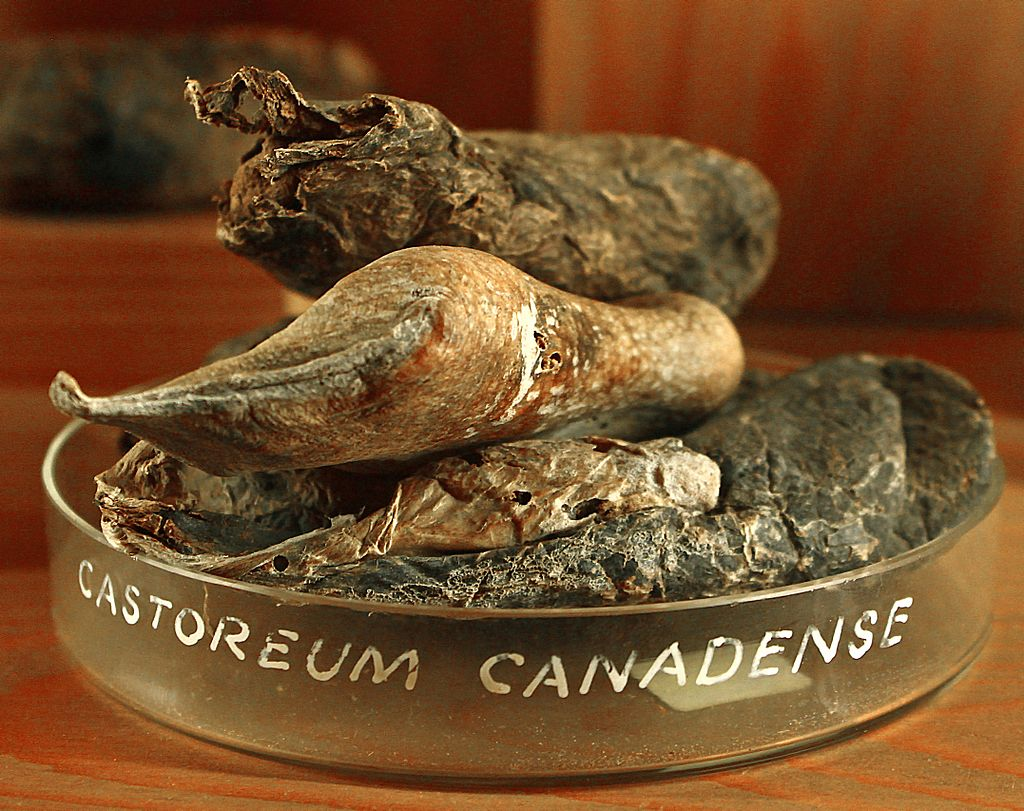
Castoreum
Castoreum is a yellowish exudate from the castor sacs of mature beavers. Beavers use castoreum in combination with urine to scent mark their territory. Both beaver sexes have a pair of castor sacs and a pair of anal glands, located in two cavities under the skin between the pelvis and the base of the tail. The castor sacs are not true glands (endocrine or exocrine)
-

The violet gland
The violet gland or supracaudal gland is a gland located on the upper surface of the tail of certain mammals, including European badgers and canids such as foxes, wolves, and the domestic dog,[verification needed] as well as the domestic cat. Like many other mammalian secretion glands, the violet gland consists of modified sweat glands and sebaceous glands. It is used for intra-species signalling, scent marking, and contributes to the strong odor of foxes in particular. Although it secretes a mixture
-
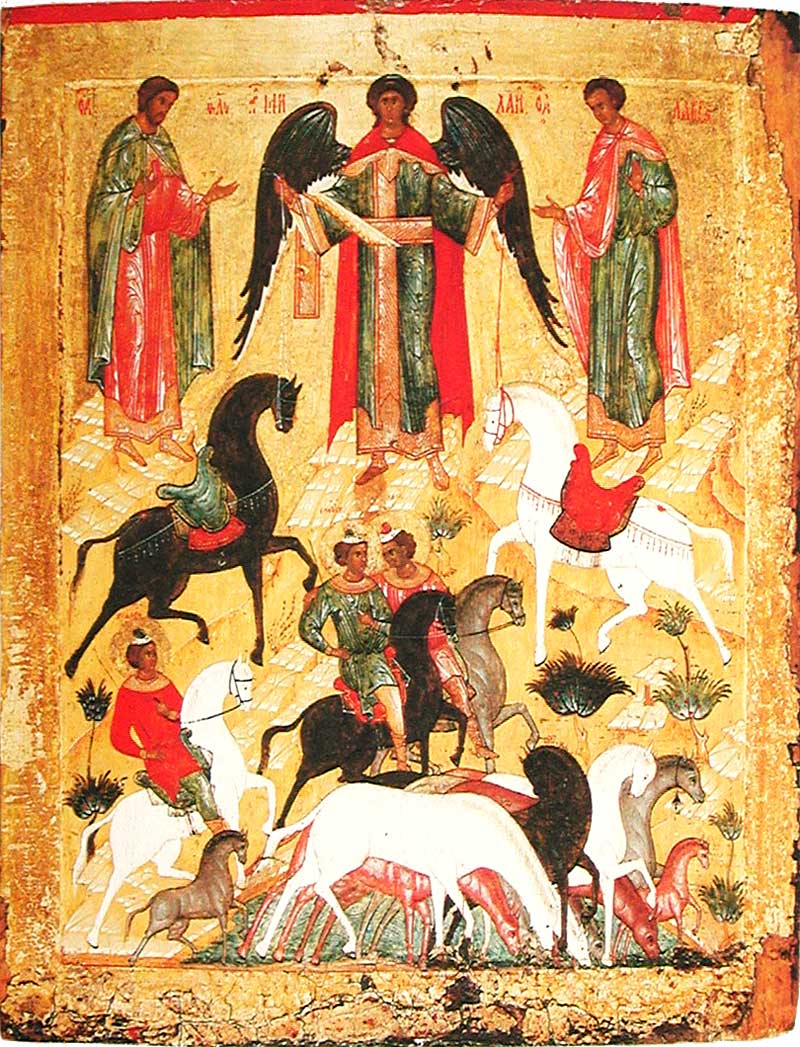
Saints Florus and Laurus, twin brothers who worked as stonemasons
Saints Florus and Laurus are venerated as Christian martyrs of the 2nd century. According to a Greek tale, they were twin brothers who worked as stonemasons. They were originally from Constantinople, Byzantium but settled in Ulpiana, Dardania, south of Pristina, Kosovo in the district of Illyricum. They were educated in the art of masonry by two men named Maximus and Proculus, who were Christians. According to their legend, Likaion, the prefect of Illyricum, employed the brothers in the construction
-
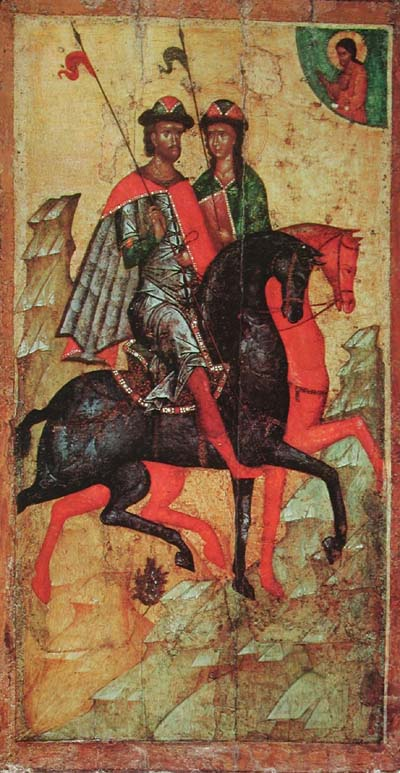
Passion bearers
In Eastern Christianity, a passion bearer (Russian: страстотéрпец, tr. strastoterpets, IPA: [strəstɐˈtʲɛrpʲɪts]) is one of the various customary titles for saints used in commemoration at divine services when honouring their feast on the Church Calendar; it is not generally used by Catholics of the Roman Rite, but it is used within the Eastern Catholic Churches. Definition The term can be defined as a person who
-
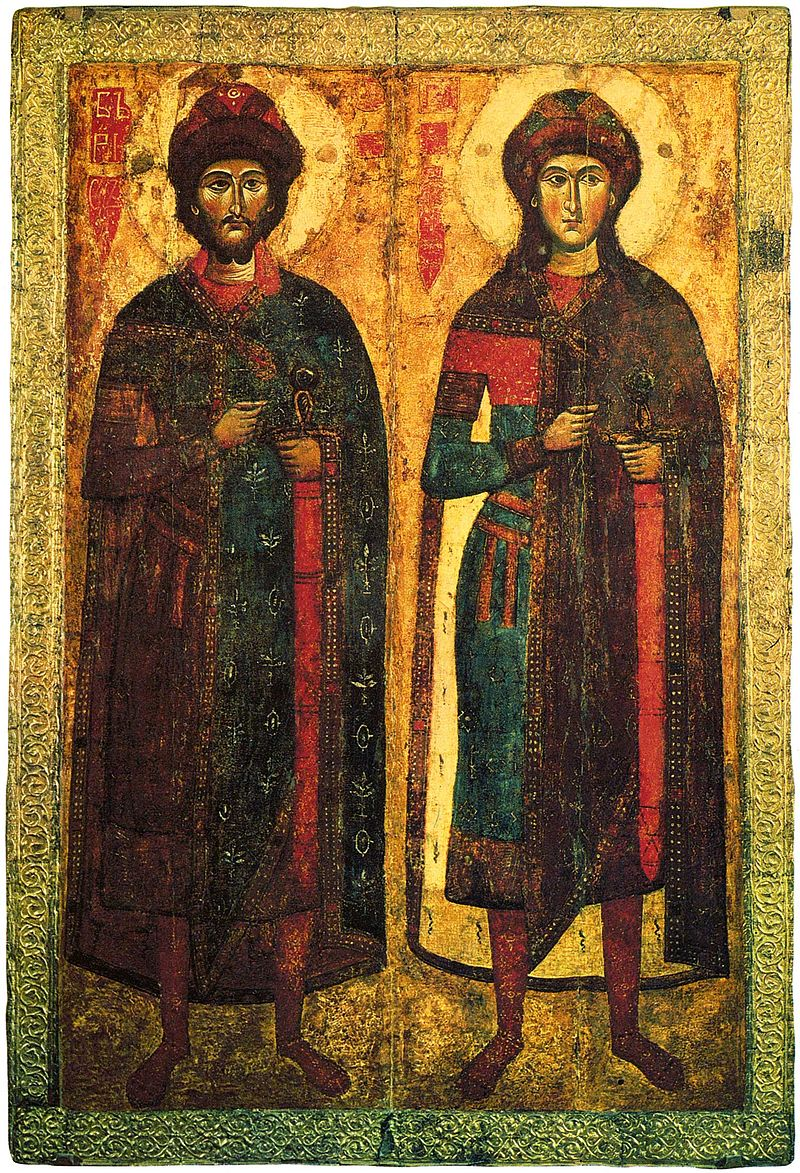
Boris and Gleb were the first saints canonized in Kievan Rus’ after the Christianization of the country
Boris and Gleb (Old East Slavic: Борисъ и Глѣбъ, romanized: Borisŭ i Glěbŭ; Russian: Борис и Глеб, romanized: Boris i Gleb; Ukrainian: Борис і Гліб, romanized: Borys i Hlib), respective Christian names Roman (Романъ, Romanŭ) and David (Давꙑдъ, Davydŭ), were the first saints canonized in Kievan Rus’ after the Christianization of the country. Their feast day is observed on July 24 (August 6). History Rurikids(IX—XI century) According to the two 11th-century Lives of Boris and Gleb (ascribed to Nestor the Chronicler and Jacob the Monk), they
-
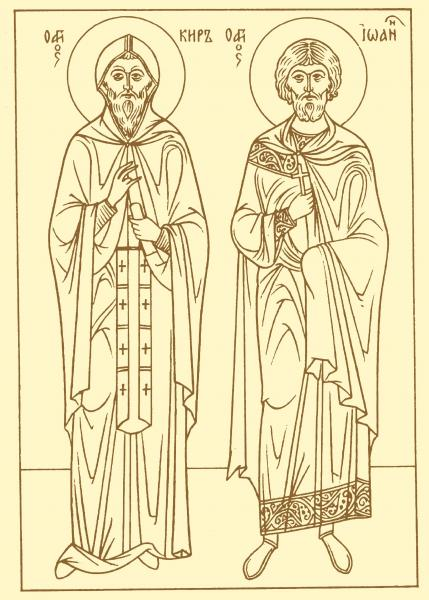
Saints Cyrus and John, Wonderworking Unmercenaries
Saints Cyrus and John (Italian: Ciro e Giovanni; Arabic: أباكير ويوحنا, romanized: Abākīr wa-Yūḥannā; died c. 304 or 311 AD) are venerated as martyrs. They are especially venerated by the Coptic Church and surnamed Wonderworking Unmercenaries (thaumatourgoi anargyroi) because they healed the sick free of charge. Their feast day is celebrated by the Copts on the sixth day of Tobi, corresponding to 31 January, the day also observed by the Eastern Orthodox Church; on the same day
-
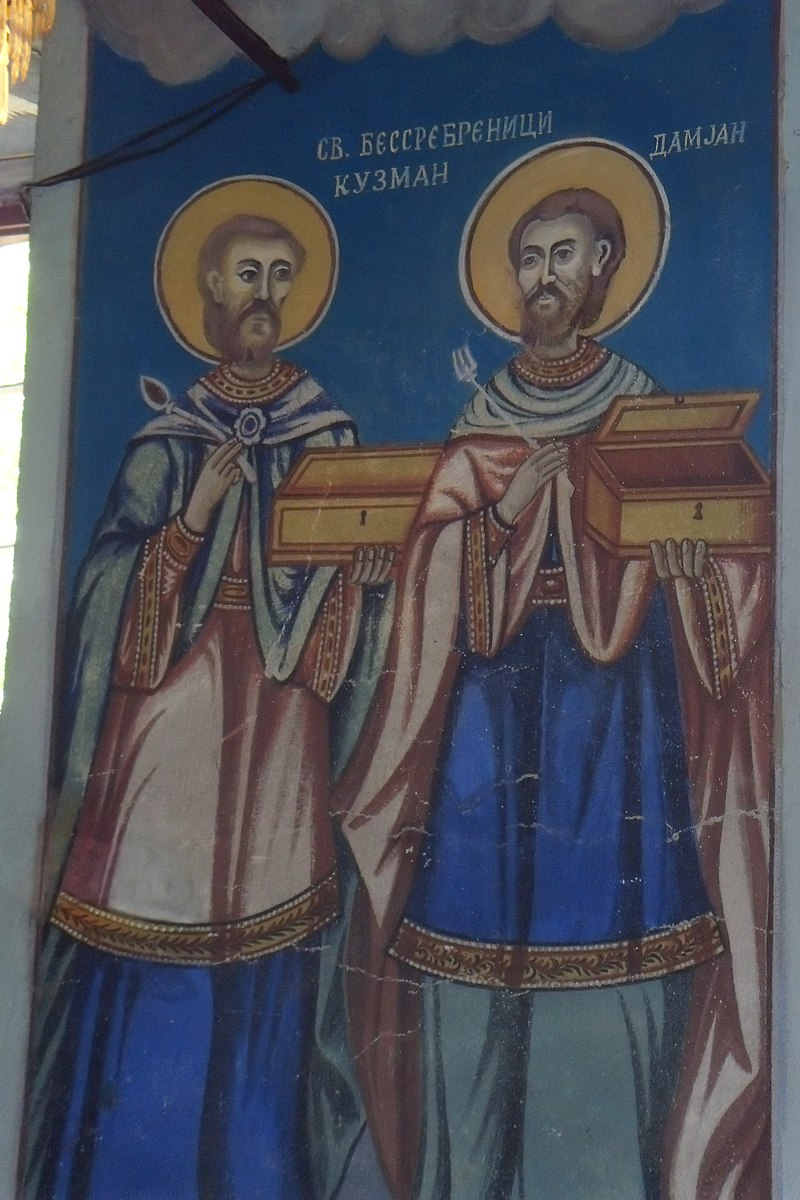
Saints Cosmas and Damian are regarded as the patrons of physicians, surgeons, pharmacists and twins
Cosmas and Damian (Arabic: قُزما ودميان, romanized: Qozma wa Demyaan; Greek: Κοσμᾶς καὶ Δαμιανός; Latin: Cosmas et Damianus; c. 3rd century – c. 287 or 303 AD) were two Arab physicians and early Christian martyrs. They practised their profession in the seaport of Aegeae, then in the Roman province of Syria. Cosmas and Damian were third century Arabian-born twin brothers who embraced Christianity and practised medicine and surgery without a fee. This led them
Recent Posts
- TON makes ERA redundant because it forbids legal caste creation at the root
- Aristocracy is a poisonous weed and the TON clauses are weedkiller (in the unhinged spirit of Justice Scalia)

- Adams and Jefferson on Aristocracy: A Structural Disagreement in the Early Republic
- John Adams — Opinions of Philosophers — Anti‑Caste Constitutional Foundations
- Corporate “persons” are a perfect example of a Titles of Nobility (TON) violation
Tags
2025 agriculture alchemy anthropology archaeology art biochemistry biography biology chemistry civil rights crystallography culture duplicate ecology economics endocrinology entertainment entomology folklore genetics geology glossary hematology history immunology law linguistics materials science medicine mythology neurology philosophy physiology politics psychology public health religion reproduction science smoker's paradox symbolism systems theory technology toxicology