-
Sexual intermediacy
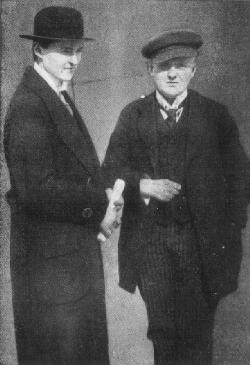
At the Institut für Sexualwissenschaft, Magnus Hirschfeld championed the doctrine of sexual intermediacy. This proposed form of classification said that every human trait existed on a scale from masculine to feminine. Masculine traits were characterized as dominant and active while feminine traits were passive and perceptive. The classification was further divided into the subgroups of sex
-

Eugenics Department for Mother and Child and Experimental Treatments for Impotence
One focus of the Institut für Sexualwissenschaft‘s research and services was sexual and reproductive health. A subdivision of the institute called the Eugenics Department for Mother and Child offered marital counseling services, and the Center of Sexual Counseling for Married Couples provided access to contraception. It was especially a goal of the institute to make contraceptive services accessible to
-
Institut für Sexualwissenschaft aimed to educate both the general public and specialists on its topics of focus
It became a point of scientific and research interest for many scientists of sexuality, as well as intellectuals and reformers from all over the world. Visitors included: René Crevel, French writer involved with the surrealist movement. Christopher Isherwood, Anglo-American novelist, playwright, screenwriter, autobiographer, and diarist. His best-known works include Goodbye to Berlin (1939), a semi-autobiographical novel which inspired
-

Institut für Sexualwissenschaft
The Institut für Sexualwissenschaft was an early private sexology research institute in Germany from 1919 to 1933. The name is variously translated as Institute of Sex Research, Institute of Sexology, Institute for Sexology or Institute for the Science of Sexuality. The Institute was a non-profit foundation situated in Tiergarten, Berlin. It was the first sexology research center in the world. The Institute was headed by Magnus Hirschfeld, who since 1897 had run
-
Experts warn of fatty liver disease ‘epidemic’ in young people
In Bristol University‘s study Children of the 90s, 2.5% of 4,000 people born in 1991 and 1992 were found by ultrasound scanning at the age of 18 to have non-alcoholic fatty liver disease; five years later transient elastography (fibroscan) found over 20% to have the fatty deposits on the liver of steatosis, indicating non-alcoholic fatty liver disease; half of those
-
Aetokthonotoxin (AETX) aka ‘eagle toxin’ discovered in 2021
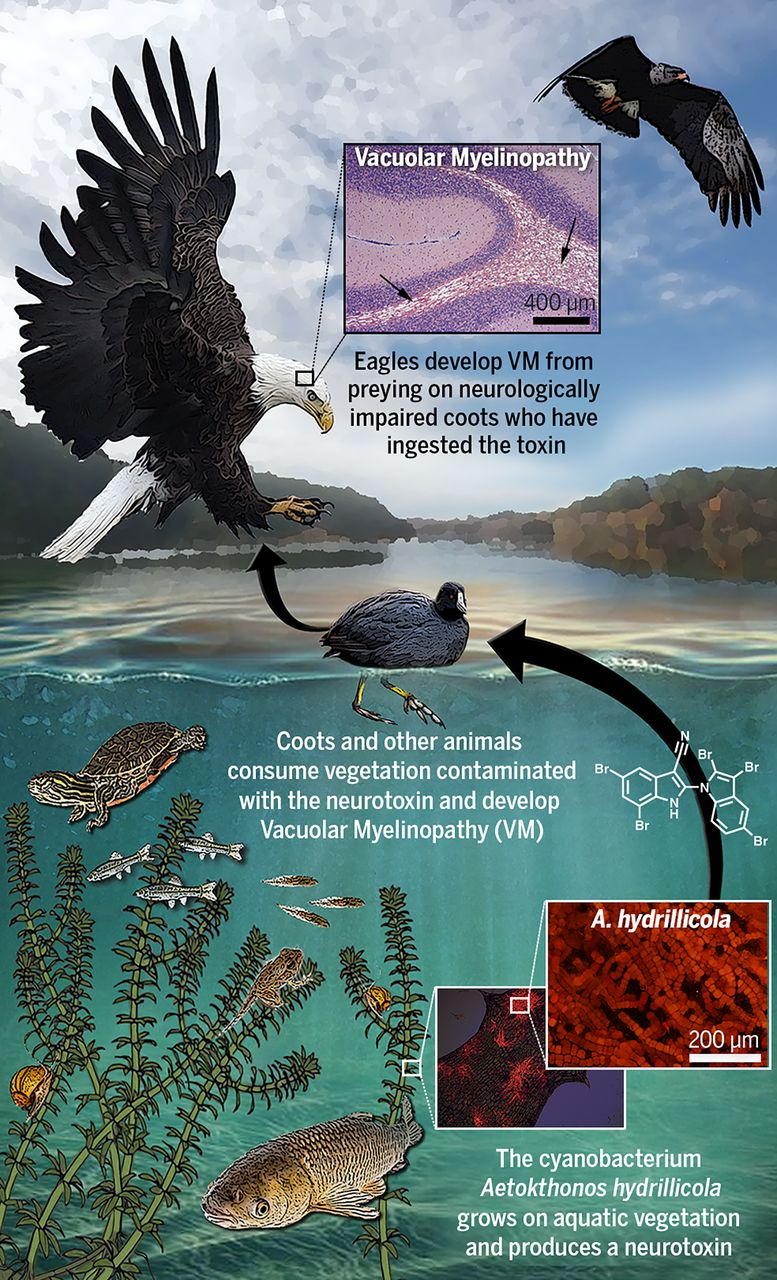
Aetokthonotoxin (AETX), colloquially ‘eagle toxin’, was discovered in 2021 as the cyanobacterial neurotoxin causing vacuolar myelinopathy (VM) in eagles in North America. Avian vacuolar myelinopathy (AVM) is a fatal neurological disease that affects various waterbirds and raptors. It is most common in the bald eagle and American coot, and it is known in the killdeer, bufflehead, northern shoveler, American wigeon, Canada goose, great horned owl, mallard, and ring-necked duck. Avian vacuolar myelinopathy is a newly discovered disease that
-
β-Methylamino-L-alanine, or BMAA
β-Methylamino-L-alanine, or BMAA, is a non-proteinogenic amino acid produced by cyanobacteria. BMAA is a neurotoxin and its potential role in various neurodegenerative disorders is the subject of scientific research. Structure and properties BMAA is a derivative of the amino acid alanine with a methylamino group on the side chain. This non-proteinogenic amino acid is classified as a polar base. Sources and detection BMAA is produced by cyanobacteria in marine, freshwater, and terrestrial environments. In
-
Lytico-bodig disease, Guam disease, or amyotrophic lateral sclerosis-parkinsonism-dementia (ALS-PDC) is a neurodegenerative disease or all of them
Lytico-bodig (also Lytigo-bodig) disease, Guam disease, or amyotrophic lateral sclerosis-parkinsonism-dementia (ALS-PDC) is a neurodegenerative disease of uncertain etiology endemic to the Chamorro people of the island of Guam in Micronesia. Lytigo and bodig are Chamorro language words for two different manifestations of the same condition. ALS-PDC, a term coined by Asao Hirano and colleagues in 1961, reflects its resemblance to amyotrophic lateral sclerosis (ALS), Parkinson’s disease, and Alzheimer’s disease. First reports of the disease surfaced in three death certificates on Guam in 1904 which made
-
The Amazonian legend of Maní is related to the cult of Manioc, the native staple food that sprang from her grave
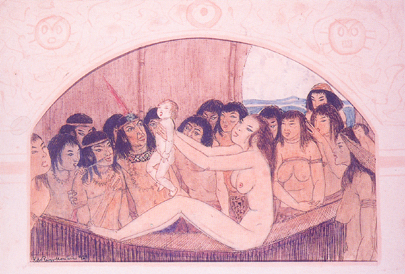
Maní, a Tupí myth of origins, is the name of an indigenous girl with very fair complexion. The Amazonian legend of Maní is related to the cult of Manioc, the native staple food that sprang from her grave. The legend The daughter of a Tupí chief became pregnant. Her father wanted to take revenge on the man who brought shame to
-
Cassava (tapioca) chips have become a major source of ethanol production
In many countries, significant research has begun to evaluate the use of cassava as an ethanol biofuel feedstock. Under the Development Plan for Renewable Energy in the Eleventh Five-Year Plan in the People’s Republic of China, the target was to increase the production of ethanol fuel from nongrain feedstock to 2 million metric tons (2,000,000 long tons; 2,200,000 short tons), and
Recent Posts
- 🛡️ 50 Corporate TON Violations (and there are many more)

- TON makes ERA redundant because it forbids legal caste creation at the root

- Aristocracy is a poisonous weed and the TON clauses are weedkiller (in the unhinged spirit of Justice Scalia)
- Adams and Jefferson on Aristocracy: A Structural Disagreement in the Early Republic
- John Adams — Opinions of Philosophers — Anti‑Caste Constitutional Foundations
Tags
2025 agriculture alchemy anthropology archaeology art biochemistry biography biology chemistry civil rights crystallography culture duplicate ecology economics endocrinology entertainment entomology folklore genetics geology glossary hematology history immunology law linguistics materials science medicine mythology neurology philosophy physiology politics psychology public health religion reproduction science smoker's paradox symbolism systems theory technology toxicology