-

Cassava is used in a number of commercially available laundry products
Cassava is also used in a number of commercially available laundry products, especially as starch for shirts and other garments. Using cassava starch diluted in water and spraying it over fabrics before ironing helps stiffen collars.
-
Malnutrition may play a role in Tropical ataxic neuropathy (TAN) aka Strachan-Scott Syndrome and prisoners of war neuropathy
Tropical ataxic neuropathy (TAN, also known as Strachan-Scott Syndrome and prisoners of war neuropathy) is a disease or category of diseases that commonly causes disability and increases mortality. The causes of TAN are not understood; there is no generally accepted treatment, and the reported outcomes are inconsistent. The disease affects poor tropical populations; there are no good statistics on how
-
Cause and Prevention of Konzo
The character of the neurological injury is not clear. The disease onset is associated with high intake of cyanide from a diet of mostly bitter cassava, which is low in protein, particularly sulfur amino acids. These are essential for the detoxification in the body of cyanide to thiocyanate, which is removed in the urine. A
-
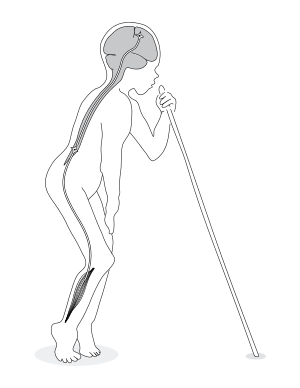
Signs and symptoms of Konzo
The onset of paralysis (spastic paraparesis) is sudden and symmetrical and affects the legs more than the arms. The resulting disability is permanent but does not progress. Typically, a patient is standing and walking on the balls of the feet with rigid legs and often with ankle clonus. Initially, most patients experience generalized weakness during the first
-
Differential diagnoses for Konzo are lathyrism and paraparesis apparently caused by geographical location or bad genes…go figure
The clinical symptoms are strikingly similar to those of lathyrism and also similar to tropical spastic paraparesis and hereditary spastic paraparesis, only that the latter two disorders have a slow onset. Konzo is distinct from polio which is a flaccid paralysis and most often affects a person asymmetrically.[citation needed] Konzo is one of several tropical neuropathies. A distinct myeloneuropathy also associated to cyanogen intake from cassava is tropical ataxic
-
Konzo Is an Epidemic Paralytic Disease Reportedly Caused by Simultaneous Malnutrition and High Dietary Cyanide Intake
Konzo is an epidemic paralytic disease occurring among hunger-stricken rural populations in Africa where a diet dominated by insufficiently processed cassava results in simultaneous malnutrition and high dietary cyanide intake. Konzo was first described by Giovanni Trolli in 1938 who compiled the observations from eight doctors working in the Kwango area of the Belgian Congo (now Democratic Republic of the Congo). “Konzo” means “tied legs” in
-
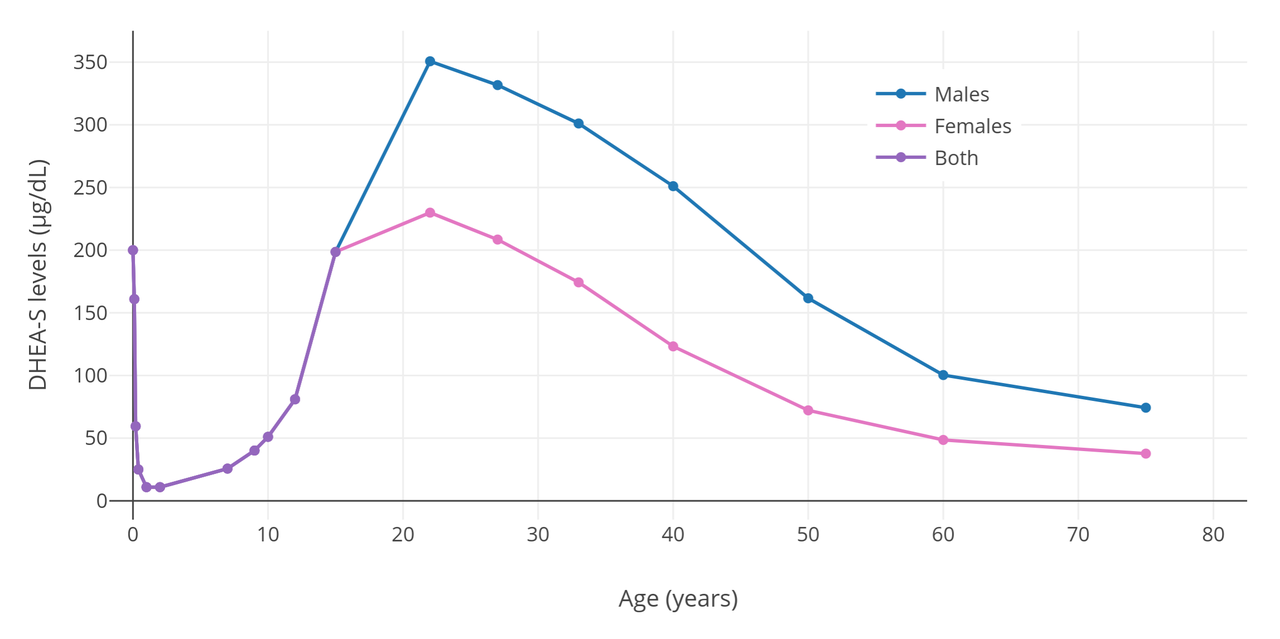
Adrenarche and Adrenopause
Adrenarche is an early stage in sexual maturation that happens in some higher primates and in humans, typically peaks at around 20 years of age, and is involved in the development of pubic hair, body odor, skin oiliness, axillary hair, sexual attraction/sexual desire/increased libido and mild acne. During adrenarche the adrenal glands secrete increased levels of weak adrenal androgens, including dehydroepiandrosterone (DHEA), dehydroepiandrosterone sulfate (DHEA-S), and androstenedione (A4), but without increased cortisol levels. Adrenarche is the result of the development of a
-
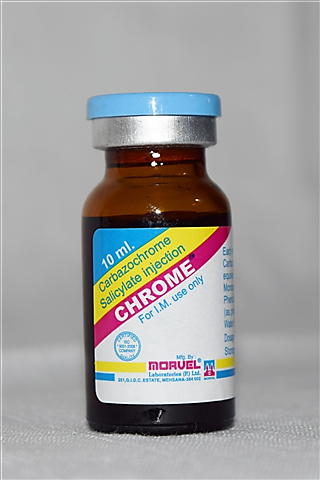
Carbazochrome is an antihemorrhagic or hemostatic agent
Carbazochrome is an antihemorrhagic, or hemostatic, agent that will cease blood flow by causing the aggregation and adhesion of platelets in the blood to form a platelet plug, ceasing blood flow from an open wound. It is hoped that this drug can be used in the future for preventing excessive blood flow during surgical operations and the treatment
-
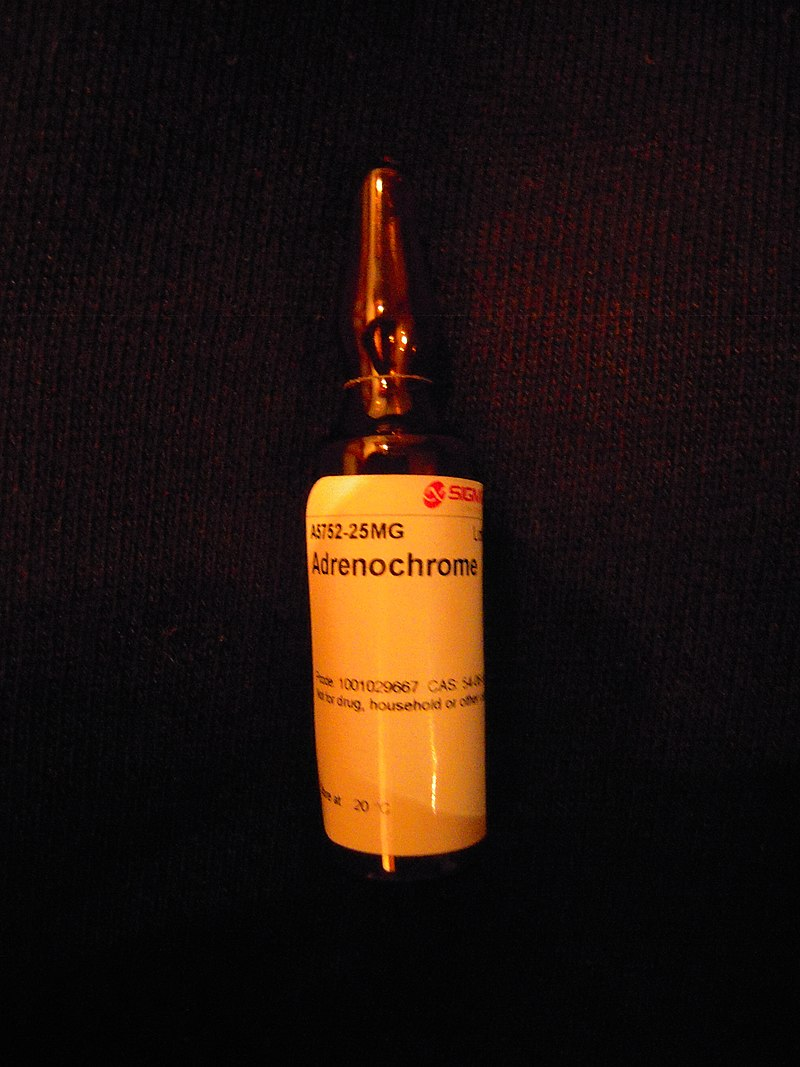
Adrenochrome
Adrenochrome is a chemical compound produced by the oxidation of adrenaline (epinephrine). It was the subject of limited research from the 1950s through to the 1970s as a potential cause of schizophrenia. While it has no current medical application, the related derivative compound, carbazochrome, is a hemostatic medication. Despite this compound’s name, it is unrelated to the element chromium; instead, the ‑chrome suffix indicates a relationship to color, as pure adrenochrome
-
Medical uses of adrenaline
Main article: Epinephrine (medication) As a medication, it is used to treat several conditions, including allergic reaction anaphylaxis, cardiac arrest, and superficial bleeding. Inhaled adrenaline may be used to improve the symptoms of croup. It may also be used for asthma when other treatments are not effective. It is given intravenously, by injection into a muscle, by inhalation, or by injection just under the skin. Common
Recent Posts
- 🛡️ 50 Corporate TON Violations (and there are many more)

- TON makes ERA redundant because it forbids legal caste creation at the root

- Aristocracy is a poisonous weed and the TON clauses are weedkiller (in the unhinged spirit of Justice Scalia)
- Adams and Jefferson on Aristocracy: A Structural Disagreement in the Early Republic
- John Adams — Opinions of Philosophers — Anti‑Caste Constitutional Foundations
Tags
2025 agriculture alchemy anthropology archaeology art biochemistry biography biology chemistry civil rights crystallography culture duplicate ecology economics endocrinology entertainment entomology folklore genetics geology glossary hematology history immunology law linguistics materials science medicine mythology neurology philosophy physiology politics psychology public health religion reproduction science smoker's paradox symbolism systems theory technology toxicology