-
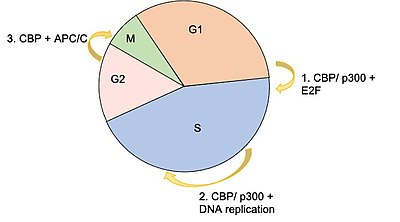
CBP has two critical mechanisms by which it is able to regulate gene expression: as an acetyltransferase, and as a protein scaffold
This gene is ubiquitously expressed and is involved in the transcriptional coactivation of many different transcription factors. CBP has two critical mechanisms by which it is able to regulate gene expression: as an acetyltransferase, and as a protein scaffold that helps recruit and construct the complexes that are necessary for transcription or chromatin remodeling. Phosphorylation of CBP increases
-
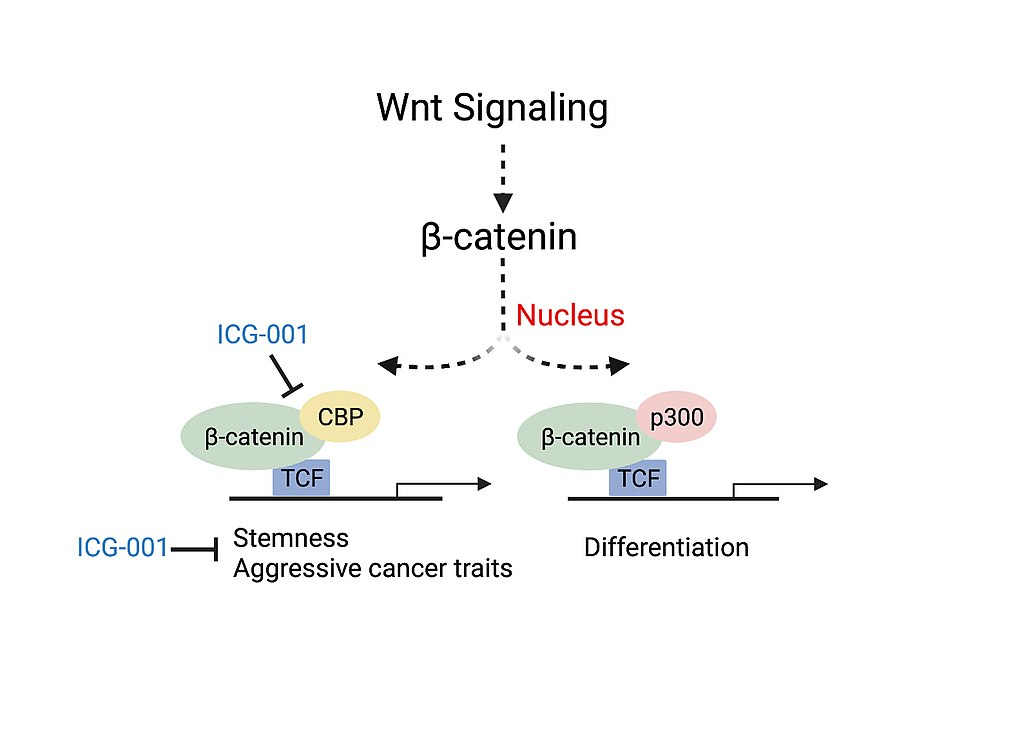
CBP has been shown to play a role in every stage of tumor development
Due to its critical role in regulation of cell proliferation, growth, migration and apoptosis, it is considered to be an oncogene, or tumor suppressor. Contrarily To date, increased CBP activity has been implicated in a variety of different malignancies including breast cancer, lung cancer, prostate cancer, colorectal cancer, acute leukemias, head and neck cancer, and many others. According to the Catalog
-

Proteins shown to interact specifically with CBP (list)
ActrNuclear receptor coactivator ACTR is a novel histone acetyltransferase and forms a multimeric activation complex with P/CAF and CBP/p300.Karamouzis MV, Konstantinopoulos PA, Papavassiliou AG (April 2007). “Roles of CREB-binding protein (CBP)/p300 in respiratory epithelium tumorigenesis”. Cell Research. 17 (4): 324–332. doi:10.1038/cr.2007.10. PMID 17372613. S2CID 36084602.Dyson HJ, Wright PE (March 2016). “Role of Intrinsic Protein Disorder in the Function and Interactions of the Transcriptional Coactivators CREB-binding Protein (CBP)
-
CBP has intrinsic acetyltransferase functions
Cyclic adenosine monophosphate Response Element Binding protein Binding Protein (CREB-binding protein), also known as CREBBP or CBP or KAT3A, is a coactivator encoded by the CREBBP gene in humans, located on chromosome 16p13.3. CBP has intrinsic acetyltransferase functions; it is able to add acetyl groups to both transcription factors as well as histone lysines, the latter of which has been shown to alter chromatin structure making genes more accessible for transcription. This relatively
-
In mouse models of Alzheimer’s Disease, it has been shown that there is a decrease in neuronal histone acetylation, a critical function of CBP
Alzheimer’s Disease (AD) is a progressive neurodegenerative disease whose pathology is diagnosed based on the presence of neuritic amyloid beta (Aβ) plaques and neurofibrillary tau (τ) tangles. Because the exact causes of the disease are not clearly understood, there are a number of different mechanisms by which CBP (CREB-binding protein) is hypothesized to play a role
-
Diminished CBP activity and decreased neuronal histone acetylation is associated with Huntington’s Disease
Huntington’s Disease (HD) is a fatal, progressing neurodegenerative disorder that is the result of a genetic mutation in the Huntingtin gene causing synthesis of a mutated huntingtin (Htt) protein. Symptoms most frequently associated with this disease are movement disorders, including impaired motor function, behavioral modification and cognitive impairment that ultimately results in dementia. It has been observed in animal
-
Decreased concentrations of CBP and lower amounts of H3 and H4 acetylation associated with fetal alcohol spectrum disorders
Fetal alcohol spectrum disorders (FASD) is a classification of diseases that all result from alcohol exposure during pregnancy. Symptoms of these disorders include poor cerebellar-dependent learning, motor coordination and impaired balance. In rats with FASD, it was shown that they had decreased concentrations of CBP and lower amounts of H3 and H4 acetylation.
-
CREB has been shown to have neuroprotective properties
Because of its association with CBP, understanding the role of CBP in neurological pathways and how aberrations influence disease is becoming of increasing interest. Numerous animal models have been designed in order to evaluate changes in motor, learning and memory function in mice with CBP mutations. Conditional knockout (cKO) mice that were hemizygous for CBP
-
Carmel-by-the-Sea prohibits wearing heels taller than 2 inches without a permit
Though often mistakenly thought of as an urban legend, the municipal code prohibits wearing shoes having heels taller than 2 inches (5.1 cm) or with a base of less than 1 square inch (6.5 cm2) unless the wearer has obtained a permit for them. While the local police do not cite those in violation of the ordinance, this
-

Ira Remsen (1846 – 1927) discovered artificial sweetener saccharin along with Constantin Fahlberg
Ira Remsen was an American chemist who discovered the artificial sweetener saccharin along with Constantin Fahlberg. He was the second president of Johns Hopkins University. Early life Ira Remsen was born in New York City on February 10, 1846. He is the son of James Vanderbelt Remsen (1818–1892) and Rosanna Secor (1823–1856). He married Elisabeth Hilleard Mallory on Apr 3, 1875, in New York
Recent Posts
- 🛡️ 50 Corporate TON Violations (and there are many more)

- TON makes ERA redundant because it forbids legal caste creation at the root

- Aristocracy is a poisonous weed and the TON clauses are weedkiller (in the unhinged spirit of Justice Scalia)
- Adams and Jefferson on Aristocracy: A Structural Disagreement in the Early Republic
- John Adams — Opinions of Philosophers — Anti‑Caste Constitutional Foundations
Tags
2025 agriculture alchemy anthropology archaeology art biochemistry biography biology chemistry civil rights crystallography culture duplicate ecology economics endocrinology entertainment entomology folklore genetics geology glossary hematology history immunology law linguistics materials science medicine mythology neurology philosophy physiology politics psychology public health religion reproduction science smoker's paradox symbolism systems theory technology toxicology